Trump’s Cleanup of Crime Scoops the Democrats
Homelessness, too, is a problem on which he is seizing the leadership.
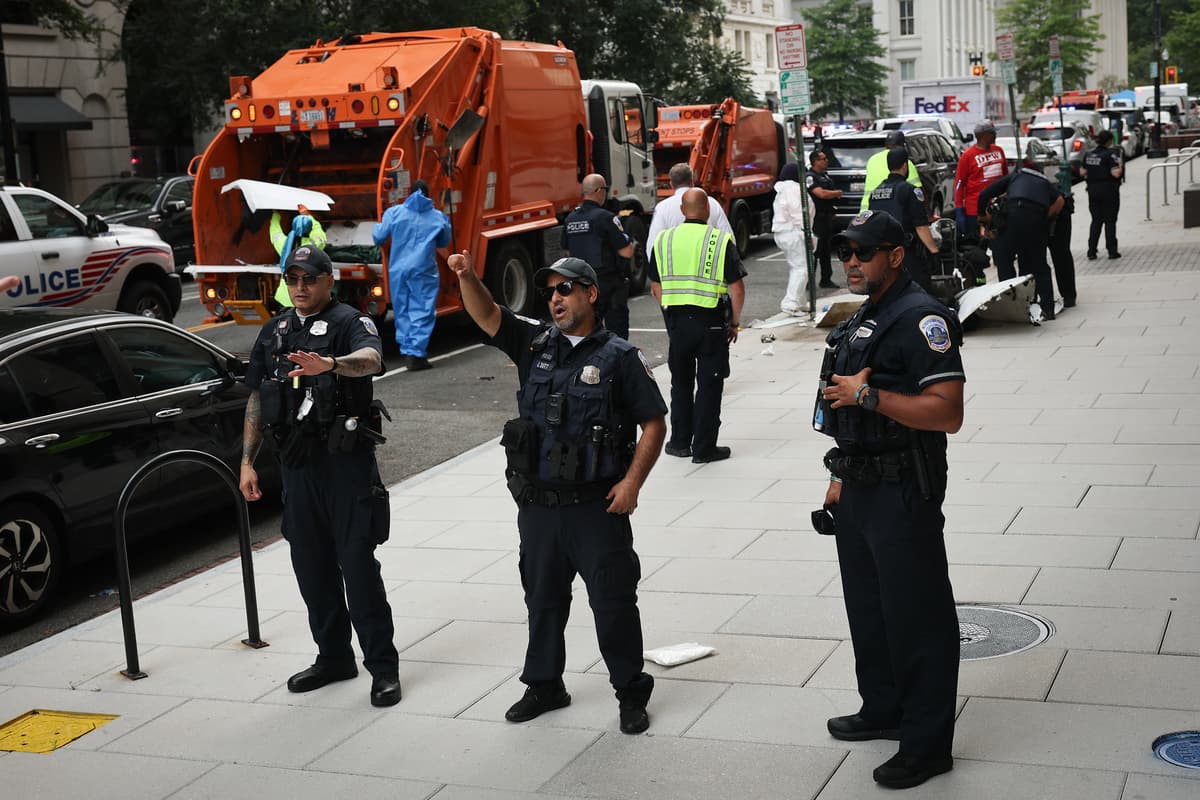
President Trump’s cleanup of crime and homelessness at Washington offers an opportunity to reshape the national debate on public safety, and urban disorder, across the country. Too often it has been taken for granted by bien-pensant liberals that the squalor of homelessness is a fact of life in America’s big cities. Public amenities like parks and libraries are too frequently ceded to derelicts. Mr. Trump’s strategy amounts to an overdue course correction.
The anti-crime campaign at the Columbia District gives Democrats, too, a chance, if they are willing to take it, to tack to the center on this head. It’s a point marked by one of the party’s relative moderates, Congressman Ritchie Torres of New York. “We as Democrats should be careful not to cede the issue of public safety to Donald Trump and Republicans,” Mr. Torres reckons. “We should own the issue of public safety, because it matters to voters.”
The Times reports that Mr. Trump “has pushed the issue of crime back to the foreground of American politics” and “invited a fight with Democrats.” The opposition party, as the Times puts it, is “treading cautiously” as it seeks “to forcefully oppose the federal incursion” at D.C., “without getting caught up in a debate over public safety on Mr. Trump’s terms.” The Times points to Mr. Torres’s remarks as a signal of the Democrats’ dilemma.
If the Democrats fail to acknowledge voters’ concerns over crime, though, it is likely to extend the party’s time in the political wilderness. Calling Mr. Trump’s federalization of police at D.C. a “soft launch of authoritarianism,” as Democratic members of Congress from Maryland and Virginia put it, overlooks that the president has legal authority for the anti-crime push. This rhetoric ignores, too, the policy justifications for Mr. Trump’s moves.
Feature Mr. Trump’s crackdown on vagrancy at the capital. “The homeless problem has ravaged the city,” the White House press secretary, Karoline Leavitt, says, citing local laws against sleeping in the streets and in encampments. The homeless are being “offered addiction or mental health services, and if they refuse,” Ms. Leavitt says, “they will be susceptible to fines or to jail time.” It’s hard to find fault with this humane approach to a vexing social problem.
Some 70 encampments have already been cleared, the Hill reports. Cue the hand-wringing in the liberal press. Framing homelessness as “nothing more than a public nuisance,” a Bloomberg editorial avers, “understates the crisis and diverts money and attention from the broader solutions that are needed.” It’s such talk as has led tents and squalor to proliferate in the streets of, say, San Francisco, where Mayor Daniel Lurie now has to clean up encampments.
Mr. Lurie’s push for public order, which led voters in the liberal enclave to hoist the Democrat into office, got a shot in the arm from the Supreme Court’s recent ruling in City of Grant’s Pass v. Johnson. That precedent overturned misguided lower court rulings that — shockingly — limited cities’ ability to clear homeless encampments, contending the practice amounted to “cruel and unusual punishment.”
At the time, these columns urged the Nine to go a step further and reverse its opposition to laws that criminalize vagrancy. Until 1972 these laws were common across America, keeping communities safe and orderly. Yet the high court had, in Papachristou v. City of Jacksonville, voided anti-vagrancy laws for “vagueness.” It was part of an era of judicial activism that led to new rights being discovered by the justices in hidden corners of the Constitution, we noted.
Justice William O. Douglas suggested that a right to sleep on city streets was among the Constitution’s “unwritten amenities” that gave “people the feeling of independence and self-confidence, the feeling of creativity.” Hogwash. In practice, striking down anti-vagrancy laws led to cities being overrun by homelessness and crime. The cleanup at D.C. could mark a turning point in reversing this trend, if Mr. Trump, and the Democrats, can seize the moment.