Trump’s Everyman Appeal to the Supreme Court
In the E. Jean Carroll case the 47th president petitions the Supreme Court on the bedrock of due process.
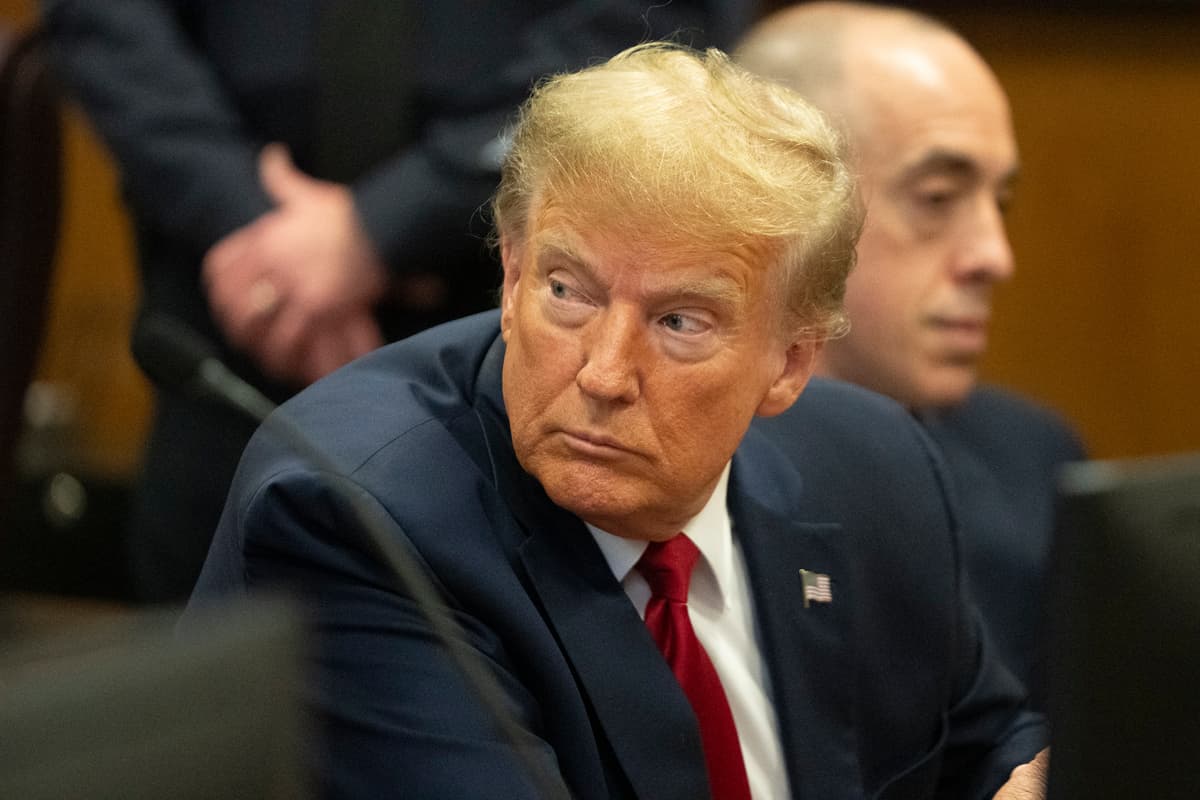

President Trump’s cert petition to the Supreme Court to hear his $5 million defamation judgment in the E. Jean Carroll case exposes constitutional bedrock — a defendant’s right to be convicted only on admissible evidence. Mr. Trump contends that the trial judge, Lewis Kaplan issued a “series of indefensible evidentiary rulings” that introduced “highly inflammatory propensity evidence” that unlawfully prejudiced the jury and distorted the verdict.
At issue, as our A.R. Hoffman reports, is Judge Kaplan’s greenlighting of the playing of the notorious “Access Hollywood” tape to the jury and permitting two women, Jessica Leeds and Natasha Stoynoff, to testify about their allegations of sexual misconduct by Mr. Trump. The president calls their testimony “unverified and unrelated allegations.” Neither were a party to this case, but both were cited as proving Trump’s “MO or playbook.”
Mr. Trump, in our view, has the better grasp of the federal rules of evidence. With some exceptions, the law provides, “evidence of any other crime, wrong, or act is not admissible to prove a person’s character in order to show that on a particular occasion the person acted in accordance with the character.” Evidence of a modus operandi is admissible only if it is so specific that it uniquely identifies the accused as the perpetrator in the present case.
The bar is high because the danger to due process is great when uncharged evidence is allowed to enter the courtroom. A defendant could be found liable — or guilty, in a criminal case — not because of what he did but because of who he is. Rarely has this been marked so well as in the opinion in this case by an emerging sage of the Second Circuit, Steven Menashi.* He dissented when the circuit’s panel sustained the verdict that Mr. Trump was liable.
Dissenting, Judge Menashi found that the judgment against Mr. Trump “cannot be justified under the rules of evidence that apply as a matter of course in all other cases. In my view, the same rules should apply equally to all defendants.” Judge Menashi argued against the “admission of propensity evidence” on a “dubious theory” that “evidence of prior acts of sexual assault” were germane to Ms. Carroll’s case.
A warning for Ms. Carroll can be gleaned from the troubled prosecution of the movie mogul Harvey Weinstein. His conviction in 2020 for sexual assault was overturned in 2024 by New York’s highest court. By a four to three vote that tribunal determined that the trial judge erred in allowing testimony about alleged sexual acts that were not charged. The appeals court ordered a new trial after finding that New York’s rules of evidence had been violated.
That brings us back to Judge Menashi’s reckoning that Mr. Trump was found liable “based on impermissible character evidence and few reliable facts … No one can have any confidence that the jury would have returned the same verdict if the normal rules of evidence had been applied.” Mr. Trump’s appeals in other cases have frequently leaned on the prerogatives of the presidency. Here, he appeals to the same rights promised to each and every American.
________
* Judge Menashi is a former editorial writer of The New York Sun.