
Trump’s Sudan Test: Can Washington Stop Iran’s Red Sea Power Grab Before It’s Too Late?
As President Trump begins his second term, a 30-month war in Africa threatens to hand Iran control of a critical Red Sea coastline — and Washington’s window to prevent it is rapidly closing.
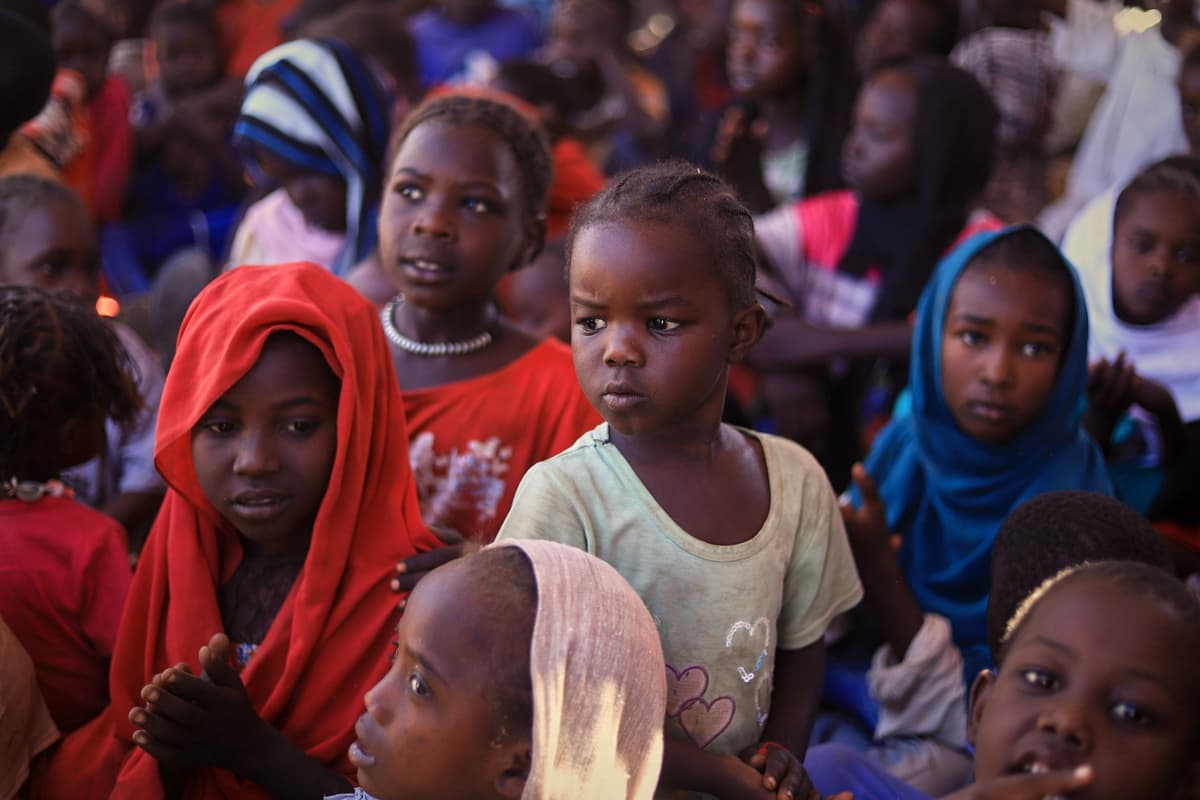
The crisis landing on President Trump’s desk is deceptively simple: Two Sudanese generals are tearing apart Africa’s third-largest country in a war that has killed over 150,000 people, displaced 13 million, and pushed 24 million toward famine.
The real problem, however, isn’t only the humanitarian catastrophe. It’s what happens if Mr. Trump lets Iran and its Houthi proxies finish what they’ve quietly started: transforming Sudan’s 500-mile Red Sea coast into the western anchor of an anti-American arc stretching from Tehran to the mouth of the Red Sea.
The question now is whether the Trump administration will act decisively to cut off Iran’s expansion — or watch Sudan become Yemen 2.0.
The Intelligence Warning Trump Can’t Ignore
Inside the Beltway, alarm bells are ringing. The Treasury Department has already moved, sanctioning Sudanese Islamist financier Gebreil Ibrahim Mohamed Fediel for ties to the Iranian Revolutionary Guards Corps and designating the Al-Bara’a Ibn Malik Brigade for its role in possible chemical-weapons deployment.
On Capitol Hill, Senators Jim Risch, a Republican of Idaho, and Jeanne Shaheen, a Democrat of New Hampshire, are circulating legislation to designate the Rapid Support Forces, one of the two warring factions, as a foreign terrorist organization. The move would freeze the overseas assets of Commander Mohamed Hamdan Dagalo, better known as Hemedti, and dramatically increase pressure on his alleged Emirati sponsors, whom United Nations experts say have funneled at least $500 million in arms to the RSF since the war began.
Yet the more profound concern for Mr. Trump isn’t Mr. Hemedti’s militia. It’s what’s happening on the other side. General Abdel Fattah al-Burhan’s Sudanese Armed Forces have reintegrated the Islamist factions that made Sudan a pariah state in the 1990s: disgruntled remnants of Omar al-Bashir’s National Congress Party, Muslim Brotherhood affiliates, and openly jihadist militias now providing crucial ground troops for SAF offensives.
“Islamists are the primary element rejecting the peace process,” Sudan expert and Executive Director at The American Center for South Yemen Studies, Fernando Carvajal, tells the New York Sun. “Their commanders are known jihadists — not just Muslim Brotherhood political types, but individuals who have openly called for jihad and espouse that ideology.”
Iran’s Red Sea Gambit: Port Sudan as the New Hodeidah
And they’re being armed by Iran. After an eight-year diplomatic freeze, Iran reopened its embassy in Port Sudan in July 2024. Since then, American intelligence has tracked dozens to hundreds of Iranian Mohajer-6, Ababil-3, and older Ababil-2 drones flowing to General Burhan’s forces.
Satellite imagery reviewed by United States officials shows new Iranian-built hangars and warehouses at Port Sudan’s airport and naval base. Iranian-backed Houthis maintain a permanent office in the city, ostensibly for “humanitarian coordination,” but ship-tracking data tells a different story: tankers linked to Houthi trading networks moving South Sudanese crude and Iranian fuel oil through Sudanese waters, while bulk carriers deliver drone components and ballistic-missile parts.
“Iran has the Arabian Peninsula completely surrounded today: Iran in the east, Houthis in the south, Sudan in the west, and the Iraqi militias in the north,” Mr. Carvajal explained. “Anyone could attack Saudi from any direction — and this is not a coincidence but politics.”
For Mr. Trump, the strategic math is stark: If Islamist militias consolidate control over Sudan’s gold mines and Red Sea ports, America will face a Houthi-style Iranian proxy on a second front — one with direct access to shipping lanes carrying 12 percent of global trade and 30 percent of container traffic.
“The SAF has three major patrons: Iran, Qatar, and Turkey,” Mr. Carvajal said. “At any point, the Muslim Brotherhood can go either with Turkey or with Qatar, and the jihadists can go with Iran.”
A fracture along those lines could produce independent Houthi-style enclaves along the Red Sea coast.
“They have access to the Red Sea coast; they don’t need airports,” Mr. Carvajal warns. “The IRGC could give them better drones. This is the scenario the U.S. and UAE are worried about, pushing them to hurry the peace deal.”
Trump’s Limited Options and Longstanding U.S. Red Lines
Longtime career diplomat and former United States ambassador, Cameron Hume, who negotiated the 2005 Comprehensive Peace Agreement that ended Sudan’s north-south civil war, is skeptical of dramatic American escalation.
“The U.S. has not taken concrete steps beyond naming and shaming during the 21 months of this crisis,” Ambassador Hume tells the Sun. “I do not see signs that it is about to change.” Yet he is unequivocal on the bottom line: “Longstanding US policy opposes either Moscow or Iran having port privileges in Sudan.”
That policy now faces its most serious test. With Russia’s Africa Corps providing logistics to the SAF and Iranian weapons moving through Port Sudan warehouses, the Trump administration must decide how far it’s willing to go to enforce America’s stated red lines.
Washington is expected to respond by tightening pressure on all external actors fueling the war — from urging Gulf partners to curb drone and financing pipelines, to pressing for stronger United Nations enforcement of the arms embargo and expanding intelligence monitoring of Iranian and Russian transfers into Sudan.
United States officials are also considering targeted sanctions on both RSF and SAF commanders, alongside contingency planning to protect Red Sea shipping if the conflict spills outward.
While the administration prefers to keep the focus on diplomacy and coordinated Gulf engagement, the broader strategy is to create enough leverage to force both generals back into a monitored ceasefire and prevent the war from metastasizing into a regional confrontation that could draw American forces back into the Middle East — exactly what Mr. Trump promised voters he’d avoid.
The Saudi Arabia Card: Trump’s Best Leverage Play
When Crown Prince Mohammed bin Salman met Mr. Trump last month, Sudan was among the key issues raised, and the American leader may have found his most effective lever.
“MBS made a smart move: the first thing he discussed with Trump was Sudan,” Mr. Carvajal explained. “He pulled the rug out from under Turkey and Qatar and positioned himself as Trump’s closest ally.”
Riyadh is now offering General Burhan what no other patron can: a single, reliable, long-term financial and political lifeline in exchange for freezing out Iran, Turkey, and Qatar. Saudi Arabia wants a monopoly over the SAF, mirroring the UAE’s relationship with the RSF.
For Mr. Trump, channeling American pressure through Saudi Arabia accomplishes multiple objectives: It keeps American forces off the ground, enlists a regional ally with real leverage over Burhan, and directly counters Iranian influence without triggering the kind of confrontation that could spiral into a broader Middle East conflict.
The diplomatic mechanism already exists: the “Quad,” comprised of the United States, Saudi Arabia, Egypt, and the United Arab Emirates, put forward a three-month ceasefire plan in September that would open humanitarian corridors and begin negotiations for a civilian-led transition. General Burhan rejected it in November, calling it biased toward the RSF and demanding that Turkey and Qatar be given lead mediation roles instead.
Now, Washington has a narrow window to force Burhan’s hand.
The Clock Is Ticking
On the ground, the deadlock persists. Last week, RSF commanders announced a unilateral ceasefire; SAF airstrikes and ground assaults have continued unabated.
In areas retaken from the Rapid Support Forces — most notably Gezira State and parts of Khartoum and Omdurman — SAF-aligned Islamist militias have carried out revenge attacks targeting civilians from non-Arab ethnic groups. According to Christian Solidarity Worldwide, Open Doors, and the United States Commission on International Religious Freedom, more than 165 churches have been destroyed or forcibly closed since April 2023, the majority in areas under SAF control.
For American policymakers, these atrocities aren’t just moral outrages; they’re warnings of what’s coming if Islamist factions gain autonomy.
“We are all just one attack on a ship, one Iranian drone, or one chemical weapon away from this 30-month-old conflict bursting out of any boundaries and firmly onto the regional stage,” Mr. Carvajal added. “If the Islamist militias say, ‘We’re going on our own,’ they become like the Houthis in Yemen. This is the scenario the U.S. and UAE are worried about, pushing them to hurry the peace deal.”