U.K. Halts Intelligence Sharing With America Over Lethal Strikes in Caribbean: Report
Britain ‘does not want to be complicit in US military strikes and believes the attacks are illegal,’ one source says.
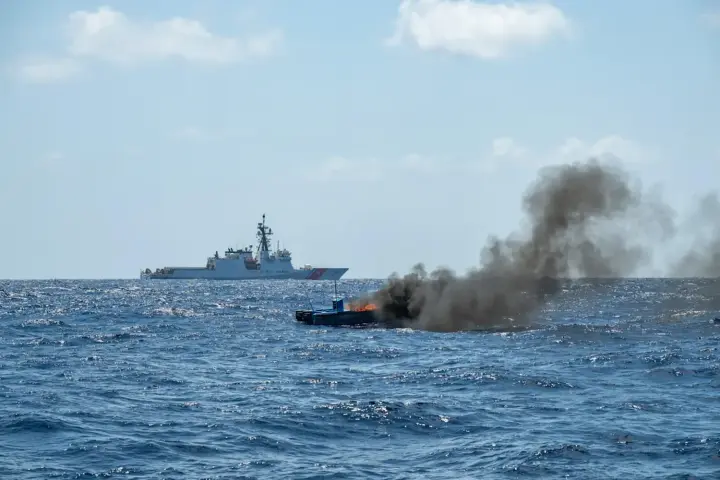

The United Kingdom has reportedly suspended some intelligence sharing with the United States amid concerns it could be implicated in a controversial U.S. military campaign involving lethal strikes against suspected drug trafficking vessels in the Caribbean.
The intelligence pause, which began more than a month ago, reflects a significant break between the two close allies. British officials reportedly agree with the international consensus that the strikes, which have killed at least 76 people, are illegal and amount to extrajudicial killings, CNN reports.
For years, Britain has aided America’s counter-narcotics efforts by providing intelligence to help the U.S. Coast Guard interdict and seize vessels. This information was typically shared with the Joint Interagency Task Force South in Florida. However, after the Trump administration began authorizing deadly military strikes against these boats in September, British officials grew concerned their intelligence could be used to select targets.
“The UK is no longer sharing intelligence with the US about suspected drug trafficking vessels in the Caribbean because it does not want to be complicit in US military strikes and believes the attacks are illegal,” sources familiar with the matter told CNN.
The strikes represent a significant shift, with the Trump administration justifying the attacks by designating some drug cartels as “foreign terrorist groups” and their operatives as “enemy combatants” in an “armed conflict” with America. A classified memo from the Justice Department’s Office of Legal Counsel reportedly reinforces this legal argument, which allows the US to bypass traditional due process for those targeted.
This position has drawn sharp criticism. Volker Türk, the UN’s human rights chief, said last month that the strikes “violate international law and amount to ‘extrajudicial killing.’” Sources confirmed to CNN that the UK government agrees with this assessment.
The controversy has also created friction within the Pentagon. The commander of U.S. Southern Command, Adm. Alvin Holsey, reportedly offered to resign during a tense meeting with Secretary of Defense Pete Hegseth after questioning the legality of the strikes. Furthermore, lawyers within the Department of Defense’s Office of General Counsel have also voiced concerns.
The UK is not the only ally distancing itself from the US campaign. Canada, another key intelligence partner in the region, has also expressed reservations. While continuing to coordinate with the US Coast Guard, Canadian officials have “made clear to the US that it does not want its intelligence being used to help target boats for deadly strikes,” sources told CNN. A spokesperson for Canada’s defense ministry emphasized that its joint operations “are separate and distinct” from the US military strikes.
The situation is intensifying. The Gerald Ford aircraft carrier strike group has moved into the Latin America region, two U.S. officials told Reuters on Tuesday, adding to a buildup in the Caribbean that has already irked Venezuela.
In addition to the USS Ford, several naval ships have already been moved to the area, including the USS Iwo Jima Amphibious Ready Group, a group that carries more than 4,500 sailors and Marines and is among the larger classes of ships in the Navy.
The Iwo Jima Amphibious Ready Group deployed in August, carrying over 4,500 sailors and Marines, according to the Department of War. The group includes the Iwo Jima, USS Fort Lauderdale, USS San Antonio, and the 22nd Marine Expeditionary Unit. Three Navy guided-missile destroyers are also operating in the Caribbean.