
U.S. Conducts First Pacific Strike Against Alleged Drug Boat, Killing Two
At least 34 people have been killed in the American strikes, including a recent hit on a semi-submersible vessel in the Caribbean.
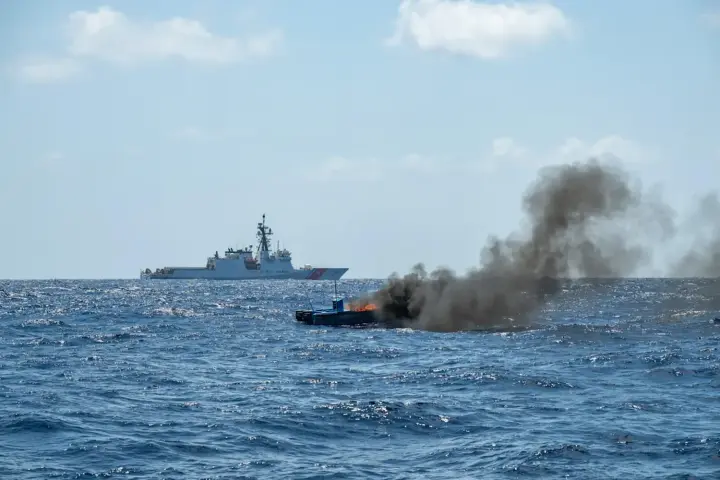
The United States military struck another alleged drug-trafficking vessel in Pacific waters Tuesday night, marking the first such operation outside the Caribbean since the Trump administration began targeting suspected narcotics boats in September.
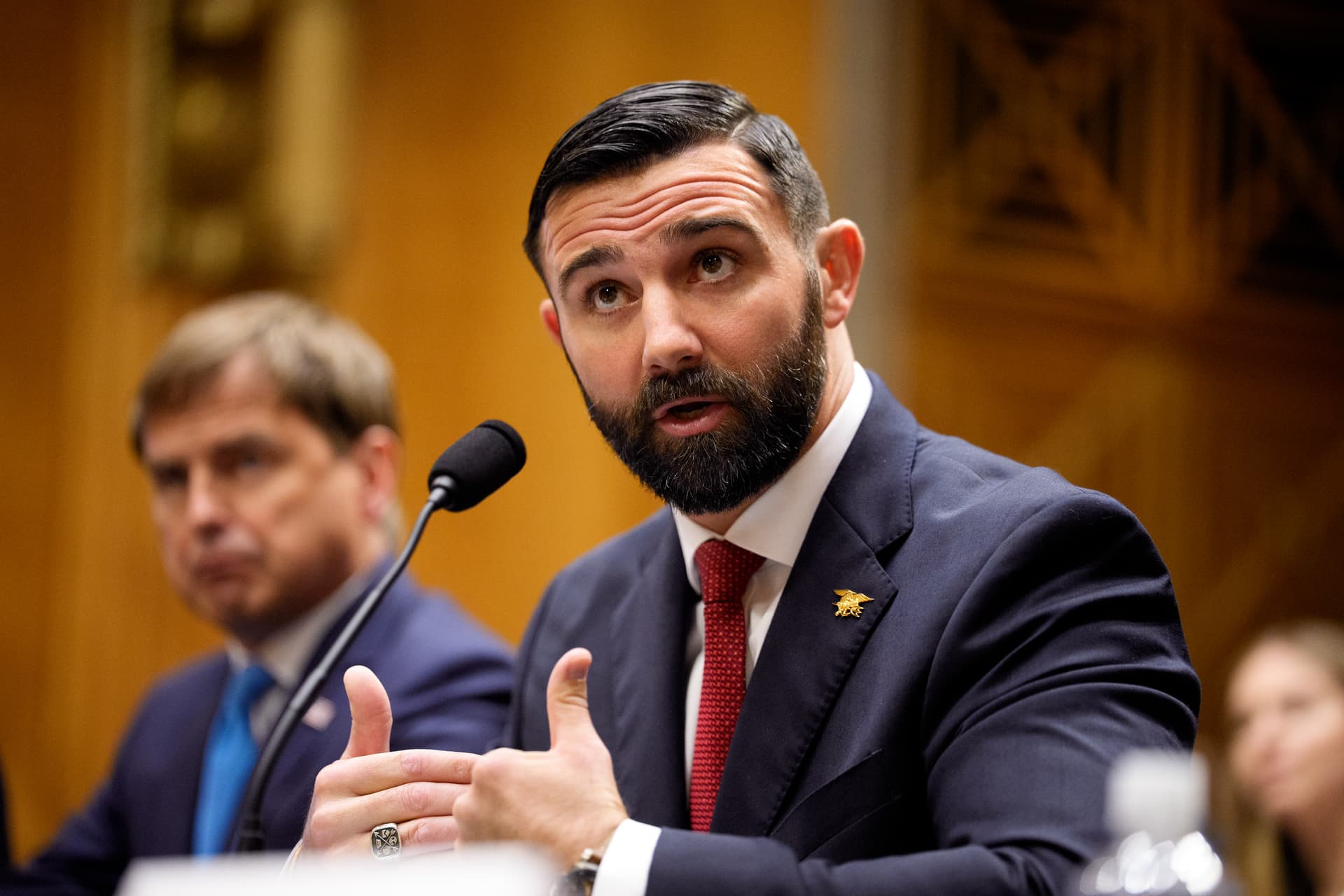
Defense Secretary Pete Hegseth confirmed Wednesday that two individuals aboard the vessel were killed during the strike, which occurred in international waters off Colombiaâs Pacific coast. No U.S. personnel were injured in the operation.
âAt the direction of President Trump, the Department of War conducted a lethal kinetic strike on a vessel being operated by a Designated Terrorist Organization and conducting narco-trafficking in the Eastern Pacific,â Mr. Hegseth said in a post on X.
âThe vessel was known by our intelligence to be involved in illicit narcotics smuggling, was transiting along a known narco-trafficking transit route, and carrying narcotics. There were two narco-terrorists aboard the vessel during the strike, which was conducted in international waters. Both terrorists were killed and no U.S. forces were harmed in this strike,â he wrote.
The Defense Department released video footage showing a vessel moving through water before being struck and engulfed in flames. âNarco-terrorists intending to bring poison to our shores, will find no safe harbor anywhere in our hemisphere,â Mr. Hegseth wrote.
The latest Pacific strike occurs amid deteriorating relations between the Trump administration and the president of Colombia, Gustavo Petro. On Sunday, Mr. Trump labeled Mr. Petro an âillegal drug leaderâ who is âstrongly encouraging the massive production of drugs, in big and small fields, all over Colombia.â
Mr. Petro accused America of killing a Colombian fisherman, and he recalled the countryâs U.S. ambassador, Daniel GarcĂa-Peña. âEven if they were in fact carrying drugs, the procedure is to capture them, to seize them, to arrest them, and to find information about who was behind them, and not blowing them up,â Mr. GarcĂa-Peña told one news agency.
The latest action brings the total number of American strikes against suspected drug vessels to eight since September 2, with the previous seven targeting boats in the Caribbean. At least 34 people have died in these operations, according to the Defense Department.
The expansion into Pacific waters represents a significant geographical shift in the administrationâs anti-narcotics strategy. Drug Enforcement Agency estimates indicate that the majority of cocaine destined for American cities travels along Pacific routes, while Caribbean seizures account for a relatively smaller percentage of total trafficking.
The strikes have drawn criticism from some lawmakers who question their legal basis and effectiveness. Senator Mark Kelly of Arizona raised concerns about both the rationale and the targeting in the Caribbean.
âWe want to keep fentanyl out of the United States, ⊠but those routes through the Caribbean on boats are predominantly used to bring cocaine to Europe,â the Democrat said Sunday on âFace the Nation,â adding that fentanyl typically enters the U.S. âfrom a different way.â
Mr. Kelly also revealed that when administration officials briefed Congress on the operations, they âhad a very hard time explaining to us the rationale, the legal rationale, for doing this and the constitutionality of doing it.â He said lawmakers were told about âa secret list of over 20 narco organizations, drug trafficking cartels,â but officials declined to share the list with Congress.
Some Republicans also question the strikes.
âWe donât blow up boats off Miami because 25% of the time suspicion is wrong,â Senator Rand Paul of Kentucky wrote on X. âWe shouldnât do it off Venezuela either. These are small outboards with no fentanyl and no path to Florida. We canât just kill indiscriminately because we are not at war. Itâs summary execution!â
âEveryone gets a trial because sometimes, the system gets it wrong. Even the worst of the worst in our country get due process. The bottom line is that execution without process is not justice, and blowing up foreign ships is a recipe for chaos,â Mr. Paul wrote.
The Trump administration has defended the strikes by declaring the U.S. is engaged in a ânon-international armed conflictâ with drug cartels. White House officials argue that the narcotics smuggled by these organizations kill tens of thousands of Americans annually, constituting an âarmed attackâ that justifies military response.
Last weekâs strike on a semi-submersible vessel in the Caribbean resulted in two survivors who were repatriated to their home countries instead of being arrested. Ecuador released AndrĂ©s Fernando Tufiño after authorities determined there was no evidence of criminal activity.
The Colombian survivor remains hospitalized following repatriation. Interior Minister Armando Benedetti described his condition: he âarrived with brain trauma, sedated, drugged, breathing with a ventilator.â Colombian authorities indicated he will face prosecution once recovered.