U.K. Woman Jailed 31 Months for Hate Speech Gets Early Release Amid Crackdown on ‘Anti-Social Behavior’
The wife of a Northampton town council member, Lucy Connolly, was convicted after a vicious rant in the wake of the Southport stabbings as Britain grapples with questions around free speech and public order laws.
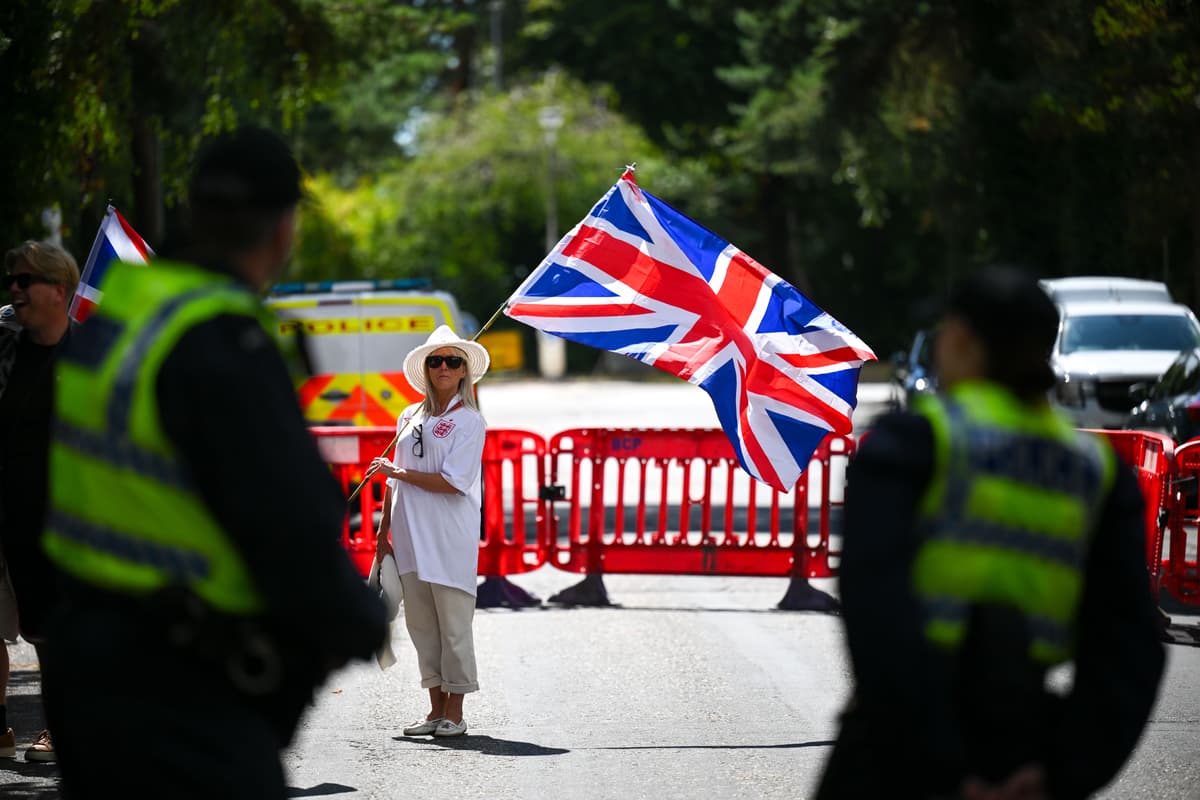

The wife of a local town council member in England who received a 31-month sentence for a racist comment on social media after a mass stabbing attack at Southport last year is out of jail and on probation until 2027.
Lucy Connolly, whose husband, Raymond Connolly, is a sitting member of the Northampton town council, served 40 percent of her sentence, which made her eligible for release. She served nine months at a Peterborough prison following her sentencing under the U.K.’s Public Order Act of 1986. The Birmingham Crown Court ruled that she had urged her followers on X to “set fire” to hotels that were housing migrants seeking asylum.
Ms. Connolly originally posted the comments after three young girls were killed in a knife attack at a Taylor Swift-themed dance class in on July 29, writing on the X platform, “Mass deportation now, set fire to all the f*****g hotels full of the bastards for all I care. … If that makes me racist, so be it.”
The rant, which was viewed 310,000 times and reposted by 940 other users before she deleted it three and a half hours later, was based upon false information that the attacker was a Muslim asylum seeker. Tensions and unrest were raised across England during a series of riots in the days after the mass stabbing.
The 41-year-old woman apologized later, saying that the information was ”false and malicious.” The judge presiding over her case at Birmingham Crown Court felt she was aware of the ramifications of her social media post.
“Some people used that tragedy as an opportunity to sow division and hatred, often using social media, leading to several towns and cities being disfigured,” Judge Melbourne Inman KC said of the stabbings.
“When you published those words, you were well aware how volatile the situation was. That volatility led to serious disorder where mindless violence was used.”
Some have criticized Ms. Connolly’s sentencing as excessive, with the Free Speech Union’s founder and director, Lord Toby Young, claiming that it was a “national scandal” that Ms. Connolly has spent a year imprisoned “for a single tweet that she quickly deleted and apologized for.” Free speech advocates also point to a disparate sentencing system in the United Kingdom, where people convicted for their comments on social media end up with longer sentences than individuals convicted for drugs, sexual abuse, and child pornography.
Ms. Connolly’s “punishment was harsher than the sentences handed down for bricks thrown at police or actual rioting,” the Conservative Party leader, Kemi Badenoch, wrote on X. “Protecting people from words should not be given greater weight in law than public safety. If the law does this, then the law itself is broken – and it’s time Parliament looked again at the Public Order Act.”
The U.K. has several laws on social behavior, for activities both on and off the internet. The Public Order Act of 1986 includes a provision that makes it illegal to stir up racial hatred knowingly. Last weekend, a British man was arrested and charged under the act during a protest outside the site of a large mosque in Dalton-in-Furness after allegedly shouting out, “We love bacon.” The man was later released on bail.
Last month, the U.K. government enacted the Online Safety Act of 2023, which makes it an offense to say something false that could cause “non-trivial psychological or physical harm.” It also enacted the Respect Order, which expands the state’s authority to enforce the Anti-social Behaviour, Crime and Policing Act of 2014, increasing police authority to disperse crowds and seize personal vehicles.