‘We Were Never Meant To Feed Gaza Alone’: Gaza Humanitarian Foundation Hopes UN Will Finally Cooperate and Accept Offer To Secure Aid Trucks
‘We can bring the aid safely and securely anywhere that the UN desires within Gaza,’ a GHF spokesman tells the Sun.
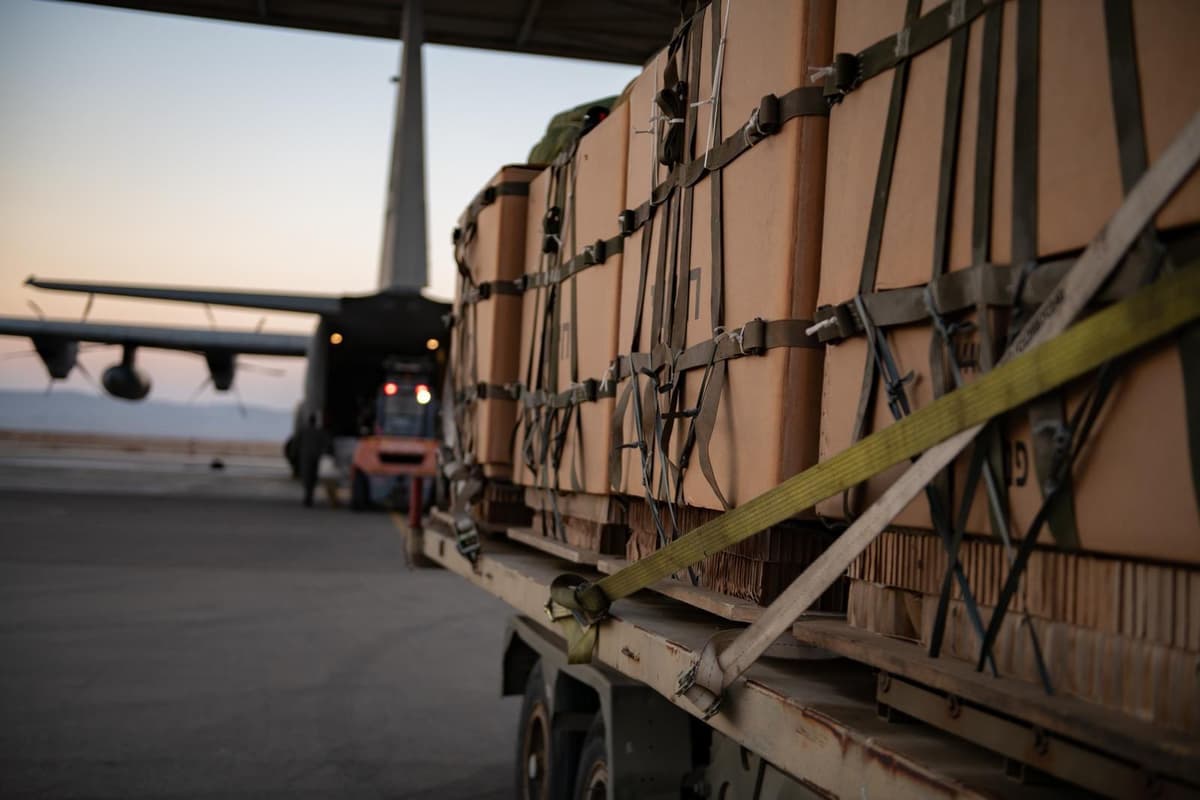

As the United Nations is ramping up efforts to distribute aid piling up at the Gaza border crossings, the American-backed Gaza Humanitarian Foundation is offering to help meet one of its key challenges; providing security for trucks carrying aid in order to prevent looting and attacks.
The UN and Israel were again at loggerheads last week after images of starvation in Gaza ignited another blame game for the lack of food entering the Hamas-run enclave.
One of the main reasons the UN cited for not picking up the hundreds of trucks’ worth of aid waiting at border crossings was a lack of safety for its truck drivers.
But the GHF has repeatedly offered to provide security trucks to the UN. It’s an offer that is yet to be accepted.
“We can provide drivers for their trucks. We can provide trucks, we can provide security. And we can bring the aid safely and securely anywhere that the UN desires within Gaza,” the GHF spokesman, Chapin Fay, told The New York Sun in an interview.
Following the outrage over images of starvation and aid piling up at the Gaza border, Israel has opened new, permanent safe routes for truck drivers that are open between 6 a.m. and 11 p.m. every day.
The IDF is also implementing tactical military pauses for humanitarian purposes in three densely populated areas in southern, central, and northern Gaza.
But the issue of humanitarian aid in Gaza has been a consistent cause for public spats between Israel and international NGOs throughout the war. It’s a fight that intensified when the GHF entered the picture this year with the backing of the United States and Israel.
The UN and other NGOs were in uproar, refusing to this day to cooperate with the GHF.
The GHF has been accused of lacking experience and failing to live up to principles of neutrality and humanity. The accusations only grew stronger after Palestinian civilians were reported shot and killed by Israeli soldiers as they neared the distribution sites.
But Hamas attempted to sabotage the GHF’s work from the outset, warning Palestinians not to collect its aid or face retribution. The terror group also sent out fake messages on behalf of the NGO to sow chaos at the distribution sites.
“We have our own online and social media channels and direct word of mouth from our local Palestinian aid workers, but Hamas actively works against us every single time, telling people that [distribution sites] are open. And when it’s not, and when thousands of people line up for food, it could get dangerous,” Mr. Fay said.
The GHF has also spotted Hamas operatives among the crowds of civilians seeking aid, most recently on July 16, when 19 people were trampled to death as the armed terrorists deliberately sowed chaos. In another incident, Hamas operatives threw hand grenades at American aid workers at one of the distribution sites.
The violent incident was the only time the GHF security people fired warning shots to control the crowd and ran in to save a child’s life, Mr. Fay said: “Our guys don’t shoot at anyone.”
According to the GFH, 12 of its Palestinian employees have been killed by Hamas while others were tortured. This is another example of the lengths the terror group is willing to go to sabotage the American-backed NGO.
But perhaps more importantly, shutting down the GHF’s work once and for all is now a key demand by Hamas in cease-fire negotiations with Israel. Hamas wants the UN and other international NGOs to be solely in charge of delivering aid and the GHF removed from Gaza, a Hamas official, Basem Naim, told the Sun.
“We believe, during this war alone, Hamas has made over a billion dollars selling free food for the people of Gaza,” Mr. Fay said, repeating a claim made by Israel’s finance minister, Betzalel Smotrich.
The Sun has not seen evidence to support the claim, but reports have suggested Hamas has looted and capitalized on aid in Gaza, while footage of large numbers of armed Palestinians hijacking trucks with aid have circulated on social media.
The UN and local Palestinians in Gaza have long reported that basic commodities are being sold for astronomical prices on the market, while the UN has admitted to repeated looting of its trucks.
Despite the GHF boasting about the more than 92 million meals delivered to hungry Palestinians in the past two months, the NGO admits that it cannot meet the task of feeding Gaza itself.
“GHF was never created to solve this problem alone. And we can’t. So we would love to work with the UN to get more food out. We want to scale up at additional sites and bring as much food to people as possible and create new humanitarian corridors,” Mr. Fay said.
Teams from the UN and the GHF are now expected to meet in the near future to discuss possible cooperation after the American-backed NGO repeatedly called on the UN to cooperate.
“I welcome dialogue on how to reach as many people as possible and alleviate widespread suffering, without causing harm. To that end, my operations team stands ready to meet, as previously proposed,” the undersecretary-general for humanitarian affairs and emergency relief coordinator, Tom Fletcher, wrote in a letter to the GHF on Friday.
In the meantime the race to get aid delivered to hungry Gazans continues, with both Israel and the UN increasing their efforts.
A total of 120 trucks with aid were picked up on Sunday by the UN and other international organizations while 180 trucks entered Gaza, waiting at the border crossing along with hundreds of other trucks’ worth of aid.