
What Did the Fed’s Chairman Know — and When?
Questions are heating up over the central bank’s spending on a $2.5 billion renovation of its offices.
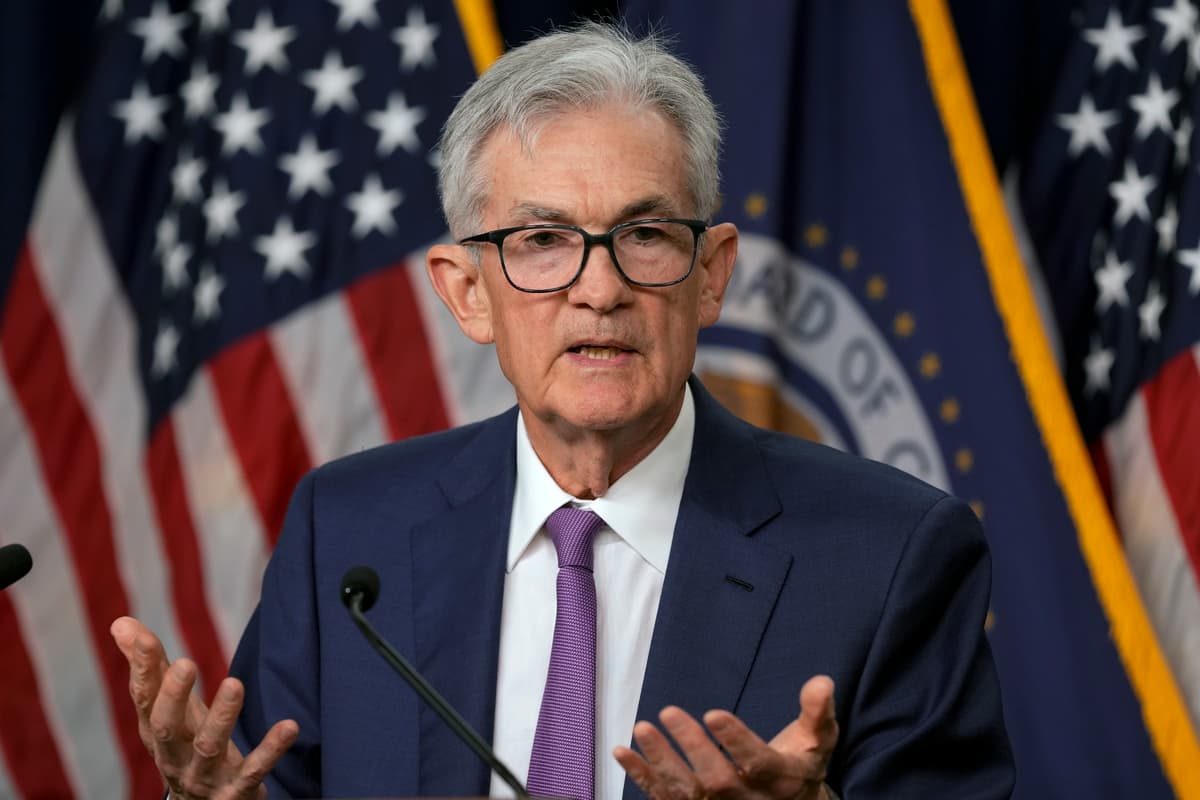
The Federal Reserve chairman, Jerome Powell, faces quite the predicament over the central bank’s lavish $2.5 billion headquarters renovation. The contretemps arises at a sensitive moment for Mr. Powell and the bank amid the Fed’s unprecedented operating losses, now at a cumulative $234 billion. The Fed chief appears to be in a difficult spot on the renovation debacle. There’s even talk, our Larry Kudlow reports, that Mr. Powell might resign.
The Sun first editorialized back in May about the criticism over the Fed’s office renovation. We stressed the discrepancy that a bank running up billions in losses would be devoting billions to an office upgrade. If a private bank tried such a move, we noted, “the shareholders would likely put management out on its ear.” We noted, too, the increasing concerns of “arrogance,” as Senator Lummis put it, about the Fed’s lack of accountability.
Now President Trump’s budget chief, Russell Vought, a critic of the central bank’s pretensions of “independence,” has appeared to catch Mr. Powell in an inconsistency that could have legal repercussions. Mr. Trump, in Mr. Vought’s telling, “is extremely troubled” by Mr. Powell’s “management of the Federal Reserve System.” That makes clear, Mr. Vought avers, the Fed chief’s handling of the reportedly over-budget renovation.
Mr. Powell, in testimony before Congress, has downplayed the Fed’s office revamp, calling reports of “luxurious upgrades,” as the New York Post put it, “misleading and inaccurate.” Mr. Powell asserts: “There’s no VIP dining room. There’s no new marble,” and “no special elevators.” Yet if Mr. Powell’s account to Congress is accurate, Mr. Vought wonders, does that mean the Fed has made misleading statements about the renovation?
The office upgrade, Mr. Vought says, had to be approved by the National Capital Planning Commission, which okayed the project in 2021 with the amenities. If the luxury features aren’t included, after all, Mr. Vought suggests, the Fed could be in hot water. “Your testimony appears to reveal that the project is out of compliance with the approved plan with regard to major design elements,” he says, putting “the project outside of the NCPC’s approval.”
The Fed has so far declined to comment on the disparity between Mr. Powell’s remarks and its plans for the headquarters revamp, which features “new rooftop garden terraces, skylights, and ornate water features,” per the Post. The complex even offers Fed staffers rooftop Italian beehives, the Wall Street Journal reported, while the basement features a collection of art. It all sounds rather glamorous for an institution that is running up operating losses like the Fed.
Yet the Fed’s errors of policy, offering ample grounds for substantive criticism, are far more serious. They suggest an irony in the calls for Mr. Powell to step down over the comparatively trifling renovation rhubarb. The idea of “attacking the Fed for a failure to comply with the National Capital Planning Act seems a little like nailing Al Capone on federal income-tax charges,” we’re told by James Grant, editor of Grant’s Interest Rate Observer.
We take his point. It would be one thing were the central bank serving as a responsible steward of the dollar, which was valued at about a 20th of an ounce of gold when the Fed was formed in 1913. Today America’s currency, amid a long inflation, some of it sought by the Fed, has plummeted to less than a 3,330th of an ounce of gold. It’s that record, far more important than the renovation, that undermines the central bank’s standing.
It would seem that Mr. Powell at least owes the public, not to mention Mr. Vought, an explanation on all the questions that are emerging about the Fed. The episode underscores the need for more accountability and openness on the part of the world’s most important central bank, which has been allergic to greater oversight from the Congress that created the Fed and that holds the monetary powers granted to the federal government in the Constitution.