
Who Lost United States Steel?
To get our heavy industry back on its feet, we first need to restore the rules of global trade.
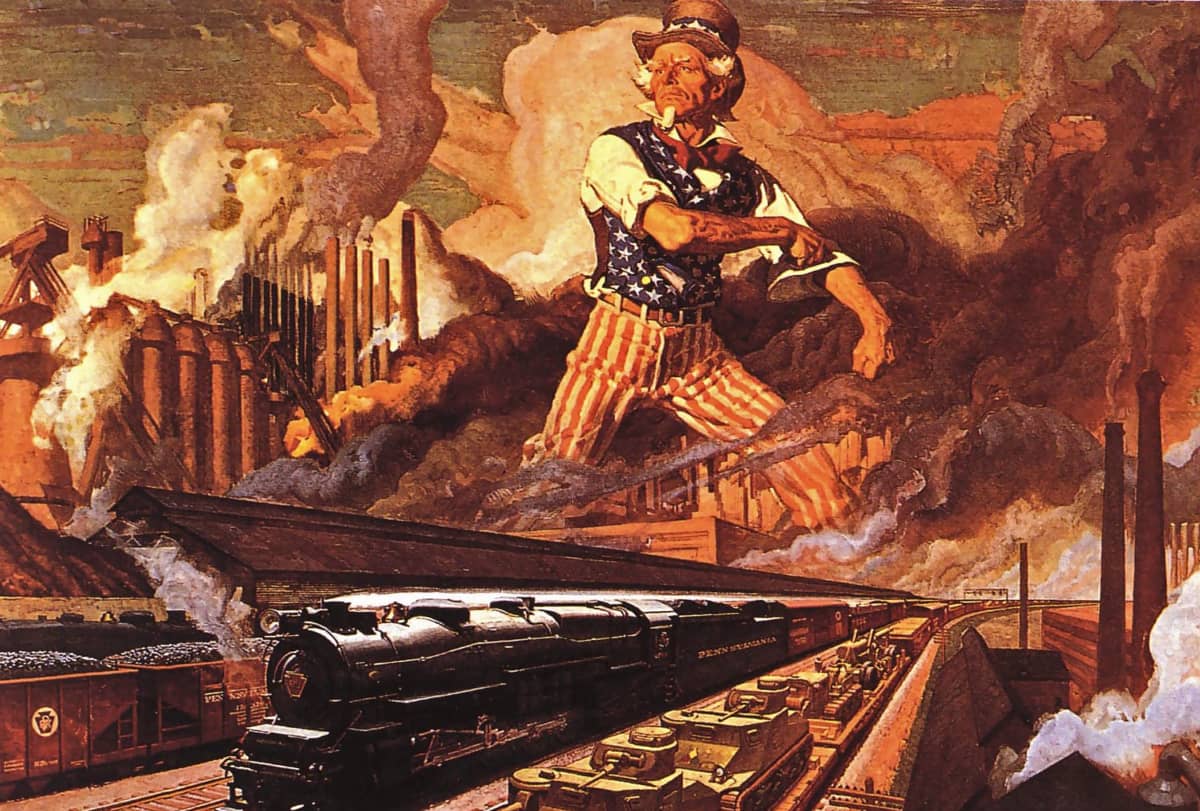
President Biden and populists of both parties are waging a rear-guard action to bar the sale of United States Steel to a Japanese firm. The attempt to thwart the workings of free-market capitalism is ideological. This is not to say that the fall of a titan of American industry like U.S. Steel should be shrugged off or cheered. Itâs a moment to mark how Americaâs rivals â especially Communist China â tilt the rules of global trade to their advantage.
The deal warrants âserious scrutiny,â is the warning from Mr. Bidenâs economic adviser, Lael Brainard, over risks to ânational security and supply chain reliability.â Thatâs window-dressing for Mr. Bidenâs drive to placate labor unions. The sale is âabsolutely outrageous,â Senator Fetterman says, vowing to protect union steel labor. GOP members of an emerging neo-protectionist faction in the Senate are balking, too.
Senators Vance, Hawley, and Rubio urge Secretary Yellen to deploy a federal trade agency to stop the sale in its tracks as a matter of ânational security.â These solons seem to think itâs still 1944 and we are still at war with the Empire of Japan. Plus, too, at a time when America is âcourting direct investment from Japan,â the FTâs Leo Lewis notes, and âpushing the âfriendshoringâ of supply chains,â sowing âmistrust of Japan is a perversely odd strategy.â
Itâs also hypocritical, Mr. Lewis observes, since America has long urged Japanese firms âto apply more aggressively profit-driven, shareholder-first standards,â and not close themselves off from foreign investment. One can view the sale of U.S. Steel to a more successful foreign rival as a case study in how free markets work. Yet America only benefits from capitalismâs creative destruction when international rivalry takes place on a level playing field.
In the steel industry, the market has been warped on both sides of the border. Protectionists here, the Wall Street Journal notes, âmiss the irony that their tariffs and industrial policyâ led to âthe foreign takeover of an iconic U.S. manufacturer.â The Journal editors note how federal overspending on âpublic works and green energyâ has been âgoosing domestic demand for steelâ even as âtariffs protect U.S. manufacturers against foreign competition.â
Much of that competition, though, is from China, which deploys its steel industry as an instrument of state policy â a far cry from how free markets are supposed to work. American steelmakers have long decried how Beijing subsidizes its domestic steel industry âin the form of an undervalued currency,â the Congressional Research Service observes, âexport rebates and/or quotas,â and state-aided financing. No wonder China is now the worldâs top steelmaker.
As President Trump put it, China âis cleaning our clock right nowâ when it comes to steelmaking and other foundations of Americaâs former industrial might. Decades of failure to stop Chinaâs trade and currency manipulation is bearing fruit in the form of lost jobs and a hollowing out of our once-great manufacturing heartland. Yet the steel industryâs woes canât be pinned entirely on China, as columnist Salena Zito, based at Pittsburgh, writes.
Americaâs steel industry, Ms. Zito notes, has been ailing for decades. As far back as 1983, the jobless rate at Steel City hit 18 percent, she points out, as firms like U.S. Steel reeled from a collapse in domestic steelmaking, âcrippled by automation, trade, union strife, inattention to emerging technology, and poor corporate leadership.â U.S. Steel in particular, economists say, failed to keep up with innovations and lost ground to more nimble rivals.
Even so, Ms. Zito laments steelâs decline. She observes that young people who have never âwalked into a millâ still grasp âthe idea that when you did,â there was a sense of being âpart of something that was bigger than yourself: You were part of the building of America.â Suspending the rules of capitalism to save U.S. Steel would be a hollow victory. Getting our steel industry back on its feet will require overhauling the terms of our trade ties with China.