Why President Trump Has Ample Authority To Deploy the National Guard
To plumb that question we called the sage who knows more about the militia clauses and related issues than but a handful of sages.
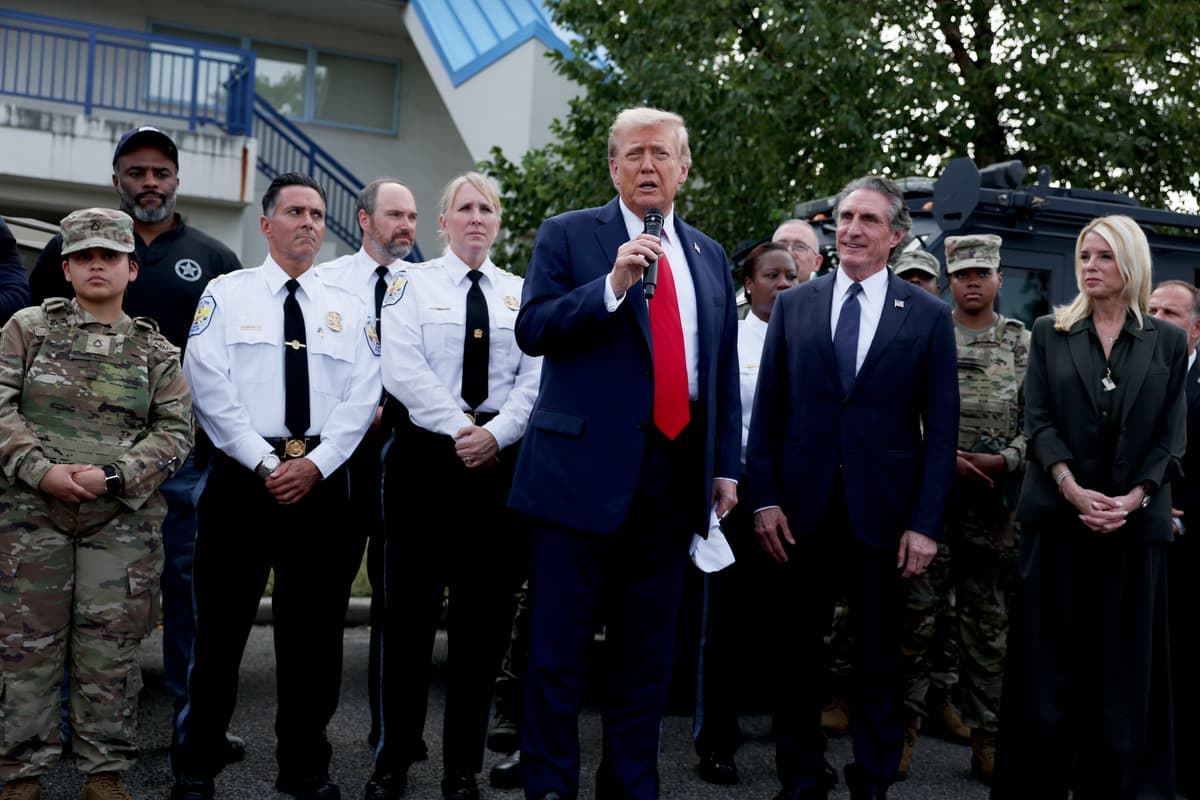

As President Trump girds for an escalating battle in the courts over his authority to deploy the National Guard to quell disorder in American cities, we put in a call to attorney Edwin Vieira Jr. A constitutional scholar of the first water, Mr. Vieira knows more about the parchmentâs militia clauses than but a handful of sages. He reckons Mr. Trump has ample legal authority, as the president deems fit, to deploy the state troops in furtherance of law and order.
That, to be sure, could come as news to the federal judge at Los Angeles, Charles Breyer, who today held that Mr. Trump lacks this power. Judge Breyer, brother of the quondam Supreme Court justice, Stephen Breyer, balks that âCongress spoke clearly in 1878 when it passed the Posse Comitatus Act,â barring the use of the military as police. Yet that law was enacted to stop federal troops from protecting blacksâ civil rights in the former Confederacy.
Judge Breyer, nominated to the federal bench by President Clinton, frets, too, that Mr. Trump intends âto call National Guard troops into service in other cities across the country,â and create âa national police force with the President as its chief.â The case looks likely to return to the riders of the Ninth Circuit, which in June reversed Judge Breyerâs order that Mr. Trump cede control of the National Guard troops to the Coast governor, Gavin Newsom.
The circuit riders found that Mr. Trump had authority under Section 2406 of Title 10 of the United States Code to federalize when needed the National Guard to âexecute the laws of the United States.â Mr. Vieira, too, points to provisions in Title 10 like Section 253, say, which lets a president use âthe militia or the armed forcesâ to âtake such measures as he considers necessary to suppress, in a State, any insurrection, domestic violence,â or âconspiracy.â
Presidential power under Section 253 can be invoked, the law says, if the disorder âso hinders the execution of the lawsâ that âany part or class of its people is deprived of a right, privilege, immunity, or protection named in the Constitution and secured by law.â As Mr. Vieira tells us, âa specific authorizationâ like the provisions found in Title 10 of the federal code âoverrides a general prohibitionâ like the Posse Comitatus Act.
Judge Breyerâs hostility toward Mr. Trumpâs efforts to maintain law and order could well reflect a broader confusion, not limited to the judiciary, over the National Guardâs legal status. The Guard is often seen as an evolution of the militias referenced in the Constitution, which gives Congress power to organize and arm the state forces. To the president is granted power to act as commander in chief of the militias âwhen called into the actual service of the United States.â
Yet the actual legal basis of todayâs National Guard, Mr. Vieira tells us, can be found in Article I, Section 10 of the Constitution, which says that âNo State shall,â without Congressâs approval, âkeep troopsâ in âtime of peace.â After Congress in 1903 put in place the lineaments of the modern National Guard, the secretary of war, Elihu Root, said that Americaâs âoriginal militia systemâ had not only ânever worked,â but had become âa dead letter.â
Hmmm, as in hubris. The state-based forces were set up on a volunteer basis to avoid what Justice Joseph Story called the publicâs distaste for âany system of militia discipline.â In 1903, Root, citing Article I, Section 10, congratulated the guard on being ânow, probably for the first time, unquestionably a constitutional force.â That, as Mr. Vieira suggests, offers the clearest legal lens to view Mr. Trumpâs use of the state-based troops to restore law and order.
Mr. Vieira tells us that, presuming Mr. Trump âis following the correct statutory and constitutional procedures,â the âlegality of what heâs doing has already been decided by the Supreme Court in Martin v. Mott.â In that case from 1827, the Nine held that power to call up the militia âis exclusively vested in the President.â The precedent, avers Mr. Vieira, âabsolutely precludes anyone from second-guessing or interfering with the presidentâs actions.â