‘You Have To Adapt’: Sweden Joins Growing List of European Nations Seeking Bans on Islamic Burqas, Niqabs in Public

Sweden has maintained a more permissive approach to religious dress than many European neighbors, but that consensus now appears to be fracturing.

Peter Macdiarmid/Getty Images
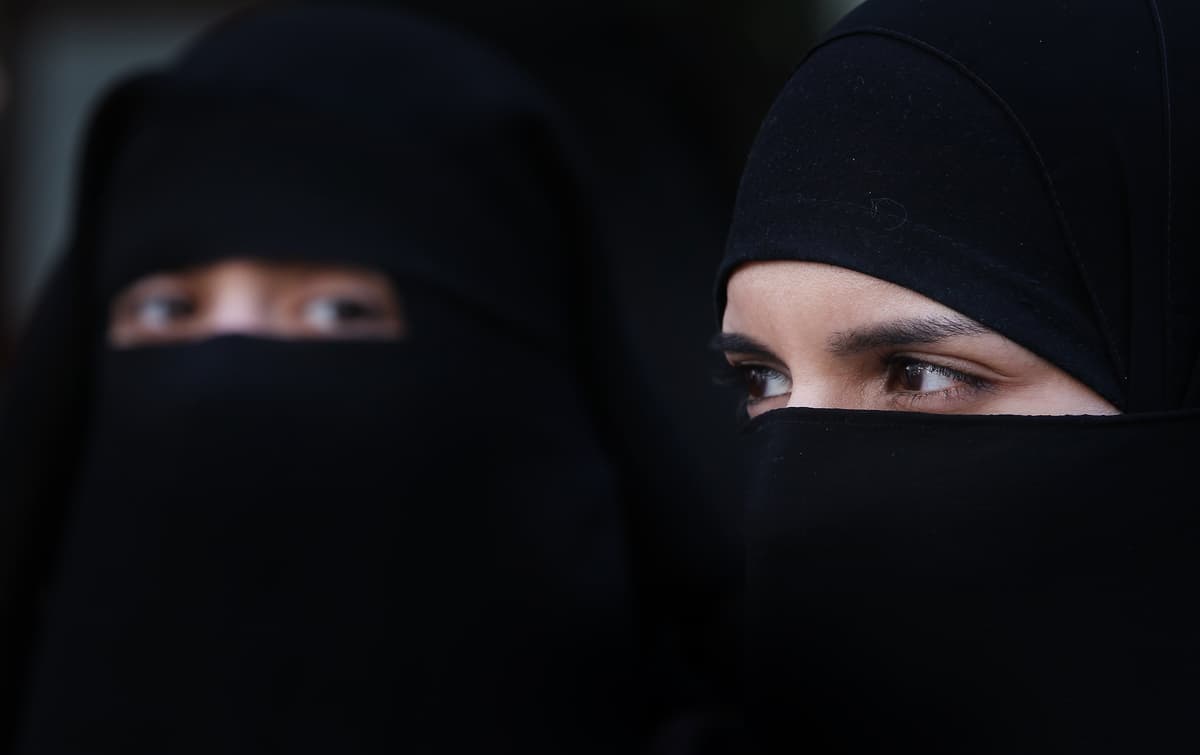
Two women wearing Islamic niqab veils stand outside the French Embassy during a demonstration at London, England. Peter Macdiarmid/Getty Images

A growing number of European countries are moving to ban face-covering Islamic garments in public spaces, with Sweden poised to be the next government to reject immigrant traditions it views as incompatible with European liberal values.

Sweden would join Denmark, France, Belgium, Austria, and Switzerland, all of which have enacted similar legislation in recent years. These countries have variously cited security concerns, social cohesion, and women’s rights as justifications for their bans.

Italy is also on track to impose a similar ban. Last week, Prime Minister Giorgia Meloni introduced legislation prohibiting face-covering garments in public spaces, including shops, schools, and workplaces. Violators could face fines ranging from 300 to 3,000 euros, or the equivalent of $350 to $3,500. Ms. Meloni and her right-wing Brothers of Italy party framed the bill as countering “Islamic separatism” within the country.

Sweden’s deputy prime minister, Ebba Busch, is calling for a comprehensive prohibition on face-covering garments in public areas, declaring that the government must act “while we can.” 

The Christian Democrats party leader announced her position in an interview with a Swedish newspaper, Aftonbladet, arguing that face-to-face interaction is fundamental to Swedish society. Ms. Busch characterized the burqa, which fully covers both body and face, and the niqab, which leaves only the eyes visible, as incompatible with core Swedish principles.

“You are very welcome to be a Muslim in Sweden, but not in the way that Islam is practiced in Iran and Afghanistan,” Ms. Busch stated. “I don’t want to bring more totalitarian Islamists here. They are not welcome here in the future and you have to adapt if you are already in the country.” 

Critics of burqa and niqab bans argue that such legislation restricts freedom of religion. While Ms. Busch recognizes that Sweden has “many freedoms that sometimes conflict with each other,” she argues that the belief “that men and women are of equal value is something that is absolute. It is a fundamental Swedish value that we cannot compromise on.” 

The proposed ban forms part of a broader initiative for “increased social cohesion” developed by the Christian Democrats ahead of their party convention this fall. Ms. Busch argues that Sweden’s “naive liberalism, or lax social policy,” has brought the country to its current state of what she describes as “failed integration.”

Debates about integration and religious expression have intensified as Sweden has experienced substantial Muslim immigration over recent decades. The Muslim population in Sweden has grown to an estimated 8 to 10 percent of the population from virtually nothing in the mid-20th century. 

In 2015 alone, the country received more than 162,000 asylum seekers — the highest per capita rate of any European nation at the time. The majority were Muslims fleeing the Syrian civil war and conflicts in Afghanistan and Iraq. 

Historically, Sweden maintained a more permissive approach to religious dress than many European neighbors, but that consensus now appears to be fracturing. 

The ban has attracted support beyond Ms. Busch’s Christian Democrats. Sweden’s Liberal Party leader, Simona Mohamsson, who serves as minister of education and integration, denounced the burqa and niqab as “oppressive garments based on the idea that women should not be visible in public space.” She emphasized the government’s responsibility to “tackle oppression in the name of religion.”

The Christian Democrats will vote on the proposal during their national congress in mid-November.


The New York Sun

© 2025 The New York Sun Company, LLC. All rights reserved.

Use of this site constitutes acceptance of our Terms of Use and Privacy Policy. The material on this site is protected by copyright law and may not be reproduced, distributed, transmitted, cached or otherwise used.

The New York Sun

Sign in or  create a free account

or
By continuing you agree to our Privacy Policy and Terms of Use