A Potential End to Israel’s Two-Year Hostage Crisis Appears as Negotiators Prepare for Peace Talks in Egypt

Hamas has agreed to return the hostages but says locating the whereabouts of the living and dead requires Israel to cease its offensive at Gaza City.

Jack Guez/Pool Photo via AP
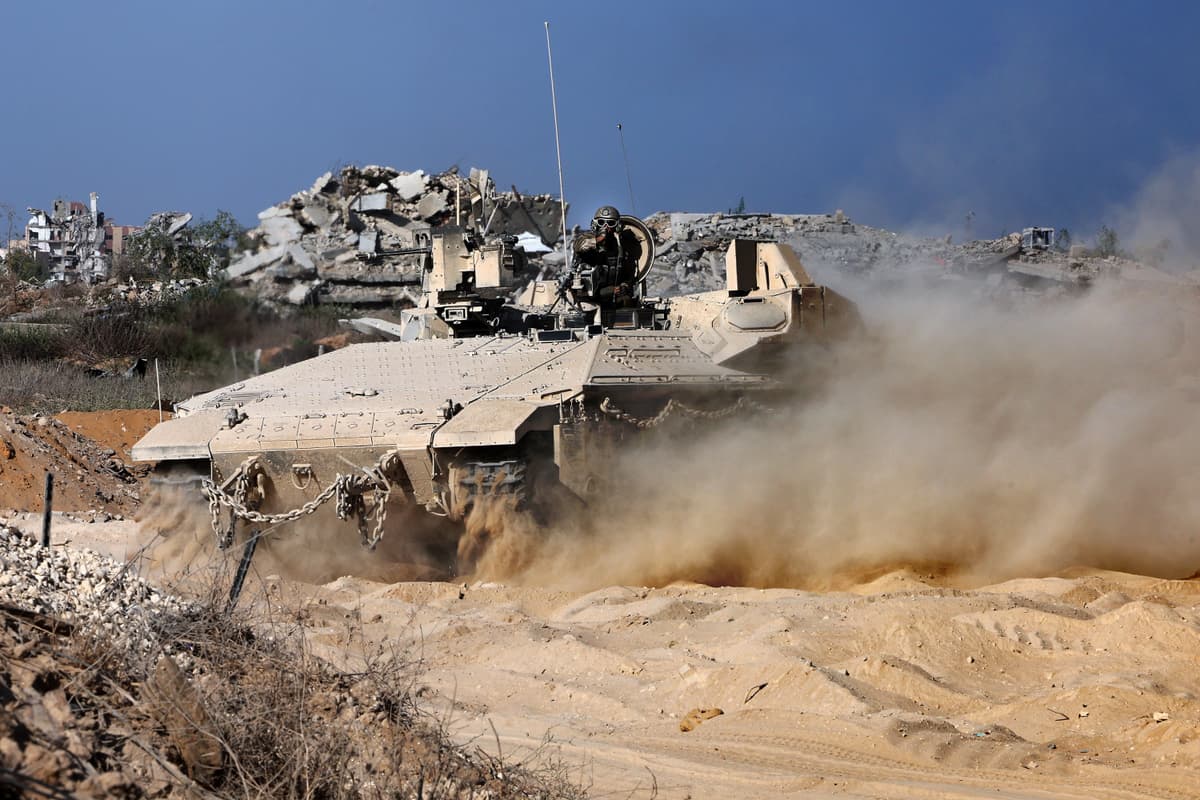
An Israeli army vehicle maneuvering at a position in the vicinity of the Jordanian Field Hospital at Gaza City. Jack Guez/Pool Photo via AP

As Israeli and Hamas negotiators prepare to meet Monday in Cairo, backroom negotiations are already underway to address the centerpiece of President Trump’s proposed peace plan — return of the remaining 48 Israeli hostages, now held captive one day shy of two years.

Without the return of all 20 living and 28 presumed dead, Israel will not move forward on the remaining aspects of the 21-point peace deal proposed by Mr. Trump, Prime Minister Netanyahu told family members of Israeli hostages on Sunday.  

He also warned that the return must be within a set timeframe, purportedly 72 hours of the agreement to be hashed out at the indirect talks. If Hamas delays — it is demanding the release of 250 Palestinian prisoners with life sentences and 1,700 people detained since the war’s start, including key terror leaders — Israel will resume its military operations at Gaza City, purportedly with America’s full-throated support.

Mr. Netanyahu held lengthy talks Sunday evening with the negotiating team he is sending to Sharm el-Sheikh in Egypt’s southern Sinai. The delegation is being led by his lead hostage negotiator and strategic affairs minister, Ron Dermer.

With a fixed timeline for the hostages’ release, Israeli troops remained in Gaza City on Sunday, even as it slowed its offensive. The Israel Defense Forces’ chief of general staff, Lieutenant General Eyal Zamir, said troops will remain stationed and on alert until a political deal is reached. 

“The operation is not over; we must remain alert and ready for combat at all times,” General Zamir told Israeli forces at the Netzarim Corridor on Sunday.

Hamas negotiators arrived in Egypt late Sunday ahead of the talks, which will eventually turn to the administration of a Gaza united with the West Bank under leadership free of the terror group. Hamas maintains a teetering grip on the final 20 percent of land in the strip. 

In an ominous sign for any potential agreement, Hamas leaders reportedly said Sunday that the group will not disarm and surrender its weapons to a Palestinian-Egyptian entity overseen by international monitors. Hamas insists it has a right to armed resistance under international law, and is describing media reports saying otherwise as false. 

“Some media platforms and websites circulated allegations attributed to a Hamas source on Al-Hadath TV, in which he claimed that the movement agreed to gradually hand over weapons under international supervision. We affirm that this news is untrue and baseless,” the group wrote on its Telegram channel, which is banned in the United States.

As protests for and against Israel were held around the world Sunday in advance of Tuesday’s second anniversary of the October 7 massacre — and more were planned for the week ahead — Secretary of State Marco Rubio said the only issues on the table Monday are how to pause the fighting to get the hostages out, who will turn them over, and where and when the handoff will happen. 

“Look, we’re dealing with Hamas. Okay. So let’s take that for what it is. But they have said that they agree with the president’s framework for the release of the hostages. So what those talks should be about … is the logistics,” Mr. Rubio said on Sunday. “That’s what this conversation should be about at this point.”

If the sides can negotiate a handoff, the rest of President Trump’s plan will come next, he said. Though Hamas agreed to release its captives and a ceasefire, transfer of administrative control of Gaza to independent Palestinian technocrats monitored by Arab and Islamic partners, amnesty for its leaders, deployment of regional peacekeepers, and Palestinian statehood have yet to be addressed. 

“That’s the part that I think is going to be a little tougher to work through, but that’s what’s going to provide permanency to the end of the conflict,” Mr. Rubio told ABC’s “This Week.”

In his last public statement on the situation, President Trump told CNN’s Jake Tapper in a text message that should the hostage release falter, it will mean “complete obliteration” of Hamas.


The New York Sun

© 2025 The New York Sun Company, LLC. All rights reserved.

Use of this site constitutes acceptance of our Terms of Use and Privacy Policy. The material on this site is protected by copyright law and may not be reproduced, distributed, transmitted, cached or otherwise used.

The New York Sun

Sign in or  create a free account

or
By continuing you agree to our Privacy Policy and Terms of Use