A Time for Choosing as ‘Chairman’ Trump Takes Stakes in Private Industry, Earning Cheers From Bernie Sanders
‘It’s called business,’ the president says of the approach of giving Uncle Sam ownership stakes in major firms.

One year ago at the Economic Club of New York, Donald Trump confronted a roomful of businessmen and billionaires with a choice: Line up behind him and “freedom” in the coming election or brace for the coming “communism” that “Comrade Kamala” would surely deliver as president.
He won, she lost, and while the Biden-Harris administration never dared to nationalize industry, the second Trump administration has. The great taking, where the federal government takes a stake in private companies, has commenced.
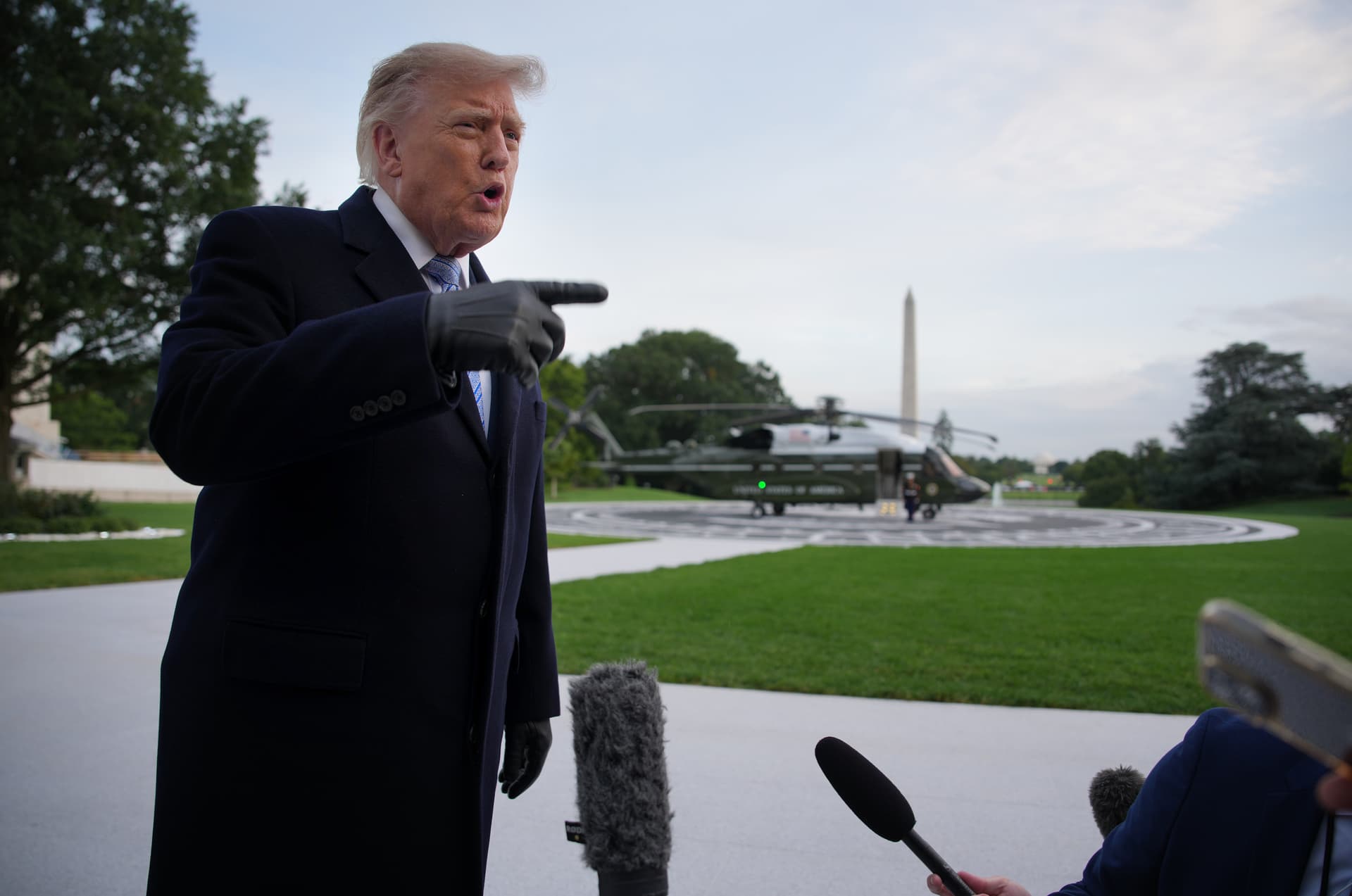
Intel, the once mighty but now beleaguered Silicon Valley giant, agreed to sell the federal government 10 percent of its shares last week, marking the most significant state intervention in private business since the Great Recession and the largest ever orchestrated by a Republican administration outside times of crisis. At the White House Monday, President Trump told RealClearPolitics that Intel was just the start.
“I hope I’m going to have many more cases like it,” the president said. Addressing his critics, he added, “You do have stupid people say, ‘Oh, that’s a shame.’ It’s not a shame. It’s called business.”
And the new kind of federal business has been booming.

Before his Intel agreement, Mr. Trump closed two deals with Nvidia and Advanced Micro Devices that allow those chipmakers to sell advanced AI tech to China in exchange for 15% of the revenue generated from American exports.
Earlier in the summer, he blessed a deal allowing Japan’s Nippon Steel to purchase United States Steel in exchange for a “golden share” granting the federal government vast authority over the corporation. His administration also entered a less noticed 10-year agreement with an American corporation developing rare earth minerals, MP Materials, in exchange for the purchase of $400 million in the company.
Mr. Trump, asked if he was engaging in the kind of behavior he had warned against on the campaign trail, pointed to what had been Republican heterodoxy until recently: Tariffs.
His favorite economic tool, said the president, had lowered trade deficits, made the Treasury flush with cash, and even helped him negotiate an end to wars the world over. “So that’s not normal either,” he concluded. “But you know what? Other countries did it to us, and now we’re doing it to other countries.”
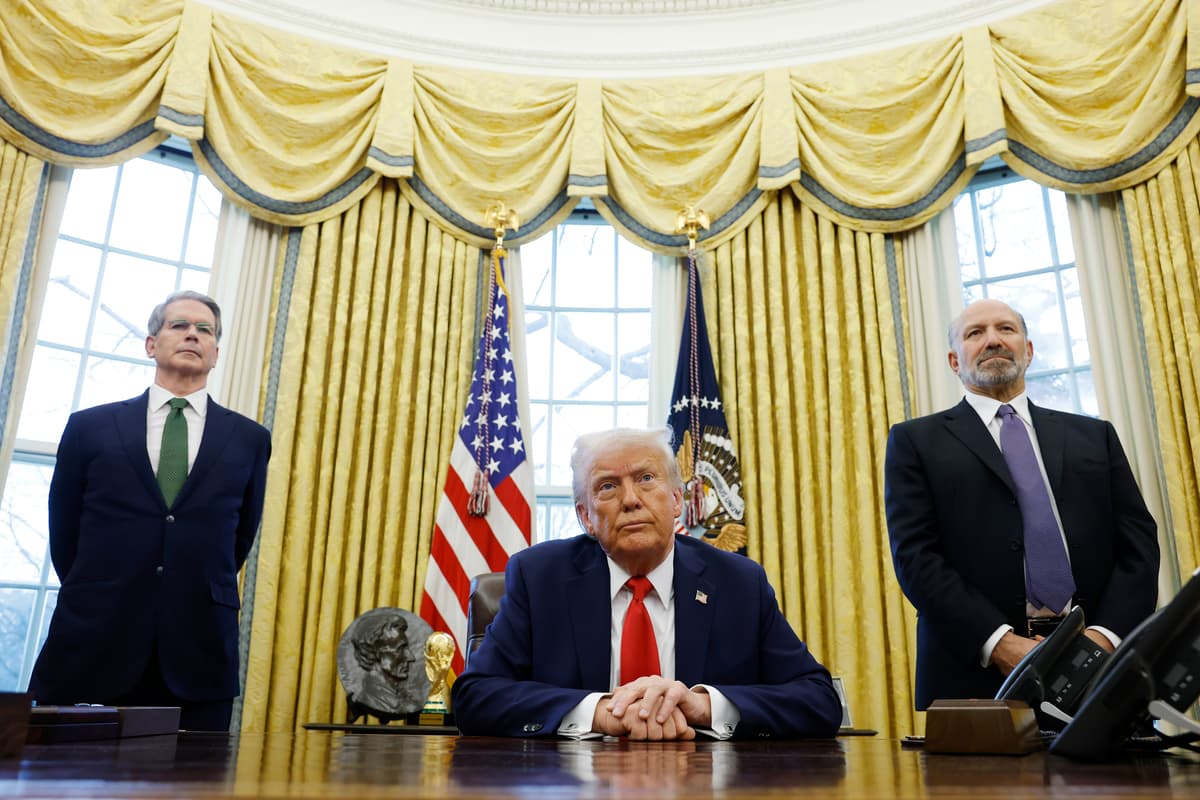
Mr. Trump himself now directs the new industrial policy of the United States. In the last eight months, the Oval Office has been transformed into a trading floor of sorts, with American chief executives and foreign leaders alike seeking audiences with the president to negotiate directly. He has reordered not just the Americaneconomy, but also longstanding GOP orthodoxy in the process.

Governor Gavin Newsom of California pounced on the irony of a Republican president meddling in the markets. In a mocking social media post, complete with a picture of Trump next to the flag of the Soviet Union, the Democrat wrote, “ALL HAIL CHAIRMAN TRUMP! WITH HIS GLORIOUS 10% PURCHASE OF INTEL, THE SOCIALIST REPUBLIC OF AMERICA ENTERS A BOLD NEW ERA OF GOVERNMENT-RUN BUSINESS.”
An unintended consequence of the new industrial policy is a role reversal on Capitol Hill. Democrats now accuse Republicans of harboring socialist tendencies.
“After ridiculously accusing numerous Democrats of being ‘communists,’ Trump has sought to bully, manage, or even seize government ownership stakes in leading American companies,” said Representative Don Beyer of Virginia, the ranking Democrat on the Joint Economic Committee.
Combined with Mr. Trump’s tariff regime and his effort to fire members of the Federal Reserve, Mr. Beyer told RCP, “all of this adds up to a command economy that incentivizes corruption and graft, hurts growth, costs American jobs, and raises prices.”
Condemnation from the left hasn’t been universal. Senator Bernie Sanders of Vermont, a democratic socialist, said that he was “glad” Mr. Trump had taken a stake in Intel. If private corporations take grant money from the federal government, the senator said in a statement, then taxpayers “have a right to a reasonable return.”

Not long ago, it would have been unimaginable for a Republican president to nationalize private industry. Fears of “socialized medicine” and state expansion fueled the Tea Party during the Obama administration, ushering in Republican congressional majorities on the explicit vow to adhere to limited government principles.
Conservatives never lived up to those promises, but the echoes of that populist movement can still be heard from the current White House that condemns their opponents as “Marxists.”
Yet most Republicans have been muted in their criticism of the takeovers for fear of angering Mr. Trump.
“If socialism is government owning the means of production, wouldn’t the government owning part of Intel be a step toward socialism?” asked Senator Rand Paul of Kentucky, who called the move a “terrible idea.” His colleague, Senator Thom Tillis of North Carolina, who announced he would retire at the end of his term, said the move “starts feeling like a semi state-owned enterprise à la CCCP.”
The deals have forced a time for choosing. “If I was speaking to the president, I’d encourage him: It’s time to think twice,” the former vice president, Mike Pence, told Bloomberg earlier this summer. Reacting to the “golden share” in U.S. Steel acquired by the federal government, he added, “State-owned enterprise is not the American way. Free enterprise is the American way.”
The administration does not appear to be listening. The commerce secretary, Howard Lutnick, told CNBC this week that senior Pentagon officials are exploring whether to acquire equity stakes in major defense contractors like Boeing and Lockheed Martin.

“Come on, let’s take care of the American taxpayer,” Mr. Lutnick later told Fox News. “That is not socialism. I will tell you what that is. That’s the best businessman in the United States of America in the Oval Office doing fair things for us.”
To the delight of more libertarian-minded conservatives, Mr. Trump immediately began cutting bureaucracy and red tape upon returning to office. Yet the president does not appear interested in limited government for constitutional reasons.
Instead, much like the chairman of a corporate board, he has focused on efficiency. Where the free market cannot heal the “American Carnage” that Mr. Trump referenced in his first inaugural address, his administration has shown a willingness to try direct federal investment.
Mr. Trump “has broken open a lot of political, rhetorical and intellectual space. The idea that you can’t have a muscular economic policy as a Republican is well and truly dead,” said the policy director of American Compass, the premier think tank of the New Right, Chris Griswold. The old guard of free market absolutists remains in the party, but they’ve been reduced to a small cadre, and the conversation has shifted.
“The debate isn’t so much ‘big government’ versus ‘small government’ anymore,” Mr. Griswold continued. “It’s about who will solve the urgent problems we face and how.” Rather than the ad-hoc approach Mr. Trump currently favors, he called for the development of “standing capacity” so the federal government can invest in certain industries, such as battery production and chip fabrication, that have been overlooked by private capital and lost to foreign competition.
“An openness to more muscular economic policy does not signal that we’re all socialist now,” Mr. Griswold continued. “Doing this well is in the Hamiltonian tradition of protecting and investing in American industry as a prerequisite to national thriving, strength and economic resilience. That’s not new at all. It’s the American system.”
Notably, though, Alexander Hamilton advocated for protective tariffs and subsidies to foster economic growth, not state ownership of private enterprises. More recently, leaders of the New Right, like the former senator, Marco Rubio, advocated for a common-good conservativism where government directed the free market to desired outcomes through a series of incentives, not outright ownership.

Mr. Trump, however, has accelerated the debate. The argument generally breaks down along two lines on the right. There are those who see in government the ability to ease some of the destabilization brought on by increased globalization and technological advancements of the free market. Others still believe that any cure administered by the federal government would likely end up being worse than the ailment.
“This is not really playing out as an intellectual debate. The camps are not really talking with each other with the intention of changing hearts and minds,” said the chief executive of the Economic Policy Innovation Center, Paul Winfree, who served as deputy director of the domestic policy council during Mr. Trump’s first term. “It’s full of rhetoric and ahistorical statements rather than a coherent methodology and close inspection.”
There has been little public backlash to Mr. Trump’s acquisitions, no Tea Party demonstrations about the size and scope of government. Other than a few editorials by the business-friendly Wall Street Journal editorial board, the protest has been muted.
“That makes me wonder about the long-run viability of the historical alliance that has been the backbone of the conservative movement,” said Mr. Winfree. “In other words, I don’t really know if the movement exists anymore or not.”
This article was originally published by RealClearPolitics and made available via RealClearWire.