Accused Fentanyl Dealer Sues Over Trump’s ‘Unlawful’ Appointment of Alina Habba as Top Prosecutor: Suit Could Cause Chaos in New Jersey

The 47th president is increasingly leaning on ‘acting’ prosecutors, which could make thousands of cases vulnerable to dismissal.
Andrew Harnik/Getty Images
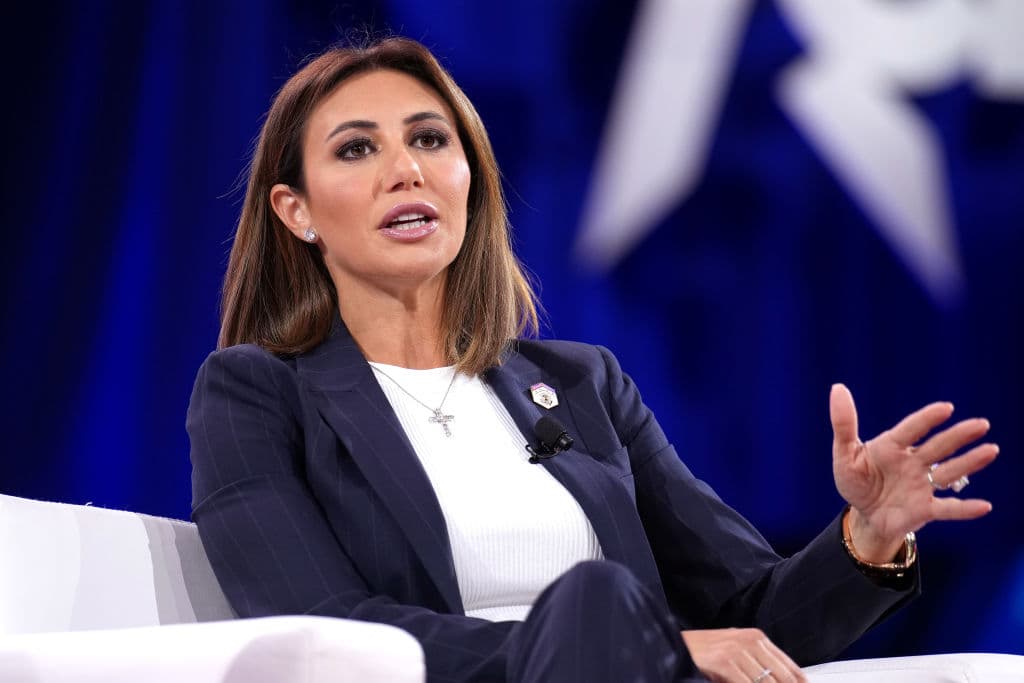
Alina Habba speak during a panel discussion at the Conservative Political Action Conference, February 20, 2025 at Oxon Hill, Maryland. Andrew Harnik/Getty Images

The challenge by two New Jersey criminal defendants, Julien Giraud Jr. and his son Julien Giraud III, to the appointment of a loyalist of President Trump, Alina Habba, as acting United States attorney for the Garden State could in short order reach the Supreme Court.

The Girauds, who are to stand trial on charges of dealing fentanyl, as well as gun charges, contend that Ms. Habba “holds office unlawfully” and that her prosecutorial authority is “unconstitutional.” They seek to dismiss the indictment or injunctive relief “barring Ms. Habba, or any Assistant United States Attorney acting under her purported authority, from exercising further prosecutorial powers.”

The defendants argue that “all subsequent prosecutorial actions taken by Ms. Habba or any assistant U.S. attorneys relying on her purported authority lack constitutional legitimacy.” If that argument carries weight, Mr. Trump’s growing reliance on interim appointments for vital prosecutorial positions could leave the core functions of the Department of Justice vulnerable to challenge.

The DOJ, in a filing in response to the Girauds’ challenge, maintains that “Ms. Habba is validly serving as the Acting United States Attorney.” The government argues that even if Ms. Habba is “not eligible to serve as the Acting U.S. Attorney, there would be no basis for dismissing this indictment” because she “could still supervise this case” under the “delegated authority” of Attorney General Bondi. She was confirmed by the Senate. 

Mr. Trump had nominated Ms. Habba to be the permanent United States attorney for New Jersey, but her path to a confirmation hearing is being blocked by the Garden State’s two Democratic senators, Andy Kim and Cory Booker. Both of them have used their “blue slip” to block Ms. Habba from coming to a vote. Mr. Trump first appointed Ms. Habba interim United States attorney, a position that expired after 120 days. 

Ms. Habba has drawn the ire of Democrats because of her high-profile prosecutions of two members of their party — Mayor Ras Baraka of Newark and Congresswoman LaMonica McIver. The charges against Mr. Baraka have been dropped, but the assault case against Ms. McIver is ongoing. She has pleaded “not guilty,” but could serve years in prison if convicted.

Federal law, though, mandates that after 120 days federal judges can vote to veto such interim appointments, and can instead appoint their own temporary choices. The judges of New Jersey, 15 of 17 of whom were appointed by Democratic presidents, did just that — and appointed their preferred candidate, Desiree Leigh Grace. She was serving as Ms. Habba’s deputy. The DOJ promptly fired Ms. Grace. On Thursday Senator Lee of Kentucky introduced a bill aiming to undo the veto power that the law affords to judges. 

For the moment, though, that law is on the books, and so Ms. Bondi withdrew Ms. Habba’s nomination and instead named her acting United States attorney, which carries a term of at least 210 days, and maybe more. The DOJ insists, “Ultimately, the President has both constitutional and statutory authority to remove from office any U.S. Attorney … and to replace that person, either himself or acting through the Attorney General, with someone he believes better suited to fulfill that role, for a temporary period.”

Main Justice reckons, “Whether or not Ms. Habba technically qualifies as Acting United States Attorney, the Attorney General has validly delegated to her the authority to supervise all pending prosecutions and other matters in the USAO-NJ.” The government acknowledges that a nominee for United States attorney cannot also be an acting United States attorney, but notes that Ms. Habba’s confirmation has been pulled.

The defendants argue that Ms. Habba’s erstwhile nomination to the permanent position blocks any future appointment as an acting United States attorney.  The DOJ counters that nothing indicates that “the mere fact of a past nomination for an office — withdrawn by the President and never considered or acted upon by the Senate — forever bars an individual from serving in that capacity on an acting basis.” 

The turmoil at the New Jersey’s federal prosecutors’ office has, according to the Times, caused legal business there to “screech to a halt,” with pretrial conferences and hearings delayed and grand jury meetings canceled. A similar drama has played out in upstate New York, where federal judges rejected Mr. Trump’s choice for interim United States attorney, John Sarcone.

A defiant Ms. Bondi — she cited Article II of the Constitution, the portion that details the power of the executive — named Mr. Sarcone “special attorney to the attorney general” on an “indefinite” basis. Mr. Sarcone is now effectively acting United States attorney, the same position now held by Ms. Habba in New Jersey. The top prosecutor in the Southern District of New York, Jay Clayton, is serving on an interim basis. This week Ms. Bonidi named acting United States attorneys at Las Vegas and Los Angeles.

There is precedent for the disqualification of a prosecutor resulting in the dismissal of charges. Judge Aileen Cannon in South Florida ruled last summer that Attorney General Garland unlawfully appointed Special Counsel Jack Smith without Senate confirmation. She dismissed the Mar-a-Lago charges against Mr. Trump and his two co-defendants. The judges at the District of Columbia determined Mr. Smith was lawfully appointed. 

A different course was taken by the Georgia court of appeals after it disqualified for a secret workplace romance the district attorney of Fulton County, Fani Willis, from her prosecution of Mr. Trump and 18 others for alleged election interference. The appellate court, though, declined to dismiss the charges, calling that move “extreme.”


The New York Sun

© 2025 The New York Sun Company, LLC. All rights reserved.

Use of this site constitutes acceptance of our Terms of Use and Privacy Policy. The material on this site is protected by copyright law and may not be reproduced, distributed, transmitted, cached or otherwise used.

The New York Sun

Sign in or  create a free account

or
By continuing you agree to our Privacy Policy and Terms of Use