

Actor Peter Sellers, Something of a Chameleon When It Came to Impersonation, Is Being Celebrated at Film Forum
Not all of the offerings are top quality in ‘100 Years of Peter Sellers: From Britcoms to International Icon,’ but the series will give movie fans a good chance to reassess the actor’s career.
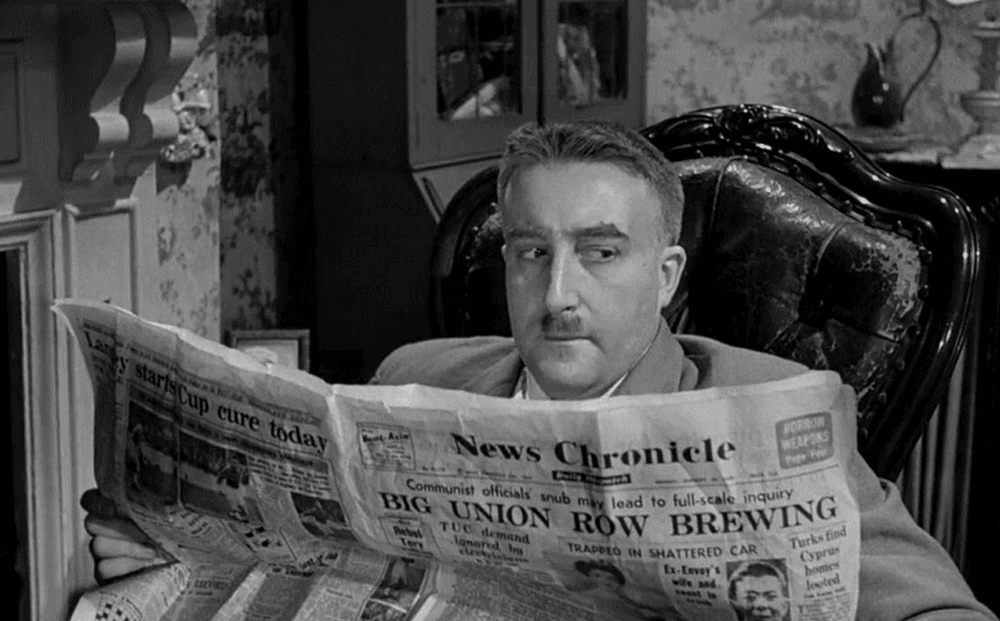
You never can tell with art. Take Blake Edwards’s “The Party” (1969), a movie that will be included in an upcoming series at Film Forum, “100 Years of Peter Sellers: From Britcoms to International Icon.” Edwards’s comedy did not sit well with the people of India or, at least, some of its more voluble members.
Peter Sellers’s portrayal of Hrundi V. Bakshi, a bumbling but sweet tempered actor from India who inadvertently finds himself amongst a cadre of Hollywood elites, was seen as a demeaning caricature. The government of then prime minister, Indira Gandhi, saw fit to ban the release of the picture.
The thing is, Gandhi was a fan of “The Party.” She held special screenings of the film — for impressionable young children, no less — and took particular notice of Hrundi’s response to the bullying question of an American film producer, “Who do you think you are?” To which Sellers’s fish-out-of-water responds, “In India, we don’t think who we are, we know who we are.” Still, the prime minister capitulated to elite opinion.
The filmmaker Satyajit Ray wasn’t thrilled by Sellers in “The Party,” but did admire his turn as Dr. Ahmed el Kabir in Anthony Asquith’s “The Millionairess” (1960), and thought him more than capable of playing an Indian character. A planned collaboration between the two, “The Alien,” fell apart due to a variety of factors, not least Sellers’s ego: He wanted more screen time than Satyajit’s script allowed for.

Whatever objections a viewer might have about “The Party” are made less pressing when considering the quality of the picture: It’s very bad. On the lone occasion that Edwards and Sellers worked together on a project that wasn’t centered on the inept detective of “The Pink Panther” franchise, Inspector Clouseau, the director proved reliably ham-handed. There have been few auteurs who have worked as strenuously to thwart the possibility of laughter.
Allowing improvisational leeway for his star was something of a mitzvah on Edwards’s part, but how good, really, was the man born Richard Henry Sellers? Even before his death in 1980 at the age of 54, the actor and comedian was highly thought of and eagerly sought out for his chameleonic skills at impersonation. Comparisons to Charlie Chaplin were the rule; “genius” was the go-to descriptor.
Sellers famously essayed three roles in Stanley Kubrick’s “Dr. Strangelove or: How I Learned to Stop Worrying and Love The Bomb” (1960) and was set for a fourth, that of Air Force Major T.J. “King” Kong. Western stalwart Slim Pickens took on the role when Sellers sustained an injury and found it difficult to mimic a Texas accent. Kubrick went on to hire Sellers as a kidnapper and pedophile, Clare Quilty, in “Lolita” (1962), expanding the role beyond the scope of the Vladimir Nabokov novel on which it was based.
The Kubrick pictures remain inescapable as cinematic monuments, but they have their flaws — flaws that are directly traceable to Sellers. If acting is an illusion that takes on the guise of verity, then “Strangelove” and, especially, “Lolita” are hobbled by a creative facility that was, at its basis, self-aggrandizing. Like Alec Guinness, another actor with a talent for mimicry, Sellers invariably set himself apart from the business at hand, flouting an abiding artifice but rarely transcending it. Sellers is particularly insufferable in “Lolita”: how a control freak like Kubrick let an actor’s arrant schtick all but capsize the proceedings is a mystery.
Compare Sellers’s performances in “Strangelove” with those of George C. Scott and Sterling Hayden and you’ll be able to glean the difference between expertly contrived mannerisms and grotesques given life. An early performance as a harrumphing bourgeois Marxist in John Boulting’s “I’m All Right, Jack” (1959) is similarly strait-jacketed and outclassed by less studied comedic talents like Ian Carmichael and Terry Thomas.
Is there a film in which Sellers, a man who famously stated that “there is no me … I do not exist,” truly found himself lost in a role? “100 Years of Peter Sellers” is the place to find out.