Advice From McGovern, Once the ‘Conscience’ of Democrats, on Mamdani’s City-Owned Markets Plan

After the senator from South Dakota left office, he opened a business and learned the lessons Mamdani needs to learn.

AP/Nam Y. Huh
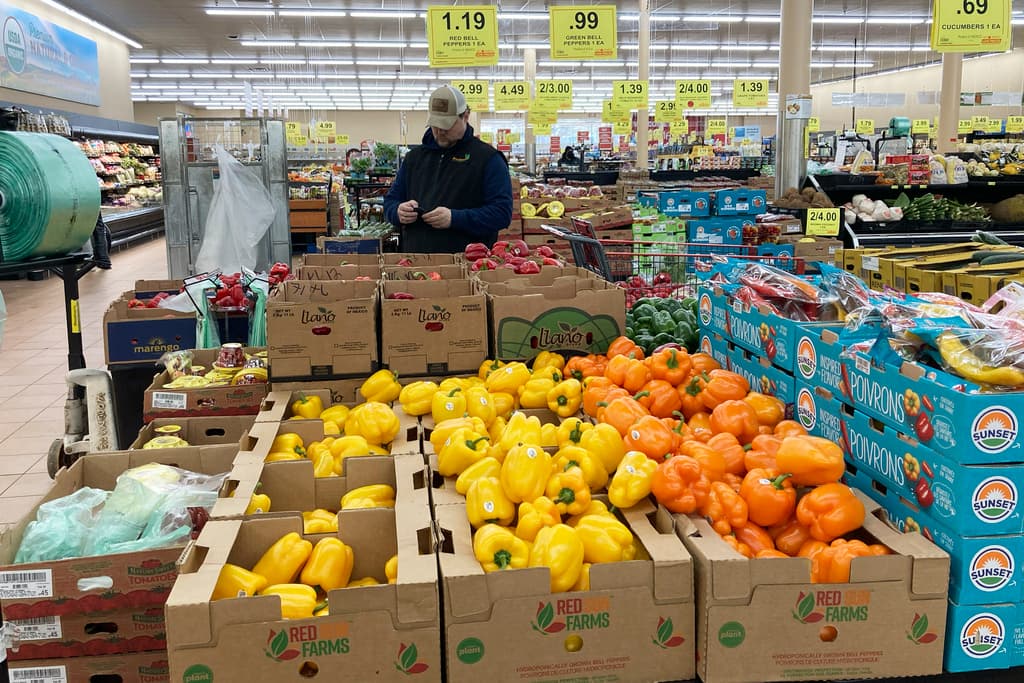
A grocery store at Buffalo Grove, Illinois, March 19, 2023. AP/Nam Y. Huh

The Democratic nominee for New York City mayor, Assemblyman Zohran Mamdani, is pitching city-owned grocery stores to lower “out of control” prices. Capitalists warn it’ll be a socialist boondoggle.

The advice of Senator McGovern, a liberal titan now gone, might do more to persuade Mr. Mamdani that running a business is harder than it looks. Mr. Mamdani proposes a city-owned store in each of New York City’s five boroughs.

The stores would compete with private supermarkets, which rely on “thin margins,” as the owner of the Gristedes and D’Agostino’s chains, John Catsimatidis, wrote in the June 30 Wall Street Journal. Mr. Catsimatidis reckoned that Mr. Mamdani’s proposal would “collapse our food supply” and “kill private industry.” Last month, he told Fox Business that he’ll close or sell his supermarkets if the democratic socialist wins, warning that “nationalized” stores would herald “the bread lines of the old Soviet Union.”

Mr. Catsimatidis called capitalism “the only system that feeds the world.” He warned that “forced takeovers of private enterprise” would drive bodegas, delis, and supermarkets out of business. KC Sun Fresh of Kansas City, Missouri — on the verge of failure due to shoplifting and lost customers — is a cautionary tale.

KC Sun Fresh, the Washington Post reported on Friday, “lost $885,000 last year.” It draws only about 4,000 shoppers a week, down from 10,000 a few years ago, according to the Community Builders of Kansas City’s president and chief executive, Emmet Pierson Jr. The nonprofit leases the site, which was purchased by the city for $17 million in 2018.

Kansas City just gave KC Sun Fresh a $750,000 subsidy, but photographs show empty shelves and deserted aisles. Mr. Mamdani says his markets would operate “without a profit motive,” too, sharing the leftist view that “profit” is a dirty word, and that tax dollars can be spent without needing to show a return on investment.

In 1989, a former senator, George McGovern, who was then an ambassador to the United Nations, shared Mr. Mamdani’s bias until he purchased the 150-room Stratford Inn in Connecticut. “I would like to see,” he told the New York Times for a profile on the purchase, “the inn become an informal arts and conference center.”

Having lost the 1972 election by 49 states, McGovern ran again in the 1984 primaries, assuming the role of an elder statesman dubbed “the conscience of the Democratic Party.” His name recognition made him confident that his hotel venture would be a success.

Instead, the Stanford Inn filed for bankruptcy the year after it opened and closed a year after that. McGovern reflected on the experience in a 1992 op-ed for the Nation’s Restaurant News, shouldering the blame while questioning if the left-wing policies he’d championed were helping to drive up prices.

McGovern said he “lived with federal, state, and local rules that were all passed with the objective of helping employees, protecting the environment, raising tax dollars for schools, protecting our customers from fire hazards, etc.” He didn’t doubt “the worthiness of any of these goals,” but found they’d proved counterproductive.

“A concept that most often eludes legislators,” McGovern wrote, is how the expense of “red tape” and taxes “drive operating costs,” which get passed on at the cash register. He said consumers have “little choice when faced with higher prices,” and those hit hardest are often the people he’d “spent a lifetime trying to help.”

The Stanford Inn “provided a substantial package for our staff,” McGovern wrote. Yet the “costs” of “health care on top of salaries and other benefits” left “no reasonable way for us to absorb or pass on these costs.” The same factors apply to groceries.

“Competition,” McGovern said, “tempers price increases,” and the “‘one-size-fits-all’ rules for business ignore the reality of the marketplace.” He said he wished that “in public office” he’d “had this firsthand experience about the difficulties businesspeople face every day.”

McGovern risked his own money on the Stanford Inn. Before Mr. Mamdani gambles the public’s cash on city-run stores, he’d do well to learn about the profit motive. McGovern said that such knowledge would’ve made him “a better U.S. senator and a more understanding presidential contender.” It would also make Mr. Mamdani a wiser mayor.


The New York Sun

© 2025 The New York Sun Company, LLC. All rights reserved.

Use of this site constitutes acceptance of our Terms of Use and Privacy Policy. The material on this site is protected by copyright law and may not be reproduced, distributed, transmitted, cached or otherwise used.

The New York Sun

Sign in or  create a free account

or
By continuing you agree to our Privacy Policy and Terms of Use