After Decades of Focusing Almost Exclusively on North Korea, American Command in South Korea Is Shifting Resources Toward China: RAND Analyst
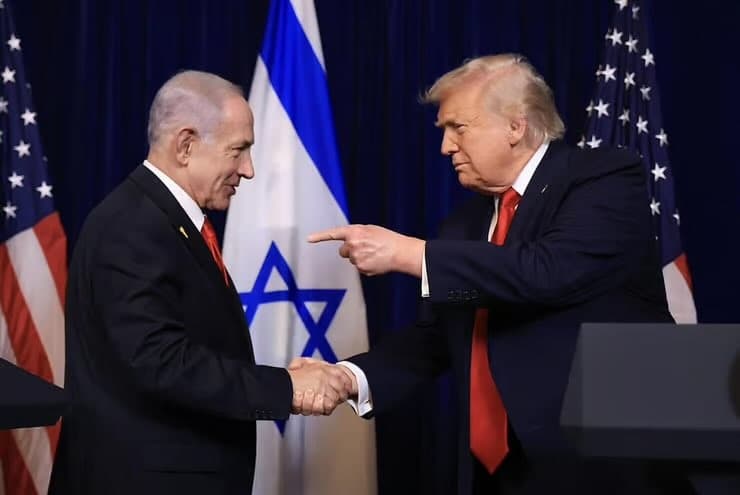
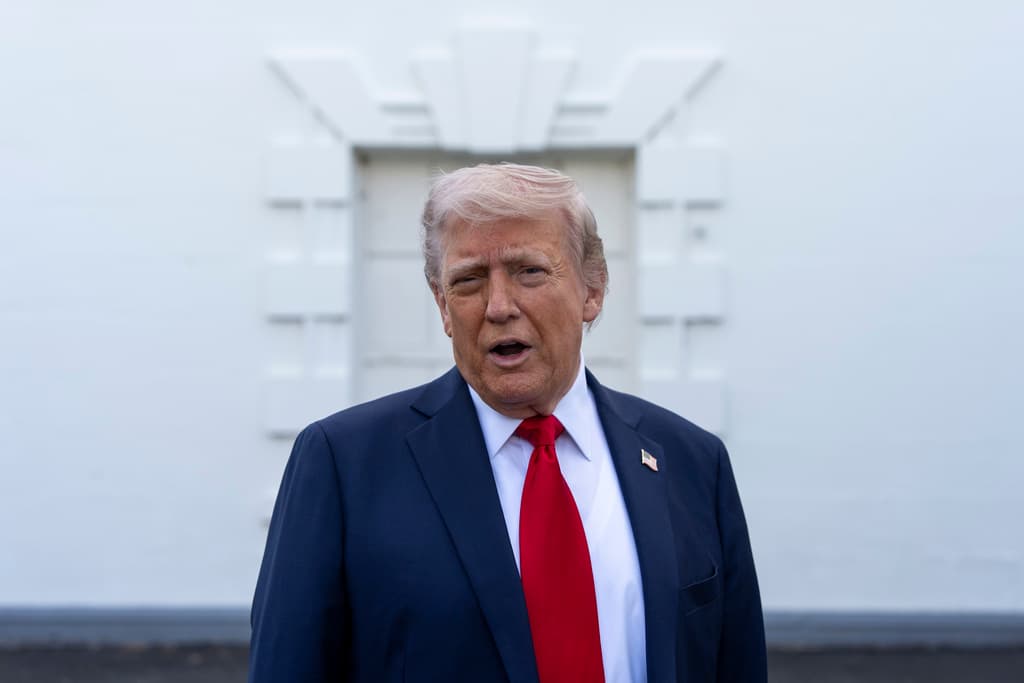
That judgement jibes with the view of President Trump that China represents an existential threat, as seen in the ongoing trade war.

SEOUL — The American command in South Korea is focusing on China almost as much as North Korea even as Pyongyang shifts to “ready-to-use” tactical nuclear weapons, according to a long-time RAND Corporation analyst, Bruce Bennett.
Talking at the annual conference of the Asan Institute for Policy Studies, an influential Korean think tank, Mr. Bennett said the American command here is giving high priority to the Chinese threat after for decades having dedicated its resources almost exclusively to South Korea.
U.S. Forces Korea “has been gradually shifting to the responsibilities of dealing with China,” Mr. Bennett said. “As the U.S. shifts its interests, USFK is prepared to fight China or North Korea.”
That judgement jibes with the view of President Trump that China represents an existential threat, as seen in the ongoing trade war in which Beijing and Washington have been engaging in tit-for-tat tariff increases that threaten the balance of trade of both countries.
Now the fear is that of a shooting war in which China and North Korea, which relies on Beijing for almost all of its oil and much of its food and other essentials, would eventually attack South Korea. North Korea, Mr. Bennett said, is counting on tactical nukes for an attack on the South rather than warheads packing much more explosive power, as it’s not able to miniaturize the latter to attach to missiles.
The North’s relationship with China is an integral aspect of the danger confronting South Korea and its American ally. “We recognize China wants dominance in Asia within the next 15 years,” Mr. Bennett, author of RAND studies on the nuclear strength of China and North Korea, said. “It’s important for us to protect our allies.”
The question is basic, he said: “If China were to intervene, what would they do? You need to be prepared to do things.”
Americans and South Koreans are ringing alarm bells as China appears eager to intensify its military bond with North Korea.
China is widely believed to be responsible for dissuading North Korea’s leader, Kim Jong-un, from testing another nuclear warhead after its sixth test in 2017. China’s president, Xi Jinping, also worries about Mr. Kim’s tight ties with Russia’s president, Vladimir Putin, with whom he agreed to provide arms and men for Russia’s war against Ukraine.
Now, though, bilateral ties “appear to be entering a phase of recovery,” according to a South Korean official quoted by Seoul’s Yonhap News. China’s ambassador to North Korea, Wang Yajun, was quoted as saying China and North Korea’s “blood-forged” relationship had reached “new heights.”
A long-time intelligence analyst with the American command here as well as with the CIA, Sydney Seiler, ruled out the possibility of meaningful talks between Messrs. Kim and Trump after their meetings in 2018 and 2019 failed to get anywhere in persuading Mr. Kim to give up his nuclear program.
For that reason, Mr. Seiler, now with the Center for Strategic and International Studies at Washington, told the Sun, “the issue of South Korea’s nuclear option needs to be talked about as never before” — that is, whether the South should also develop nuclear warheads. “You can’t have an arms control agreement accepting a nuclear North Korea without South Korea having nuclear weapons at all.”
Similarly, “You don’t want to raise expectations about denuclearization,” he added. “Thirty years of negotiations has proven North Korea never had any intention of denuclearizing. … We’ve had every opportunity to move forward with North Korea. They are not interested in good relations.”
Mr. Bennett agreed that South Korea would be justified in matching North Korea as a nuclear power. “A balance of nuclear forces is important to maintaining the security of South Korea,” he said. “The U.S. has been modernizing its nuclear weapons. We recommend that South Korea volunteer to modernize them.”
One name that keeps coming up as the Pentagon turns to China is that of the newly ensconced undersecretary of defense for policy, Elbridge Colby, an outspoken advocate of a tough line vis-à-vis America’s main rival for power in the Indo-Pacific region.
“He would like to be prepared to pivot, to focus not only on North Korea but on China,” Mr. Bennett said. While America worries more about China, Mr. Bennett said he believes “South Korea should tell the U.S., ‘We’ll spend more on equipment and capabilities for North Korea.’”