

After Uproar, German Auction House Cancels Event Featuring Nazi Collectibles, Belongings of Holocaust Victims
The Felzmann auction house outside Düsseldorf agrees to cancel the event after Germany’s foreign minister and the International Auschwitz Committee interject.
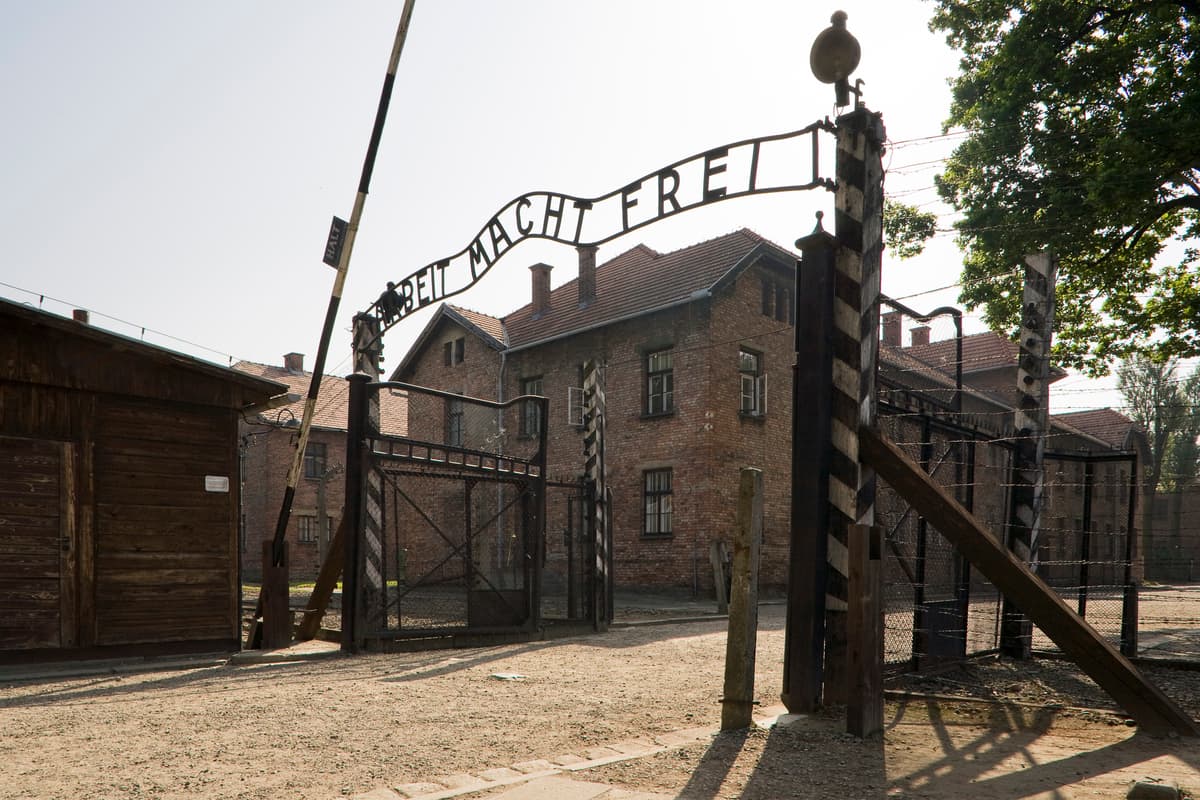
An auction of the morbid — Nazi paraphernalia, stars of David, and other items owned by Holocaust victims — will not proceed Monday after Germany’s foreign minister and the International Auschwitz Committee interceded with the auction house scheduled to host the event.
The Felzmann auction house outside Düsseldorf agreed Sunday to cancel the event after the International Auschwitz Committee’s vice president, Christoph Heubner, urged the promoters not to proceed.
“Documents relating to persecution and the Holocaust belong to the families of those who were persecuted,” said Mr. Huebner in a statement. “They should be displayed in museums or in exhibitions at memorial sites and not be degraded to objects of trade.”
Germany’s prime minister, Johann Wadephul, also intervened on behalf of Holocaust survivors, according to Poland’s Foreign Minister, Radoslaw Sikorski, who called the auction “offensive.”
“The memory of Holocaust victims is not a commodity and cannot be the subject of commercial trade. Polish diplomacy appeals for the return of artifacts to @AuschwitzMuseum,” he wrote on X.
The 600 items scheduled for bidding — listed in the auction titled “System of Terror Vol. II” —included such Nazi keepsakes as documents on forced sterilization at the Dachau concentration camp, records of companies that had been sold out from under Jewish owners, Jewish passports, and “life-saving documents” such as a prisoner release form from a survivor who was able to get out of the Mauthausen concentration camp. The items dated from 1933 to 1945, according to DW.com, which saw the list before it was deleted from the auction house website.
The market for Nazi memorabilia and collectibles is large, with thousands of items in circulation and freely offered for sale online and by private collectors. Some of the most popular items include ghetto patches, Zyklon B canisters, Judenrat armbands, SS uniforms, and personal items belonging to Adolph Hitler. High-end collections can be valued as high as $500,000, though collectors run a high risk of buying fakes.
In the United States and United Kingdom, sale and display is legal though controversial. Defenders say the market is part of history, even as Germany, Austria, France, and other European nations maintain strict rules on public display or sale of Nazi symbols, generally limiting their curation outside of museums and other historical education.
A French group that monitors atrocities, The October 7 Collective, called the auction house’s event the “auction of shame” and the attempt to profit “indecent.” “At a time when antisemitism and denialism are on the rise, selling these testimonies is not only indecent: it is to desecrate the memory of the victims. these documents must return to the families, to the museums, and to the places of memory. Memory is not for sale,” it posted on X.