Alligator Alcatraz’s Redacted Hurricane Safety Plan Opens Questions About the Facility’s Preparedness
The remote detention center, built on an abandoned airstrip, is deemed ‘vulnerable.’
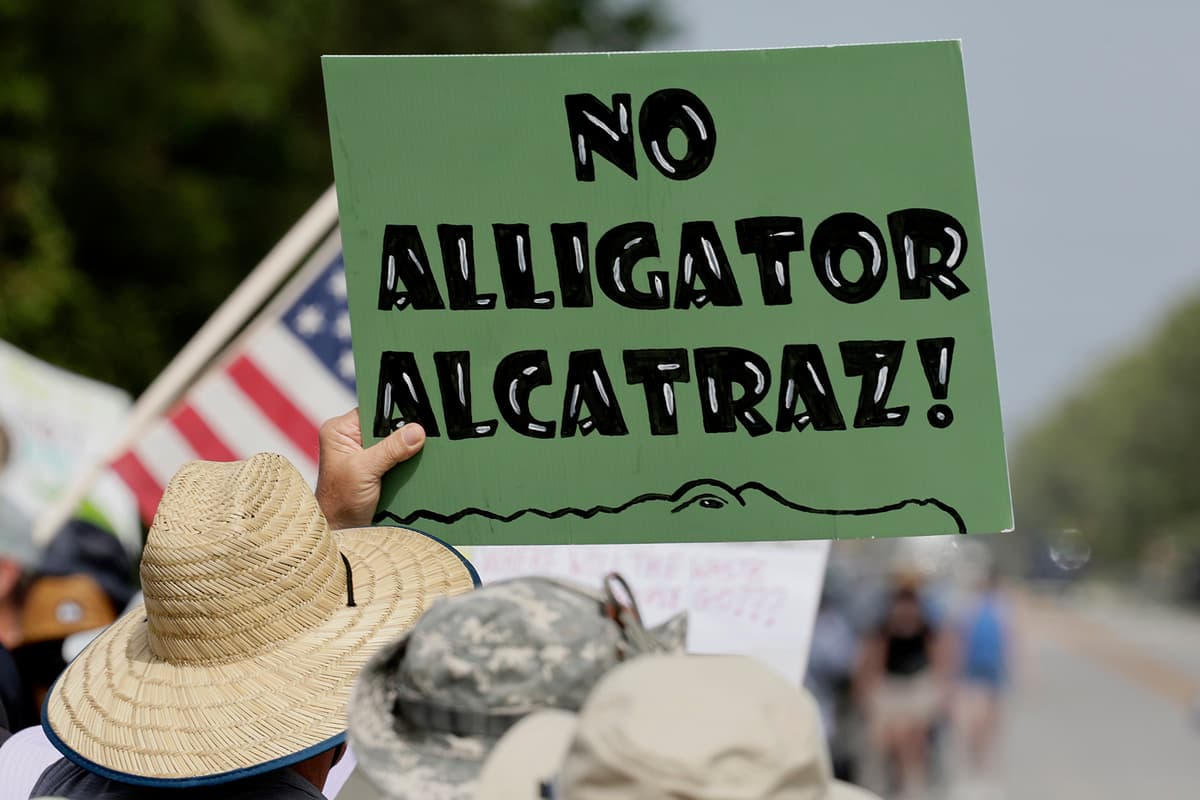
State officials in Florida released their Alligator Alcatraz evacuation plan after public pressure — but the heavily redacted documents raise more questions than they answer.
The 33-page draft plan, titled “South Florida Detention Facility Continuity of Operations Plan,” from the Florida Division of Emergency Management claims to outline broad hurricane evacuation protocols but a majority of the document, including entire pages, has been blacked out — including a list of alternative facilities in the region that could be used in the event of an evacuation.
The hastily built migrant detention facility, which was erected on an abandoned airstrip in an isolated section of the Everglades, is named as a “vulnerable” facility in the report.
“The geography [of] this location, while ideal for integrated detention operations in support of the DHS–ICE initiatives, is vulnerable to tropical weather,” a section on page 4 of the report reads.
“All vendors have developed individual continuity planning procedures to include the level of staffing necessary to support the STDF concurrently with evacuation and relocation of detainees to alternate facilities.”
Redacted in the report are the names and locations of the facilities as well as the procedures.
The report comes after weeks of requests from the media and politicians. Earlier this week, a FDEM spokeswoman confirmed to the Miami Herald, after a request for information on contingency plans, that they did not exist.
“There are no responsive records for this request,” she said in an email to the newspaper.
Last week, Governor DeSantis and other state officials spoke on the complex’s readiness. FDEM’s executive director, Kevin Guthrie, said the facility could withstand the winds from a Category 2 hurricane.
“I may have visited some facilities in the state of Florida. Why? Because this facility, as I’ve said before, can withstand category winds of up to Category 2,” he said during the press conference. “When we have that situation, we will have to do an evacuation, and it’s coming upon the Florida Division of Emergency Management to be able to take care of that.”
On July 2, just hours after Mr. DeSantis toured the newly opened facility with President Trump, the facility was struck with a rainstorm. Water quickly seeped into tent structures designed to house as many as 3,000 detainees, pooling around the bases of poles holding the American and Florida flags and streaming toward electrical cables on the floor.
The rainfall — estimated at just one-and-a-half inches by the National Weather Service in Miami — caused significant water intrusion.