Along With Checking Out Kurosawa Classics at Film Forum Retrospective, His ‘High and Low’ Is Worth a Watch

When Kurosawa leads us down the heroin-addled alleys of Yokohama, the results are unnerving: Post-war Japan is rendered as a hellscape equal to that imagined in George Romero’s ‘Night of the Living Dead.’
Via Film Forum
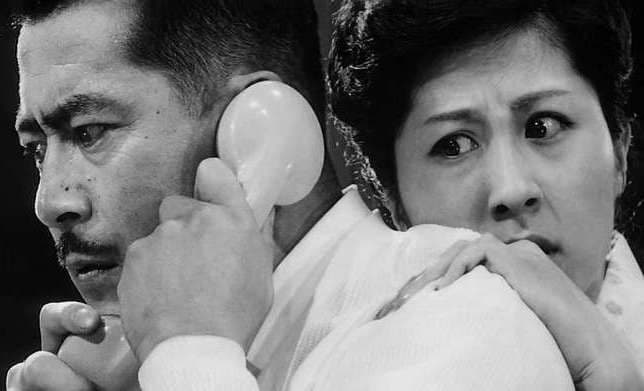
Toshiro MIfune and Kyōko Kagawa in 'High and Low' (1963). Via Film Forum

Upon receiving notice of an upcoming program at Film Forum, “Kurosawa in 4K,” I was happy to get the opportunity to see a group of movies by Akira Kurosawa (1910-88) on a big screen while simultaneously wondering if there was a screen big enough to do justice to the Japanese director’s reputation. 

Kurosawa, like any artist of note, has become a figure of almost immovable proportions; all the same, he’s garnered detractors. A common complaint, usually from those ensconced in Western locales, is that the man’s aesthetic wasn’t sufficiently Japanese. Brickbats rarely get as righteous as those seeking purity from cultures other than their own.

Let’s see how the estimable director fares at the southern edge of Greenwich Village during the final two weeks of July. Mounted in conjunction with the Reginald S. Reinhardt, Ling-Makekau Fund for Asia-Pacific Films, “Kurosawa in 4K” will be presenting restorations of nine iconographic pictures, including “Stray Dog” (1949), “Ikiru” (1952), “Seven Samurai” (1954), “Throne of Blood” (1957), “The Hidden Fortress” (1958), “Yojimbo” (1961), “Sanjuro” (1962), and “High and Low” (1963). An abiding art house standby, “Rashomon” (1950), is the only film in the bunch that hasn’t been upgraded and will be screened in a lowly 2K.

“Rashomon” was a phenomenon back in the day — it was the first Kurosawa film to be distributed internationally — and like George Cukor’s “Gaslight” (1944), the title has become part of our cultural lexicon. At the center of this allegorical tale about perception and truth is Toshiro Mifune as a wily bandit who may (or may not) have a moral compass. Mifune’s stylized performance threatens to capsize the proceedings, but counter-ballast is provided by a sturdy ensemble cast. As for the auteur: He directs with consummate aplomb — so much so, that an ending that should be pure cheese is as earned as everything leading up to it.

Akira Kurosawa, 1960. Via Wikimedia Commons

Less well known, though held dear by Kurosawa-philes, is “High and Low,” a police procedural based on Ed McBain’s 1957 novel, “King’s Ransom.” Kingo Gondo (Mifune again) is a wealthy executive at National Shoes, a company for which his climb up the corporate ladder took a hard-won three decades. When a venal cadre of board members advocates on behalf of increasing profits by cutting costs and quality, Gondo won’t hear of it. He mortgages everything that’s got his name on it, including a mountain-top villa, to become a majority shareholder. There will be no cut-rate shoes under his watch, thank you very much.

Not soon after the requisite blustering by all the involved suits, Gondo receives a phone call from someone who claims to have kidnapped his son. An enormous ransom is requested, but there’s something awry here: Gondo’s son is alive, well, and at home. It is, rather, the son of Gondo’s long-suffering chauffeur, Aoki (Yutaka Sada), who’s being held captive. 

When our kidnapper realizes the error, he insists, all the same, that a ransom be paid by Gondo. A lot of hemming-and-hawing ensues on the part of our belligerent executive, his ethereal wife (Kyōko Kagawa), and the much put-upon Aoki. Between the guilt-mondering of the latter two and the arm-twisting by police officers Tukora (Tatsuya Nakadai) and Taguchi (Kenjiro Ishiyama), Gondo begrudgingly agrees to dole out the money.

“High and Low” is brilliant in moments but cumbersome in structure. The first act is essentially a stage play choreographed within the confines of Gondo’s capacious living room; the second, a dutiful and often funny step-by-step overview of police at work. The final act is the most varied in its settings and, not coincidentally, more cinematically inventive. When Kurosawa leads us down the heroin-addled alleys of Yokohama, the results are unnerving: Post-war Japan is rendered as a hellscape equal to that imagined in George Romero’s “Night of the Living Dead” (1968).

Kurosawa newbies are recommended to the seminal “Rashomon,” the epic “Seven Samurai,” the grit and gumption of “Stray Dogs,” and the winsome “Ikiru” to get a full flavor of the director at his best. But should you stumble into “High and Low,” you’ll stumble out a convert all the same.


The New York Sun

© 2025 The New York Sun Company, LLC. All rights reserved.

Use of this site constitutes acceptance of our Terms of Use and Privacy Policy. The material on this site is protected by copyright law and may not be reproduced, distributed, transmitted, cached or otherwise used.

The New York Sun

Sign in or  create a free account

or
By continuing you agree to our Privacy Policy and Terms of Use