American Allies in Northeast Asia Face Uncertainty as China Hosts Russian and North Korean Leaders at Beijing

Immigration raid on Korean plant partly owned by Hyundai in Georgia adds another issue to the crisis.

Franck Robichon, Pool Photo via AP
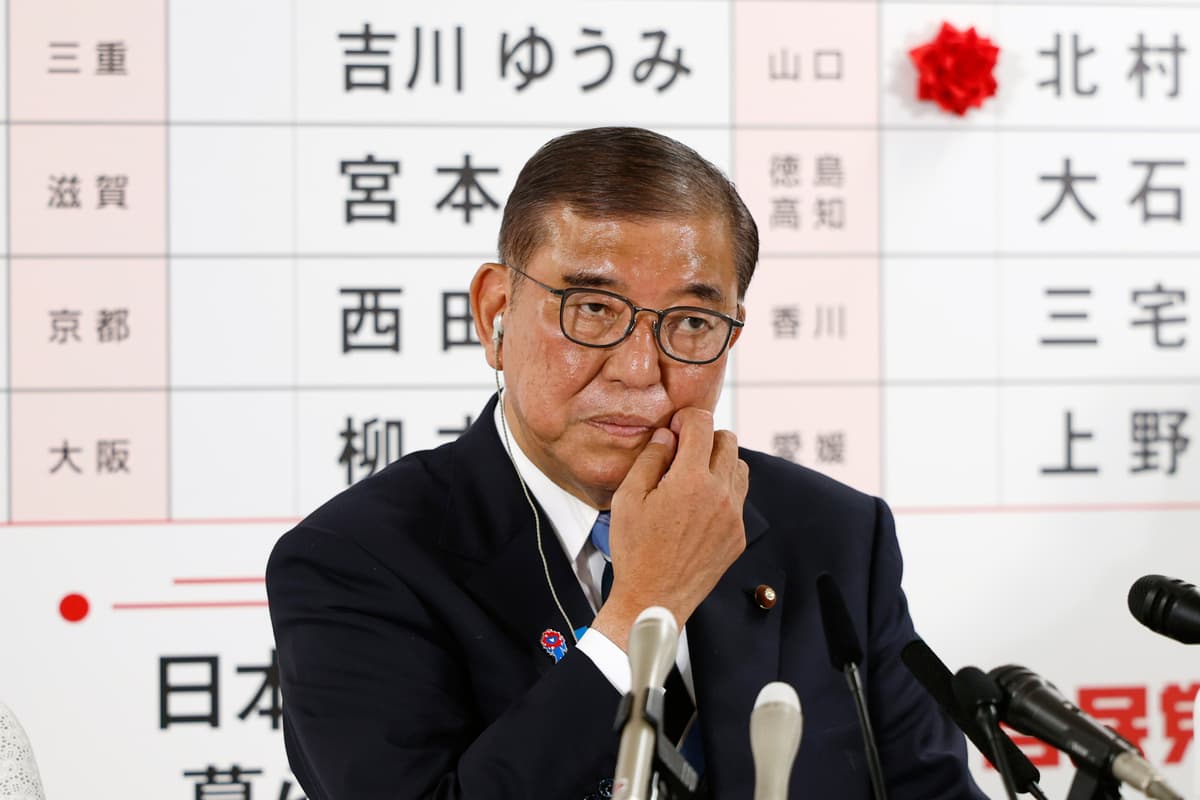
Japan's Prime Minister and president of the ruling Liberal Democratic Party, Shigeru Ishiba, meets the media at Tokyo. Franck Robichon, Pool Photo via AP

Washington’s two Northeast Asian allies, Japan and South Korea, face grave uncertainties in the aftermath of the display of unity shown by their leading foes, Communist China, Russia, and North Korea, at last week’s “victory” celebration at Beijing.

In Japan, the sudden resignation of the prime minister, Shigeru Ishiba, raises the issue of whether the long-ruling conservative Liberal Democratic Party can maintain its grip while Japanese suffer economic difficulties and face demands to pay more for American bases.

In South Korea, major Korean companies told workers not to go to America until they could be sure they would not be denied entry in the aftermath of the immigration raid in which upward of 300 Korean employees at a huge plant under construction near Savannah, Georgia, were rounded up.

Koreans at Seoul saw the raid as a blow to Korean-American relations while the foreign minister, Cho Hyun, goes to Washington this week to sort out the future of Koreans on projects in which giant Korean companies are investing hundreds of billions of dollars in new American plants.

Executives and employees at Hyundai Motor, co-owner with LG of the plant, were ordered to postpone visits to America while the Korean government charters airplanes to bring the jailed employees back home after American authorities agree to release them.

The political crisis in Japan exposed deep divisions and discontent as Mr. Ishiba resigned nearly two months after his Liberal-Democratic Party lost its majority in the diet, or parliament, and had to form a coalition with a small conservative party to stay in power. Mr. Ishiba, who’s been prime minister for nearly a year, will step down after his party has elected a new leader, who then faces election as prime minister by the lower house of the parliament.

Mr. Ishiba said he would have resigned much sooner but stayed on amid negotiations that resulted in Washington lowering tariffs on motor vehicles to 15 percent from 25 percent — an agreement that he described as “just excellent.” Like South Korea, Japan has pledged to invest hundreds of billions of dollars in new American factories while beginning to redress a trade surplus of more than $60 billion a year, also about the same as Korea’s trade surplus.

Having reached understandings with President Trump on tariffs, however, both Japan and Korea face what are sure to be tendentious talks on how much to contribute to the costs of American troops and bases in both countries. Japan is paying about $1.9 billion a year toward the upkeep of about 55,000 American troops while Korea pays $1.1 billion a year for America’s 28,500 troops — sums that Mr. Trump has called for increasing by several times.

The talks raise questions about the future of American bases that are crucial to defense of the region. Camp Humphreys, 40 miles south of Seoul, headquarters of U.S. Forces Korea, is America’s largest overseas base. America’s Marine and Air Force bases on Okinawa support American military operations from the Middle East to Northeast Asia.

In both countries, the cost of the bases is a divisive issue. The leftist-led Korean government of President Lee Jae-myung would like to scale down joint military exercises with American forces while attempting to reopen dialogue with North Korea’s leader, Kim Jong-un. In Japan, opposition to conservative rule is rising in tandem with rising costs and the sense that the government can do little to halt inflation.

Those questions drowned out concerns about the show of unity displayed at Beijing as President Xi Jinping presided over a parade flaunting new intercontinental ballistic missiles. President Vladimir Putin sat on one side of him and Mr. Kim on the other, in recognition of what Messrs. Xi and Putin see as the overwhelming importance of North Korea in defense of the region against Japan, South Korea, and their American ally.


The New York Sun

© 2025 The New York Sun Company, LLC. All rights reserved.

Use of this site constitutes acceptance of our Terms of Use and Privacy Policy. The material on this site is protected by copyright law and may not be reproduced, distributed, transmitted, cached or otherwise used.

The New York Sun

Sign in or  create a free account

or
By continuing you agree to our Privacy Policy and Terms of Use