American Military Boasts of ‘Recruiting Renaissance’ During Trump Administration
All of the branches of the military say they are now meeting their recruitment goals.
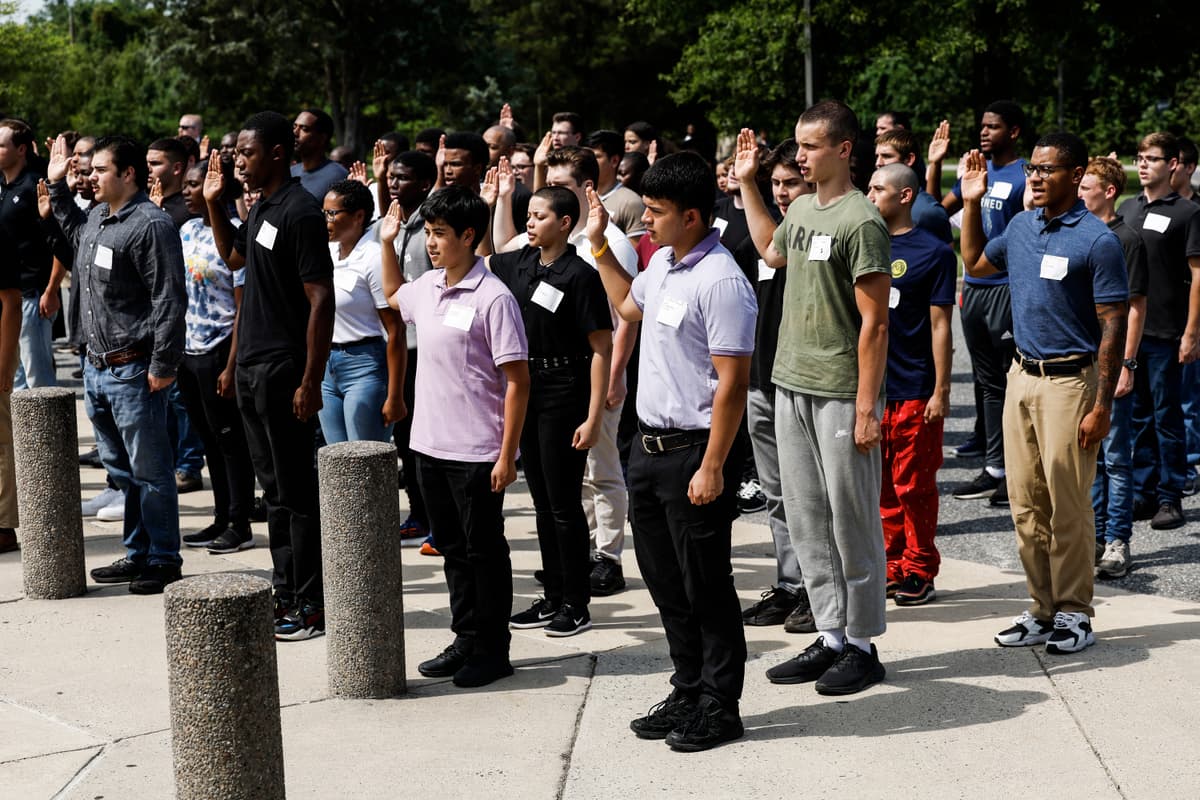
The military is seeing a surge of new recruits across all branches and the Trump administration is taking credit.
The Air Force, Army, Marine Corps, and Navy say they met recruiting goals for the fiscal year that ended on September 30. And the Air Force says it is well on its way to meeting next year’s goal due to a program that allows potential recruits to delay entering the service for four months.
The solid recruitment numbers mark a change from just a few years ago, when Covid and a strong labor market made it tough to attract new recruits.
The Air Force reports that it currently has about 19,000 people in its delayed entry program, which allows potential airmen to wait up to four months before heading to basic training. If all of them stay in the program, that would meet 58 percent of the Air Force’s 2026 fiscal year recruiting goal, military news site Task and Purpose reports.
“Based on research and asking, we understand that they appreciate the benefits that are offered, looking for educational opportunities, also the path for growth within the service, kind of basic things for career growth development over time,” the commander of the Air Force Recruiting Service, Brigadier General Jeffrey W. Nelson, tells the outlet.
Secretary Pete Hegseth claims the Trump administration’s policies are driving up the numbers. He says there is a “recruiting renaissance” under way. “When we prioritize war-fighting over wokeness, that energized the young men and women of our country,” Mr. Hegseth said during an April address at the Army War College.
But the increase might also be tied to steps taken by the Biden administration to remove barriers to recruitment. The maximum age for recruits has been bumped to 42 and the Air Force now allows candidates who test positive for marijuana to test again after 90 days.
The Army and Navy, meanwhile, are offering remedial academic or physical training to recruits who don’t initially meet the required standards.
“The competitiveness of the economy will always play a factor, and it’s really about how easy or hard it is to connect a recruiter with a young person,” the commander of Navy Recruiting Command, Rear Admiral James Waters, tells Stars and Stripes. “That dramatic change is by recognizing and adapting to the environment that exists.”
The military has also been steadily raising recruitment bonuses. The Army now promises up to a $50,000 bonus based on factors like job selection, skills, and training. The Air Force has an even higher potential bonus of $75,000 for recruits with the hardest-to-fill skills such as cyber security, and cryptologic language analysis.
The military is also hanging onto active duty personnel longer. Retention rates are rising due to a slowing job market, especially in federal jobs, where many members of the military traditionally find new employment after they leave the service.
One branch that says it didn’t change its requirements but met this year’s recruiting goal is the Marine Corps. The Corps recruited 30,536 active duty and reserve enlisted Marines — one person over its goal.
“Everywhere I’ve been in the country, the American people know the Marine Corps has very high standards and that we stick to them,” Lieutenant General William Bowers told the Associated Press. “If you try to appeal to everybody, you won’t get the people you maybe really want.”
While the current numbers look positive, the long-range outlook is bleaker. As American population growth slows, there will be fewer potential recruits. The number of youths who don’t qualify for service due to physical fitness or educational deficiencies is also rising, shrinking the pool further.