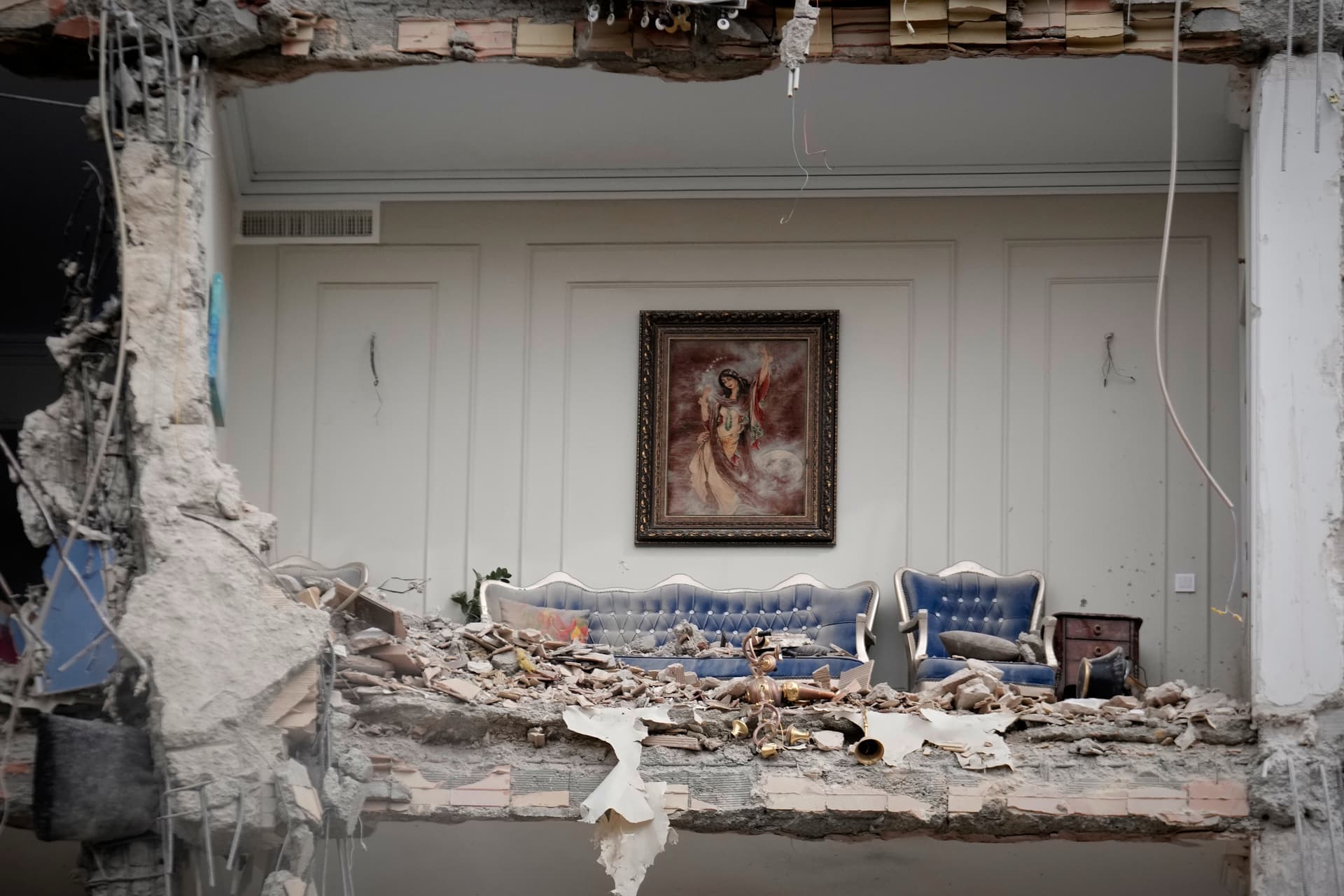

America’s Can-Do Spirit Needs Liberation From Stifling Culture of Compliance and Overregulation

‘The obsessive drive to foreclose anything that might go wrong has left little room for the freedom to make things go right,’ Philip Howard warns in his new book.
Getty Images
'Rogue' judges are being blamed for thwarting the president's agenda. Getty Images

Philip Howard, a graduate of Taft prep school, Yale, and the University of Virginia School of Law, says he never wore “white bucks.” This 1950s campus fashion waned before he matriculated. 

Those buckskin shoes were popular among young blades destined to become “white-shoe lawyers” at prestigious “white-shoe law firms,” such as Covington & Burling, where Mr. Howard, 76, is senior counsel.

He also is a genteel inveigher against the coagulation of American society, which is saturated with law. In his new book, “Saving Can-Do: How to Revive the Spirit of America,” he argues that law’s proper role is preventing transgressions by authorities, not micromanaging choices so minutely that red tape extinguishes individual responsibility and the social trust that individualism engenders.

What has been called the “fetishization of process” — process as an end in itself — costs money and stymies progress. Mr. Howard writes, “Doctors and nurses spend almost half their day doing deskwork” to comply with regulations.

Historian Henry Steele Commager (1902-98) deplored the nation’s “almost lawless passion for lawmaking.” This has built what Mr. Howard calls a “monument to the precautionary principle”: “The obsessive drive to foreclose anything that might go wrong has left little room for the freedom to make things go right.”

Almost 150 million words of federal laws and regulations, almost all generated since the 1960s, have created a “dreary public culture” and “a society riven with distrust.” This “squeezes the life out of freedom.” And nothing gets done.

In 2021, the Biden administration allocated $7.5 billion to build a national network of electric vehicle charging stations. Three years later, only 11 had been built. For the administration’s failure to expand broadband service, blame legislation larded with diversity, equity, and inclusion requirements, climate change rules, price controls, union preferences, etc.

An act was passed to reduce the 4.7 years’ average time to complete environmental impact statements for federal projects. Four years later, the average completion time was: 4.7 years.

Mr. Howard also notes that merely raising a roadway on a Port of Newark bridge required five years and 20,000 pages of environmental assessments, including the impact on historic buildings within a two-mile radius (no buildings, historic or otherwise, were affected), and required input from Native American tribes around the country whose ancestors might have lived at Newark’s harbor. The 1956 statute authorizing the interstate highway system was 29 pages long.

Building a small, $200,000 public toilet at San Francisco was budgeted to cost $1.7 million because approval had to be won from, among many other agencies, the city’s Arts Commission. The fragile Hudson River rail tunnels connecting Manhattan to everywhere west were built between 1906 and 1910 by our great-grandfathers. New tunnels are expected in 2038, 29 years after construction was announced.

K-12 schools micromanaged by multi-hundred-page collective bargaining agreements with teachers unions “more closely resemble penal institutions” than centers for nurturing, Mr. Howard writes. “The disempowerment of school leaders” by union rules in the past 50 years “is the main reason bad schools get worse, and why mediocre schools rarely improve.”

New York state, pandering to 19th-century immigrants, mandates instruction about the Irish potato famine (1845-52). Some Florida school districts, preemptively fending off lawyers, require written permission before giving a pupil a Band-Aid.

Before Hurricane Katrina, a New Orleans high school valedictorian could not graduate because she failed the state proficiency test five times. It should not take a natural calamity to fracture society’s stale crust, opening fissures through which green shoots of fresh thinking can sprout, as has happened in post-Katrina New Orleans.

In a recent 18-year period in Illinois, an annual average of only two out of 95,000 teachers were terminated for poor performance. Illinois public education is a calamity in need of a calamity: a Katrina. Otherwise, the task of reviving union-dominated schools is, Mr. Howard says, akin to “putting fumes back into a bottle.”

When all choices by people in authority are, in Mr. Howard’s words, “strained through a legal sieve,” we understand Alexis de Tocqueville’s warning from nearly 200 years ago: Minute regulations that stifle intuition, judgment and freedom perpetuate “a drowsy regularity,” and the status quo.

Our ancestors began this nation as an errand into an inhospitable wilderness, then walked to Oregon, without laws preempting their judgments in daily choices. Yet the nation’s spirit “has been collapsing over the past fifty years,” Mr. Howard writes, as Americans have been trained by too much law “to focus on compliance.” So, they “tiptoe through the day looking over their shoulders” and avoiding risks. For the nation’s long-term vitality, nothing is riskier.

The Washington Post


The New York Sun

© 2025 The New York Sun Company, LLC. All rights reserved.

Use of this site constitutes acceptance of our Terms of Use and Privacy Policy. The material on this site is protected by copyright law and may not be reproduced, distributed, transmitted, cached or otherwise used.

The New York Sun

Sign in or  create a free account

or
By continuing you agree to our Privacy Policy and Terms of Use