Animator Bill Plympton Is Back With an Homage to the American West as Mythologized by Hollywood, ‘Slide’
Plympton’s drawing style is sharp in contour and scrabbled in tone, a bumptious amalgam of Honore Daumier, George Grosz, Tex Avery, and Basil Wolverton.
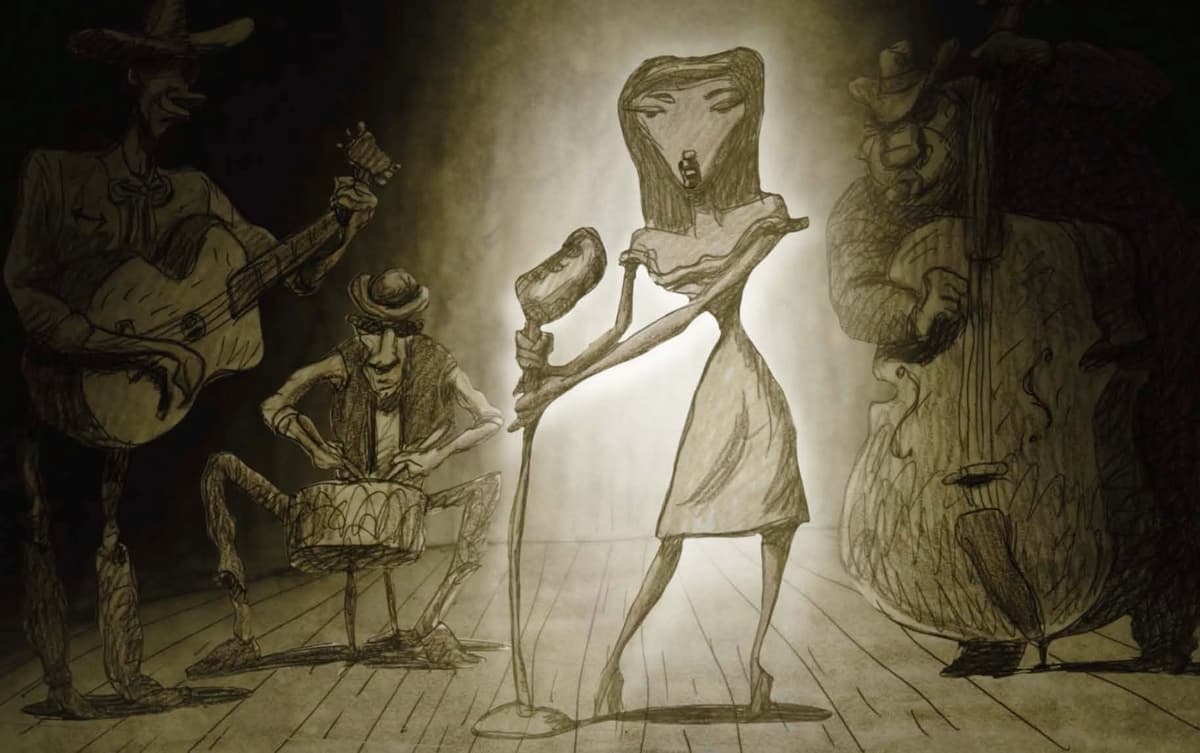

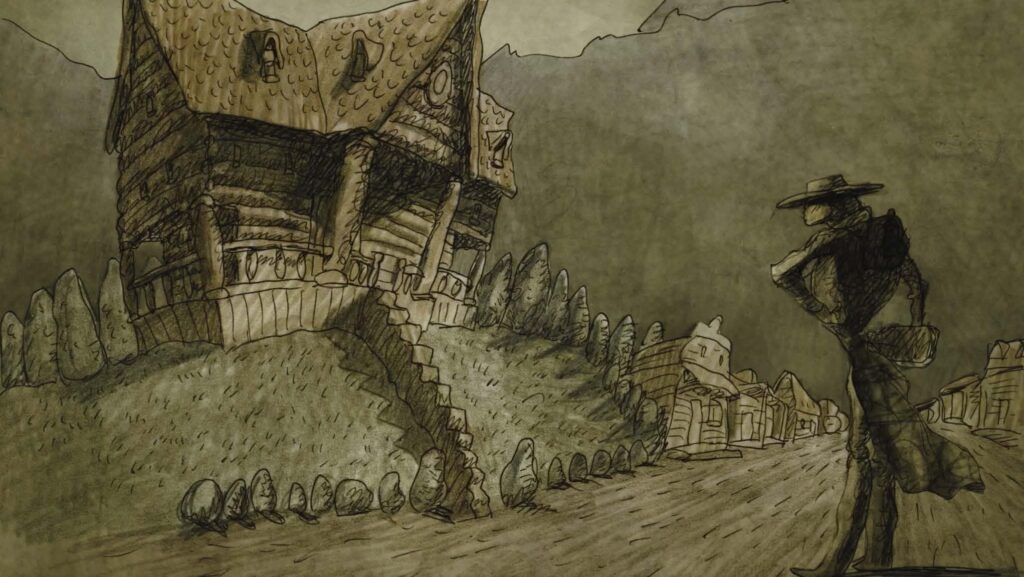
What an exquisite folly is Bill Plympton’s “Slide,” and old-fashioned, too. The much-esteemed “King of Indie Animation” has made an homage to the American West, not as historical fact but as it has been mythologized by Hollywood. It’s a cosmos as encompassing as it is dusty, and populated by archetypes like the lone gunslinger, the whore with a heart of gold, the avaricious speculator, and bushwhackers, varmints, and goons for hire.
Music figures into it, as the title character wields a mean slide guitar. The majority of songs punctuating “Slide” are the handiwork of Hank Bones and Maureen McElheron, performers who have a keen knowledge of vintage country music and early rock and roll. Given the comedic nature of Mr. Plympton’s aesthetic, Mr. Bones and Ms. McElheron hoke it up with tropes like “the coyote’s lonesome trail,” but never do they condescend to musical conventions they clearly love. That, and you should hear Ms. McElheron yodel.
Should the name Bill Plympton not ring a bell, trust me, you’ve seen his cartoons. A proud son of Oregon, Mr. Plympton transferred to the School of Visual Arts in New York City, where he pursued a major in animation, from Portland State University. Disillusionment set in: His SVA instructor, Mr. Plympton told Oregon Artwatch, “didn’t care about storytelling or narrative, or even beautiful drawing.” The erstwhile animator dropped out.
Mr. Plympton found employment as a cartoonist, doing work for the New York Times and the New Yorker, as well as for journals whose purview was more salacious in nature, like Playboy, Penthouse, and Oui. The Soho Weekly News offered him a weekly political cartoon, and he collaborated with Village Voice mainstay Jules Feiffer to create “Boomtown” (1985), a six-minute cartoon that couched a blunt satire of the military industrial complex within jaunty surrealist stylings.
That film made a splash, and Mr. Plympton has since managed to pursue his idiosyncratic muse while cashing paychecks from clients like Geico, Taco Bell, and Microsoft. Along the way he’s earned an impressive cadre of admirers, including directors Terry Gilliam and Guillermo del Toro. After Mr. Plympton earned an Oscar nomination for the animated short “Your Face” (1987), Walt Disney Studios came knocking with a job offer.
In what was “maybe the stupidest move of my life,” he turned it down. The million or so bucks Mr. Plympton was offered could not recompense for the freedom of his own drawing board.
There’s freedom aplenty in “Slide,” and much of it is grotesque, violent, wildly exaggerated, and sometimes racy. Mr. Plympton’s drawing style is sharp in contour and scrabbled in tone, a bumptious amalgam of Honore Daumier, George Grosz, Tex Avery, and Basil Wolverton. His animation is hyperbolic in temper and herky-jerky in rhythm. A taste for Mr. Plympton’s over-the-top absurdism is easily acquired.
Yet it’s not always easily sustained. As clever and sometimes laugh-out-loud funny as “Slide” might be, its whimsies can seem arbitrary and its satirical targets tired. When Hollywood comes calling on the faraway township of Sourdough Creek, a megalomaniacal landboss goes about building an on-the-fly luxury resort. A tall, dark, and archetypal stranger comes calling to set things right — that is, if he can deal with a mythical beast known as the Hell Bug.
And so it goes for probably 20 minutes longer than it should. Bullets fly, songs are sung, men put on dresses, and the bosoms of our ladies of the evening jiggle to mechanical effect. Mr. Plympton may poke fun at any number of cliches — among them pampered starlets, barroom fisticuffs, and how music can soothe the savage breast — but he cruises too much on their ubiquity. A viewer can admire “Slide” and still be impatient with its virtues.

