Appeals Court Throws Out Letitia James’s $500 Million Fraud Penalty in Stunning Victory for Trump

The underlying verdict, though, stands — setting up an appeal to New York’s highest court.
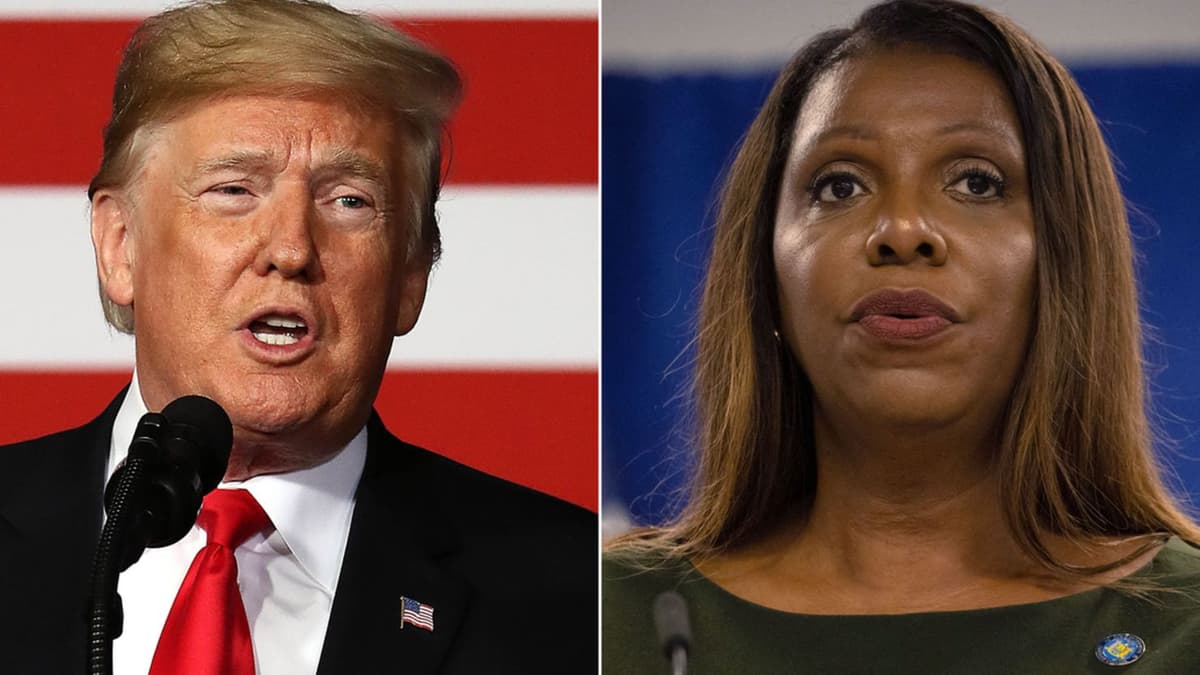
Getty Images / Getty Images
New York's attorney general, Letitia James, and President Trump. Getty Images / Getty Images

The ruling by a New York appellate court that the $500 million fraud verdict against President Trump, his two adult sons, and his business violated the United States Constitution is a signature victory for the 47th president — even if the underlying case is intact. 

The ruling by the five-judge panel took more than 300 days to be handed down, a remarkable delay that stands in marked contrast to the month or so that these decisions usually take. An appeal to New York’s highest court appears inevitable because the intermediate appellate tribunal declined to dismiss the case entirely. 

One of the judges, Peter Moulton, wrote, “While harm certainly occurred, it was not the cataclysmic harm that can justify a nearly half billion-dollar award to the state.” The appellate court was fractured, with at least one judge, David Friedman, wanting the case dismissed entirely. Two judges reckoned that a retrial was in order. Judge Moulton and the presiding judge, Dianne Renwick, decided to uphold the conviction but toss the penalty. 

The court reasoned that Judge Arthur Engoron’s ruling “is well crafted to curb defendants’ business culture” but added that “the court’s disgorgement order, which directs that defendants pay nearly half a billion dollars to the State of New York, is an excessive fine that violates the Eighth Amendment of the United States Constitution.” That amendment ordains: “Excessive bail shall not be required, nor excessive fines imposed, nor cruel and unusual punishments inflicted.”

Judge Engoron, who found Mr. Trump liable for “persistent fraud” on summary judgment — meaning there was no trial to determine innocence or guilt; the only trial that took place was to determine punishment — wrote in his decision, “The frauds found here leap off the page and shock the conscience.” The case turned on whether Mr. Trump and his organization inflated the value of their properties to secure more favorable loan terms.

Ms. James, who ran for office in 2018 promising to shine a “bright light” into Mr. Trump’s real estate dealings, declared last year, “For years, Donald Trump engaged in massive fraud to falsely inflate his net worth and unjustly enrich himself, his family, and his organization. While he may have authored the ‘Art of the Deal,’ our case revealed that his business was based on the art of steal.”

Ms. James, a Democrat, has alleged that Mr. Trump engaged in “lying, cheating, and staggering fraud.” The 47th president has maintained that he is an “innocent man” and that the case amounted to a “fraud on me.” Mr. Trump has accused both Judge Engoron and his erstwhile law clerk — Allison Greenfield, now an elected Democratic judge herself — of bias. Judge Engoron imposed a gag order on Mr. Trump during the trial. The gag order was later extended to his legal team after they objected to Ms. Greenfield — who sat alongside Judge Engoron on the bench — “co-judging” and “rolling her eyes.”  

The full ruling of the supreme court of the state of New York, appellate division, first judicial department runs to more than 300 pages and paints a picture of a fractured court. The majority finds that “the Attorney General acted well within her lawful power in bringing this action, and that she vindicated a public interest in doing so.” It would, though, “modify the remedy” imposed by Judge Engoron.

Judge Friedman dissented to find that Judge Engoron’s decisions “are infirm in almost every respect” and maintains that Ms. James “had no power to bring this case.”

Judge Moulton rejects the notion, propounded by some of his colleagues, that justice requires a new trial. He writes that such a course would be “both Sisyphean and unneeded, because an extensive trial record already exists” and  “would likely consign this meritorious case to oblivion.” He adds: “It is difficult to imagine that a trial could proceed while one of the principal defendants, and a central witness, is President of the United States.”

Part of Judge Friedman’s case for overturning the underlying finding of fraud is its reliance on the testimony of the lawyer Michael Cohen, whom he calls a “convicted perjurer.” The court, though, reasons that “many investigations, whether civil or criminal, begin with just such a compromised, implicated, and knowledgeable insider. Certainly, Cohen’s information led to avenues of investigation.”

In interpreting the Eighth Amendment as applied to a civil fine — a relatively untrod terrain of constitutional law — the Supreme Court has held that a fine is “excessive” if it is “grossly disproportional to the gravity of the defendant’s offense.”  The court held that the immense penalty levied on the Trump organization — but not the other forms of injunctive relief, like the appointment of an independent monitor — was “excessive” under this standard.

Ms. James now faces her own accusations of fraud in her personal finances, in the form of a criminal referral that rests with the Department of Justice. Her attorney, Abbe Lowell, calls those allegations the product of a “revenge tour” launched by Mr. Trump in retaliation for the  judgement against him — now vacated as crosswise with the Constitution.

In a statement on Thursday Ms. James declared, “It should not be lost to history: Yet another court has ruled that the president violated the law, and that our case has merit.”


The New York Sun

© 2025 The New York Sun Company, LLC. All rights reserved.

Use of this site constitutes acceptance of our Terms of Use and Privacy Policy. The material on this site is protected by copyright law and may not be reproduced, distributed, transmitted, cached or otherwise used.

The New York Sun

Sign in or  create a free account

or
By continuing you agree to our Privacy Policy and Terms of Use