Appeals Court Ruling That Alina Habba Was Unlawfully Appointed Is Blow to Bondi — and Prosecution of Democratic Congresswoman
A panel of the Third United States Appeals Court finds that New Jersey’s top prosecutor is exercising power unlawfully.
The ruling by a panel of the Third United States Appeals Court that the top federal prosecutor in New Jersey, Alina Habba, was unlawfully appointed is another setback for President Trump’s Department of Justice.
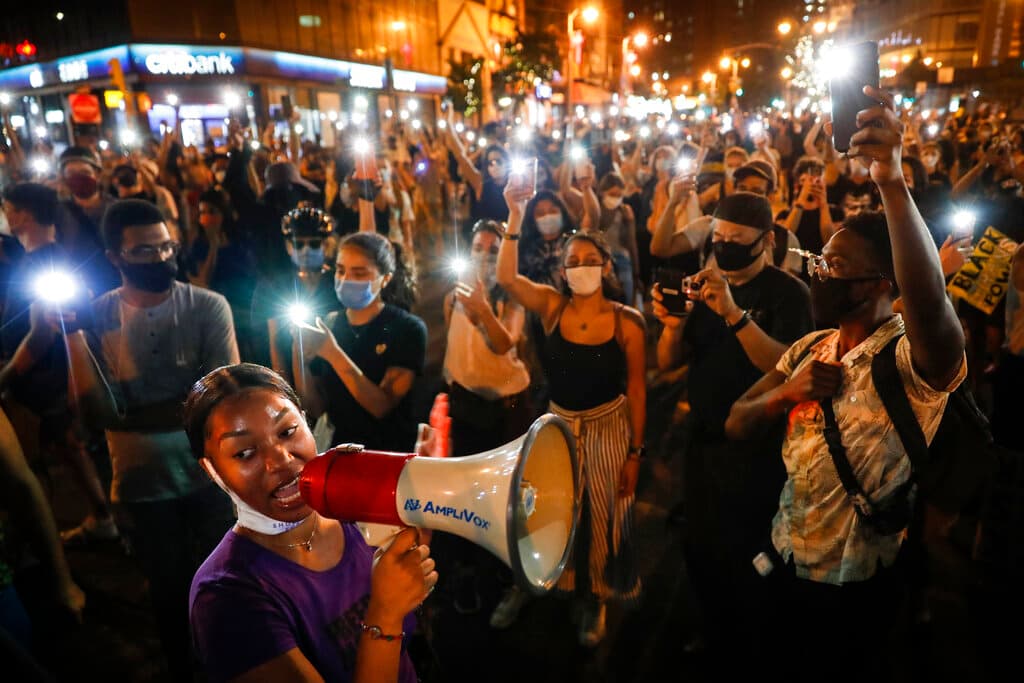
Ms. Habba’s most notable prosecution has been that of a Democratic representative from New Jersey, LaMonica McIver, for forcibly assaulting a federal agent. Ms. McIver participated in a melee this past May outside an ICE detention center. Ms. Habba also charged the mayor of Newark, Ras Baraka, with felonies related to the melee, but those charges were later dropped.
The appellate ruling on Ms. Habba’s appointment upholds the determination of a district judge, Matthew Brann, that Ms. Habba “is not currently qualified to exercise the functions and duties of the office in an acting capacity, she must be disqualified from participating in any ongoing cases.” Judge Brann is a Republican who was appointed to the federal bench by President Obama.
The rebuke to the DOJ from the Third Circuit came from Judges L. Felipe Restrepo, D. Brooks Smith and D. Michael Fisher. Judge Restrepo was appointed by President Obama, while the latter two jurists were both tapped by President George W. Bush. The circuit riders did not immediately indicate how New Jersey’s federal prosecutions are intended to proceed given Ms. Habba’s status.
The Third Circuit as a whole is fairly heterogeneous with respect to the presidents who nominated its members to the bench. Mr. Trump has appointed the most number of jurists — most recently his ally and former DOJ official, Emil Bove. Presidents Bush, Biden, and Obama are represented as well, with some of the more senior judges owing their seat to President Reagan.
The panel reasons that “under the Government’s … theory, Habba may avoid the gauntlet of presidential appointment and Senate confirmation and serve as the de facto U.S. Attorney indefinitely. This view is so broad that it bypasses the constitutional (appointment and Senate confirmation) process entirely.”
The ruling from the Third Circuit — the DOJ can appeal for an en banc hearing of the full tribunal, as well as to the Supreme Court — comes on the heels of the disqualification of the interim United States attorney for the Eastern District of Virginia, Lindsey Halligan. That blow sunk, pending appeal, the criminal cases against New York Attorney General Letitia James and former FBI director James Comey.
Now the appellate court, in upholding Judge Brann’s ruling, finds that “the citizens of New Jersey and the loyal employees in the U.S. attorney’s office deserve some clarity and stability.” Ms. Habba, like Ms. Halligan, previously served as a personal defense attorney for Mr. Trump but never as a prosecutor. Ms. Habba was first nominated to an interim position when it was clear that the state’s two Democratic senators, Andy Kim and Cory Booker, would never allow her confirmation vote to proceed in the Senate.
A longtime convention of the Senate known as “blue slipping” gives a state’s senators veto power over judges and United States attorneys appointed in their state, even if the senators are from a rival party. Mr. Trump has demanded that the Senate’s Republican leadership end the practice of blue slipping but the Senate majority leader, John Thune, has demurred.
As an interim United States attorney Ms. Habba brought criminal felony charges against Mr. Baraka and Ms. McIver, following an imbroglio at an ICE facility in the Garden State. The case against Mr. Baraka has been dropped, though the one against McIver is ongoing. Federal law, though, grants federal judges in each district the discretion to decide, after 120 days, whether to extend the interim appointment or deny such an extension.
New Jersey’s federal judges, overwhelmingly appointed by Democratic presidents, denied Ms. Habba an extension and appointed another prosecutor, Desiree Leigh Grace, to lead the office. Attorney General Pam Bondi fired Ms. Grace and appointed Ms. Habba “acting United States attorney,” a maneuver that Judge Brann and the Third Circuit panel have both found to be unlawful.
The DOJ’s lawyers have argued that President Trump — and by extension, Ms. Bondi — possess “substantial authority to decide who is executing the criminal laws of the United States.” Ms. Habba’s appointment was challenged by the attorney Abbe Lowell, who is also representing Ms. James and several other foes of Mr. Trump. Mr. Lowell contended to Judge Brann that Mr. Trump had “pursued a shell game to keep” Ms. Habba in power by “relying on a chimera of at least seven different statutes.”
Judge Brann, in disqualifying Ms. Habba, conceded that the case raises “several issues of first impression” and a “novel series of legal and personnel moves,” which means that its appellate future could feature yet more twists. In an apparently unrelated case, Ms. Habba’s office was earlier this month attacked by an assailant wielding a baseball bat. The suspect, Keith Michael Lisa, has been arrested and is in custody.