The Dazzling Design of Wiener Werkstätte

This article is from the archive of The New York Sun before the launch of its new website in 2022. The Sun has neither altered nor updated such articles but will seek to correct any errors, mis-categorizations or other problems introduced during transfer.

The New York Sun

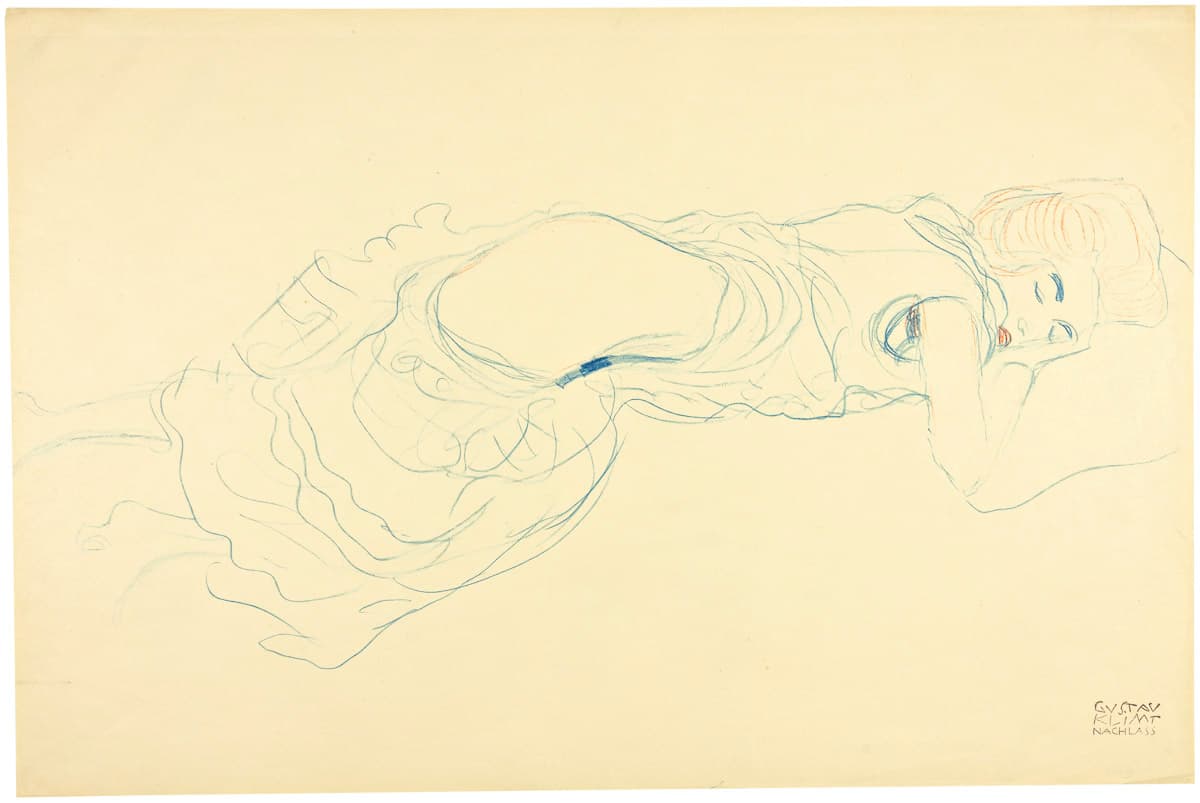
Josef Hoffmann and Koloman Moser founded the Wiener Werkstätte in 1903. The two Viennese found inspiration in Britain, where the Englishmen John Ruskin, William Morris, and Charles Robert Ashbee, and the Scotsman Charles Rennie Mackintosh, had championed a kind of neo-medievalism that had little to do with the historical Middle Ages and a great deal to do with fantasies of creative freedom through handicraft — the artist’s or artisan’s joy in making would be our joy in beholding. The Victorian English — including Augustus Pugin and Dante Gabriel Rossetti — indulged a creative impulse so prodigious and inventive it seemed at moments to have gone off some psychological deep end. The head swims, and the heart swoons, in contemplation of their works. By century’s end, the totalizing design impulse had migrated to Austria, where the Secession produced rich, dazzling patterns of vivid, at times violent, coloration and sinuous line, as in the paintings of Gustav Klimt, which are so beautifully exhibited at the Neue Galerie.

Now the Neue Galerie complements its Klimt with an elegantly mounted exhibition of Wiener Werkstätte jewelry, with several works each by Hoffmann and Moser, as well as pieces by Dagobert Peche (who ran the Werkstätte between 1910 and 1923), Eduard Josef Wimmer-Wisgrill, and Carl Otto Czeschka. Jewelry is hard to exhibit well, and credit must be given to curator Janis Staggs for the wonderfully clear presentation. Seven four-sided cases are arranged around the gallery, with one or two pieces per side, near enough to eye level so as not to require too much bending. The arrangement makes the works eminently viewable while preventing bottlenecks of gallery-goers.

Hoffmann’s and Moser’s crafts workshops took off from the Secession, as well as from the British Arts and Crafts movement. Like Morris in England, or Louis Tiffany in New York, the Wiener Werkstätte sought to infuse all of life with art, making even the humblest of objects beautiful. They produced wallpaper, clothing, glass, ceramics, furniture and, not least, jewelry. For these men, jewelry was a pure, free expression of beauty, and was, like a Klimt painting, about color and pattern. It was not about the mounting of precious stones. Though much is made of the workshops’ inclination to bold geometry, said to have influenced Frank Lloyd Wright and, as we see in later works (1918–20) by Wimmer-Wisgrill and Peche, Art Deco, what’s noteworthy isn’t an arid arrangement of squares and circles but the use of simple geometry to lend structure to fluid, curvy elements that seem always to want to ooze out of their frames. The tension thus produced is undeniably sexual — as much so as we find in Klimt’s paintings, though in the jewelry there is no overt graphic imagery. The stones and silver swirls seem always to pulsate, swim, or dance like amoebae. A 1907 brooch by Hoffmann has a vertically tripartite composition, in which the center is silver worked in simple forms (evoking lilies in a vase), while to either side are riotous mash-ups of agate, coral, lapis lazuli, malachite, and turquoise. Hoffmann, more than the others, leads the eye to focus on the natural patterning of the stones’ surfaces, sometimes like runny raw egg that has been brilliantly colored, sometimes like ocean waves. A 1905 brooch that he designed also has the tripartite composition, though here he places the colored stones — a malachite rectangle placed above a lapis lazuli orb, accented by coral dots — in the center, while the sides have moonstones arranged in strands like glittering rain.

Moser’s works have a greater severity, at least in a 1904 necklace in which amber orbs merely provide a colored accent to their silver corseting. In a brooch dated 1904–05, Moser recalls Klimt in the way a silver head and arms held high rise out of or from behind a rich veil or organic patterning.

My favorite piece in the show may be a 1914 bracelet by Hoffmann. It’s a gold band in the form of a series of frames holding stylized floral patterns with the most delicately worked, spider’s-web-like stalks. A larger frame in the center holds more of the same, though with the addition of an elegant female figure in ivory. She holds in her upraised left arm a tiny dot of a diamond, and peers at it as though admiring herself in a mirror.

As with the Arts and Crafts movement in Britain, the Wiener Werkstätte wished to bring beauty to the rituals of daily life, though inevitably the exquisite workmanship came at a price, and the Werkstätte brought beauty only into the lives of the relatively well-off. Around the room are blown-up photographs of the fashion designer — and friend of Klimt — Emilie Flöge, shown wearing this jewelry, of which she owned quite a bit. But not too many owned quite a bit. Under Peche, the Werkstätte sought more marketable styles, and that dovetailed nicely with the Paris Exposition of 1925. The Werkstätte even maintained a store on Fifth Avenue. But the enterprise went under in 1932, a victim of the Great Depression. By then, the age of profligate decorativeness was coming to a close. Moser’s Werkstätte designs influenced the Bauhaus, but I think the Werkstätte belonged to an earlier era, one from which the copious handmade productions of wildly gifted artists and artisans continue to awe and astound us. At the Neue Galerie, the extraordinary popularity of Gustav Klimt’s paintings attests to this. And so does this exhibition of Wiener Werkstätte necklaces, brooches, pendants, belt buckles, and bracelets.


The New York Sun

© 2025 The New York Sun Company, LLC. All rights reserved.

Use of this site constitutes acceptance of our Terms of Use and Privacy Policy. The material on this site is protected by copyright law and may not be reproduced, distributed, transmitted, cached or otherwise used.

The New York Sun

Sign in or  create a free account

or
By continuing you agree to our Privacy Policy and Terms of Use