A Deceiver Through and Through
This article is from the archive of The New York Sun before the launch of its new website in 2022. The Sun has neither altered nor updated such articles but will seek to correct any errors, mis-categorizations or other problems introduced during transfer.

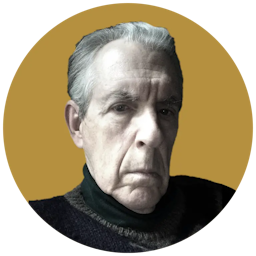
Biography reveals what autobiography conceals. Certainly this is the burden of “Last of the Cold War Spies” (Da Capo Press, 395 pages, $27.50), in which Roland Perry systematically disassembles Michael Straight’s apologia, “After Long Silence.” For the biographer, Straight was a cradle communist: At the age of 18 he was already an agent of world revolution. His teachers and friends – riddled with communist cant – cocooned him in a clandestine world, an academic elite. From there he was drawn into a sophisticated spy ring that co-opted the Cambridge Apostles, a secret society with a 130-year history of intellectual brilliance.
To be invited into this retreat of recondite Communists as the only undergraduate and the only American seemed to Straight a singular honor. Mr. Perry quotes Straight on what made spies like Guy Burgess so intriguing: “He would never address himself to open questions. He would dodge and weave, and tell an anecdote rather than respond directly.” Behind Burgess was the mystery of mysteries, the Kremlin, Stalin, the Politburo – not to mention the KGB – who masterminded the overthrow of the capitalist order.
In his autobiography, Straight, who died last year, emphasized his role as an enthusiast. He was going to make a better world by working against his own class interests. He came from wealth and privilege and used both to further the communist cause, even though its success would mean, of course, an end to his own advantageous position. Destroying the very world of his upbringing, however, had its own special thrill.
To explain Straight, Mr. Perry calls on the best authority of all, Rebecca West, who wrote thus in “The Meaning of Treason”:
Sweet it is to be not what the next man thinks one, but far more powerful, to know what he wrote in a letter he was so careful to seal; to charm the confidence of the unsuspecting stranger; to put one’s finger whimsically through the darkness and touch the fabric of the state, and feel the unstable structure rock, and know it’s one’s doing and not a soul suspecting it, and to do all this for nobility’s sake.
In “After Long Silence,” Straight sought to minimize this aspect of his espionage. Indeed, he confected a portrait of himself as agonizing over his naive complicity with traitors. Eventually he turned informer – claiming to expose the art historian-cum-Soviet spy Anthony Blunt – and cooperated with the British and American intelligence services.
Mr. Perry, who belongs to the Sidney Hook school of ardent anti-communism, will have none of Straight’s apologetics. In “Last of the Cold War Spies,” he quotes from Hook’s review of “After Long Silence”:
To this day he seems unaware that his prolonged and stubborn silence about his involvement in the Soviet espionage apparatus, long after he had claimed to shed any trace of faith or loyalty to the Communist cause, in effect made him complicit in the hundreds of deaths (in Korea and elsewhere) that were contrived by his erstwhile comrades.
Mr. Perry, who also wrote biographies of the spy Victor Rothchild and the so-called KGB “agent of influence” Wilfred Burchett, argues that “After Long Silence” and Straight’s contacts with British and American intelligence were nothing more than damage control and disinformation, the work of a lifelong Soviet agent. The biographer thinks so not only because he has examined the record of Straight’s activities, but because he interviewed Straight’s friends and family members, from whom he derives his view of a controlling, secretive, and suspicious man.
Mr. Perry has been on the Straight case a long time – some of his interviews date back to the early 1990s, when he came across material relating to Straight in his research for other books. I am reluctant to challenge his account, but nevertheless I think Mr. Perry seems too sure of his own authority.
To put it another way, this is biography as indictment. Mr. Perry the prosecutor is always sure that Straight is dissembling; there never seems to be any moment when Straight could be confused or deceiving himself. Straight always appears to know his own mind – and Mr. Perry to know it, too – which seems to me a remarkable phenomenon.
I don’t doubt Mr. Perry is basically right. But he seems to have become a victim of a malady many biographers suffer from. In working with an unreliable subject, a subject who lies, deceives, or at least misleads, a biographer begins to doubt everything the subject says. Yet Straight had many insights into Burgess and Blunt that Mr. Perry should have drawn upon.
Michael Straight reminds me a good deal of Albert Speer, another true believer who became an accommodator when the architecture of his world revolution collapsed. Certainly Speer wanted to save himself, but that did not mean his testimony about Hitler and the Third Reich was merely rationalization or deception. The suspect subject remains a valuable source.
Had Mr. Perry absorbed more patiently what Straight himself said, he would have learned more about his subject as a subject, a complex human being. Were Mr. Perry not so sure he already knows his man, Straight would seem no less guilty, but ironically we would know more about him.
What Mr. Perry lacks as a biographer is empathy. Well, Straight does not deserve it, you might say. Ah, that can be said of a person perhaps, but not of a biographical subject. The biographer must find in himself – rather as the Method actor does – some trait or experience that aligns him with his subject or role. In this instance, it would be good to think again of West, who said we all have a drop of treason in our blood, and it is that drop that makes possible changes in society that result from dissatisfaction with the status quo.
Mr. Perry has written a valuable biography filled with sound research, yet he does not acknowledge the full humanity the biographer must accord every subject.

