
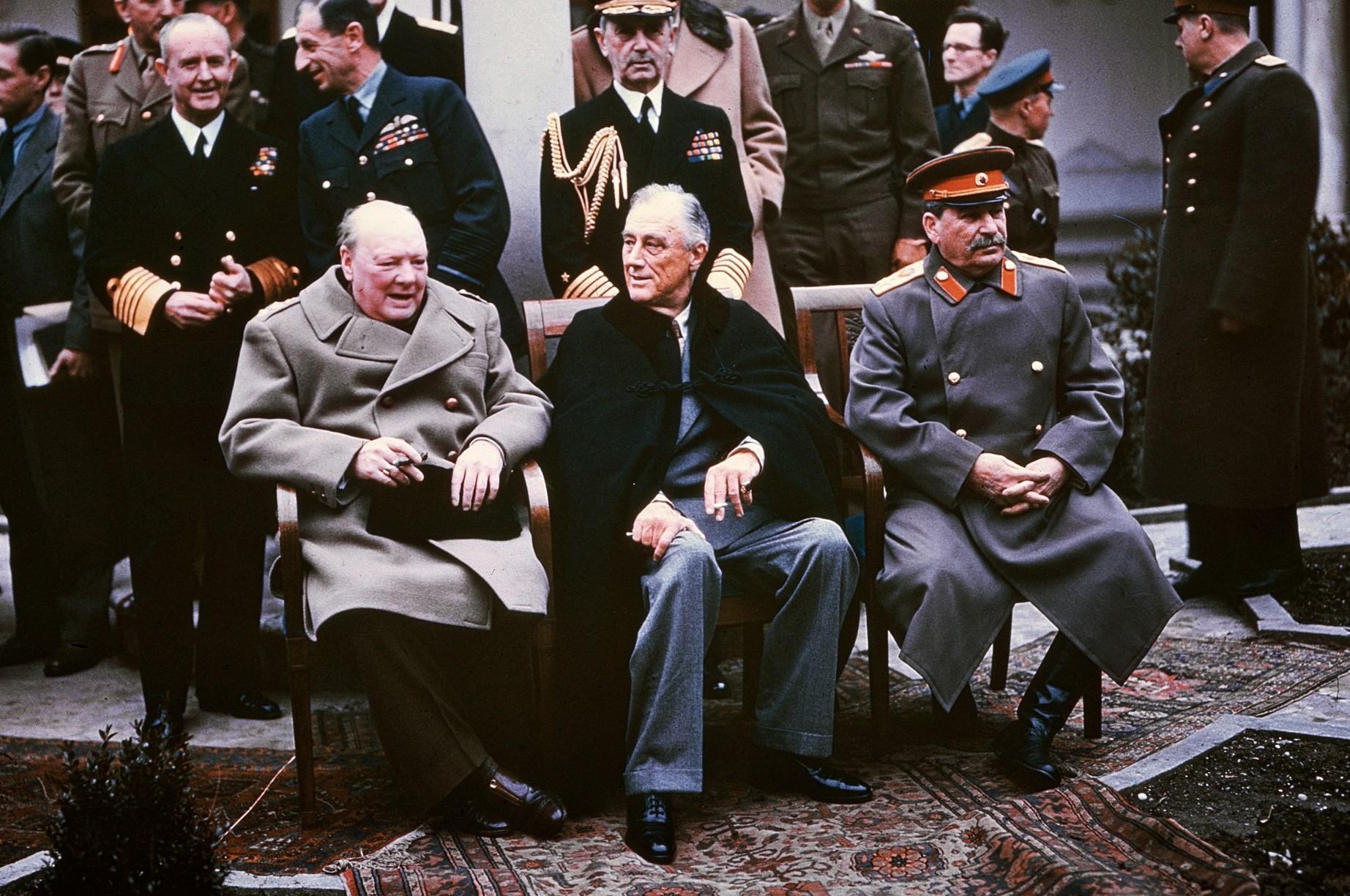
Yalta 2, and All That
By CONRAD BLACK
|This article is from the archive of The New York Sun before the launch of its new website in 2022. The Sun has neither altered nor updated such articles but will seek to correct any errors, mis-categorizations or other problems introduced during transfer.

Published:
Updated:
If the past truly is prologue, then “The Landmark Herodotus: The Histories” (Pantheon, 953 pages, $45), edited by Robert B. Strassler, is the starting point for understanding two-and-a-half millennia of Western history. For it is Herodotus whom we must credit not just with inaugurating history as a subject of inquiry, but for using the very word, historiē, to name that activity of research and writing. This massive volume, with a new translation by Andrea L. Purvis and introduction by Rosalind Thomas, reintroduces us to the Greek author and explorer of the fifth century before the common era who was the progenitor not just of history but of what we would today call journalism, ethnography, geography, and political science. With 21 appendices and 127 maps, Mr. Strassler and his trans-Atlantic colleagues make the breadth and depth of this classic work accessible to a new generation of readers — amateurs and scholars alike.
By CONRAD BLACK
|
By THE NEW YORK SUN
|
By JAMES BROOKE
|
By MATTHEW RICE
|
By SHARON KEHNEMUI
|
By DANIEL McCARTHY
|
By VERONIQUE de RUGY
|
By ROSS ANDERSON
|If the past truly is prologue, then “The Landmark Herodotus: The Histories” (Pantheon, 953 pages, $45), edited by Robert B. Strassler, is the starting point for understanding two-and-a-half millennia of Western history. For it is Herodotus whom we must credit not just with inaugurating history as a subject of inquiry, but for using the very word, historiē, to name that activity of research and writing. This massive volume, with a new translation by Andrea L. Purvis and introduction by Rosalind Thomas, reintroduces us to the Greek author and explorer of the fifth century before the common era who was the progenitor not just of history but of what we would today call journalism, ethnography, geography, and political science. With 21 appendices and 127 maps, Mr. Strassler and his trans-Atlantic colleagues make the breadth and depth of this classic work accessible to a new generation of readers — amateurs and scholars alike.
Already have a subscription? Sign in to continue reading
Cancel anytime
By continuing you agree to our Privacy Policy and Terms of Service.
Cancel anytime