
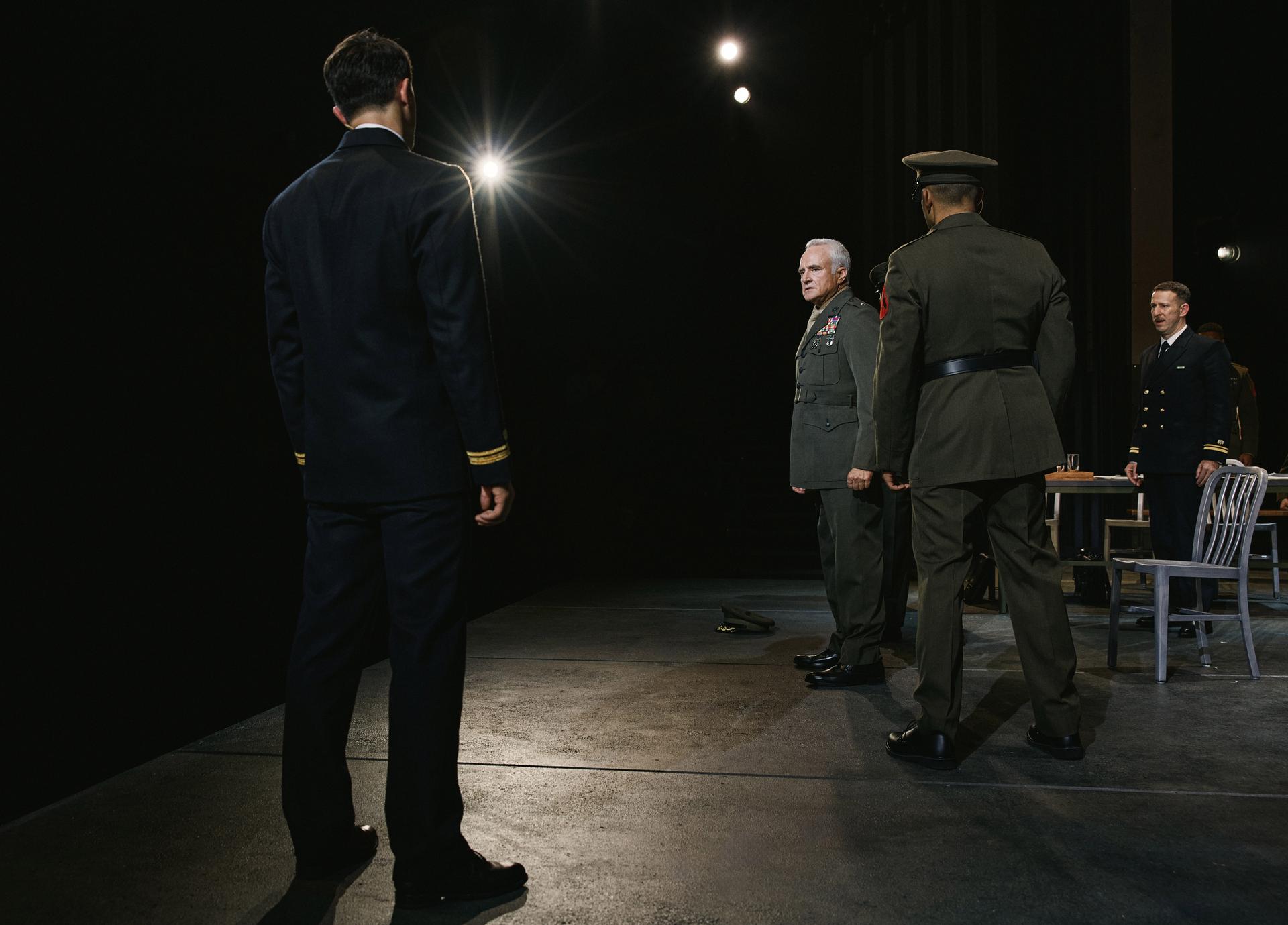
A Few Good Movie Memories Overshadow Aaron Sorkin’s Broadway Revival
By ALEX ZDAN
|This article is from the archive of The New York Sun before the launch of its new website in 2022. The Sun has neither altered nor updated such articles but will seek to correct any errors, mis-categorizations or other problems introduced during transfer.

Published:
Updated:
To understand why Marshall Sahlins feels the need to apologize to Thucydides, one has to understand the central role of the ancient Greek historian in creating our idea of what history is. His older contemporary Herodotus may have been the “Father of History,” the first writer to analyze oral traditions and conduct research expeditions, but Herodotus’s roots remained in poetry, and his tales draw on the mythical and marvelous. Thucydides, when he set himself the task of writing the history of the Peloponnesian War – “the greatest movement yet known in history, not only of the Hellenes, but of a large part of the barbarian world – I had almost said of mankind” – firmly rejected all such fictions. He meant to write what we would now call scientific history, based on reason and evidence: “With reference to the narrative of events,” he promised in his first chapter, “far from permitting myself to derive it from the first source that came to hand, I did not even trust my own impressions, but it rests partly on what I saw myself, partly on what others saw for me, the accuracy of the report being always tried by the most severe and detailed tests possible.” With a contemptuous glance at Herodotus, Thucydides declared, “The absence of romance in my history will, I fear, detract somewhat from its interest; but if it be judged useful by those inquirers who desire an exact knowledge of the past as an aid to the interpretation of the future, which in the course of things must resemble if it does not reflect it, I shall be content.”
By ALEX ZDAN
|
By MATTHEW RICE
|
By A.R. HOFFMAN
|
By SETH LIPSKY
|
By THE NEW YORK SUN
|
By LAWRENCE KUDLOW
|
By BRADLEY CORTRIGHT
|
By THE NEW YORK SUN
|To understand why Marshall Sahlins feels the need to apologize to Thucydides, one has to understand the central role of the ancient Greek historian in creating our idea of what history is. His older contemporary Herodotus may have been the “Father of History,” the first writer to analyze oral traditions and conduct research expeditions, but Herodotus’s roots remained in poetry, and his tales draw on the mythical and marvelous. Thucydides, when he set himself the task of writing the history of the Peloponnesian War – “the greatest movement yet known in history, not only of the Hellenes, but of a large part of the barbarian world – I had almost said of mankind” – firmly rejected all such fictions. He meant to write what we would now call scientific history, based on reason and evidence: “With reference to the narrative of events,” he promised in his first chapter, “far from permitting myself to derive it from the first source that came to hand, I did not even trust my own impressions, but it rests partly on what I saw myself, partly on what others saw for me, the accuracy of the report being always tried by the most severe and detailed tests possible.” With a contemptuous glance at Herodotus, Thucydides declared, “The absence of romance in my history will, I fear, detract somewhat from its interest; but if it be judged useful by those inquirers who desire an exact knowledge of the past as an aid to the interpretation of the future, which in the course of things must resemble if it does not reflect it, I shall be content.”
Already have a subscription? Sign in to continue reading
Cancel anytime
By continuing you agree to our Privacy Policy and Terms of Service.
Cancel anytime