Winterbottom Gets To the ‘Heart’ of It
This article is from the archive of The New York Sun before the launch of its new website in 2022. The Sun has neither altered nor updated such articles but will seek to correct any errors, mis-categorizations or other problems introduced during transfer.

It wasn’t until the final cut of “A Mighty Heart” screened at the Cannes Film Festival last month — to a surge of critical acclaim that included talk of Academy Awards — that the director, Michael Winterbottom, said he was again able to see the story of Daniel Pearl’s abduction and murder through an outsider’s eyes.
“Cannes was very much the first time we screened it — we were literally working up until the last minute, and it was a rather intense process,” Mr. Winterbottom said over the phone from Italy last week, where he was preparing to travel to America for the film’s New York premiere (the film makes its national premiere on Friday). “It was a very emotional experience; not just the movie, but Mariane was there — she walked the red carpet, and then went home and put Adam to bed, before returning at the end and seeing the audience.”
For Mariane Pearl — widow of Daniel and mother to Adam, the child Daniel never lived to see — that initial screening marked the end of a journey she had helped set into motion years before. Long after her world was torn apart in February 2002, when her husband, a reporter for the Wall Street Journal, was abducted en route to a meeting with a Pakistani spiritual leader and eventually murdered, Mariane sat down to write the story of her experience. Not long after, she reached out to the actress Angelina Jolie and asked her to play her part in the cinematic treatment of the book “A Mighty Heart.”
“I learned, at a press conference in Cannes actually, that Mariane was the person who first asked Angelina to play the part, and the first time I met Angelina, it was with Mariane,” Mr. Winterbottom said. “They were already close friends and they talked about the ideas of the film in much the same way. And while it was a given that Angelina was going to be in the movie, seeing them together made it all seem so perfect. It’s such a personal and difficult part, and the fact that the actress knew that person, and wanted to make the movie for that person, I think it helped her really get to that place.”
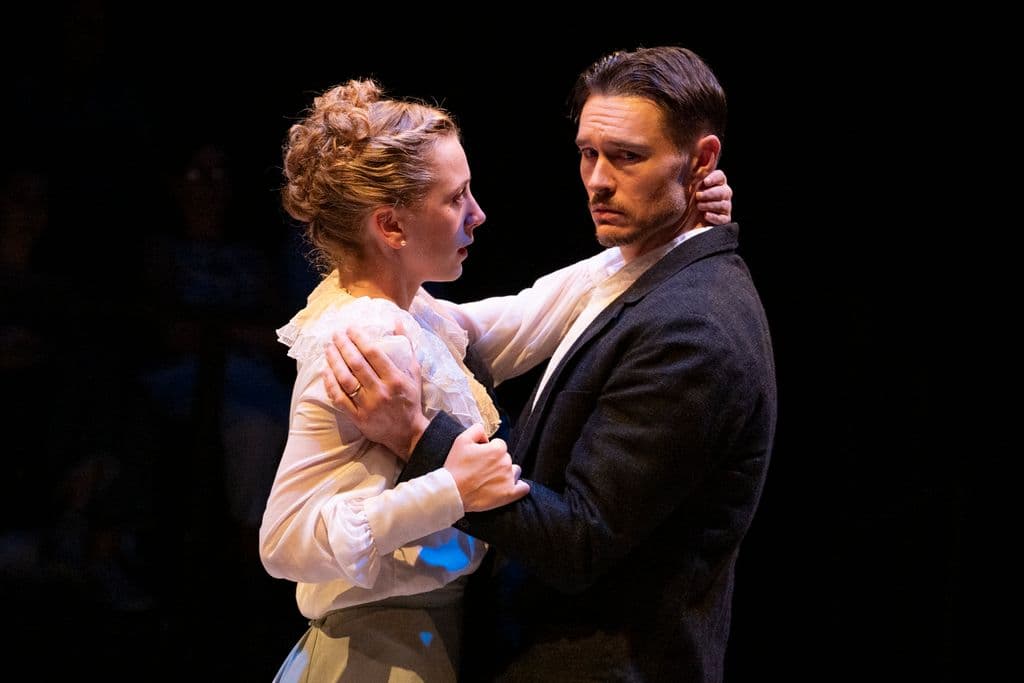
By “that place,” he means the film’s horrifying conclusion — the moment when Mariane is informed of her husband’s death and falls from a place of stoic hope to a place of inconsolable despair. Mr. Winterbottom agreed that the film, which painstakingly details the search for Daniel that originated from Mariane’s house and involved a seemingly endless array of American diplomats, Pakistani officials, and close confidants around the world, should build up to this moment, when Mariane’s tough façade finally crumbles into the agony of a pregnant widow — perhaps the most intense and harrowing scene of Ms. Jolie’s career.
It’s the scene that has left many preview audiences talking, and one for which Mr. Winterbottom prepared meticulously to ensure that its pace would afford Ms. Jolie the freedom to connect with Mariane’s pain. In fact, throughout the shooting of “A Mighty Heart,” which was conducted chronologically, the director said he focused on long takes that allowed the actors to bring a sense of realism and rhythm to their interactions. Noting that the film’s penultimate sequence, involving Mariane’s breakdown, plays out onscreen for upward of 15 minutes, Mr. Winterbottom said he intentionally shot the scene without a cut, beginning the sequence with Mariane in her bedroom as she hears the return of a caravan of cars, then following her as she walks out into the living room, hears the news, and retreats back to the bedroom in an emotional outburst of anger and agony.
“To understand Mariane’s story, you need to understand that moment,” he said, walking through the focus that went into this single, essential minute of the film. “We researched the accounts of all these people in the house, and we mapped what we thought was the best possible version. The rest, though, was Angelina, who was right in that moment from the very first take.”
From the outset, the director said he had decided to use a documentary — some prefer the term “cinema verité” — approach, and dismissed a question about whether he was ever concerned about making this real-life tragedy seem “too real.”
“Mariane had written this book in an incredibly vivid, personal way, and I wanted to be faithful to that open spirit,” he said. “It was incredibly helpful to meet her in Paris, and to talk about her experience and what she had been through [in Pakistan], and what I realized is that she had already done an amazing job of creating a world inside that house, of putting us inside the story and making it accessible. My approach was to make the film, with all the action both inside and outside the house, follow the shape of the book.”
One sensitive point of the big-screen adaptation of “A Mighty Heart” was how Daniel Pearl would be presented in the story. In the end, Mr. Winterbottom decided to show Daniel (played by Dan Futterman) only in brief, subdued flashbacks, shrouding the present in the same uncertainty that confronted Mariane during those frantic weeks, as she awaited word from any corner about the fate of her husband. “It was so difficult, it’s this gray area in the screenplay,” Mr. Winterbottom said. “We wanted to keep the shape of Mariane’s accounts, and that starts with the day that Daniel goes missing. She’s limited in the facts she knows, and so are we — there’s no speculation as to what’s going on, or what his ordeal must have been like. We’re limited to the accounts of the things happening inside the house, and what we experience is what she experienced, thinking of her husband, of their life together.
“Above all, they are both journalists, and we wanted to embrace their code of being accurate — accurate to what this experience was really like for them … no matter how painful.”