As Federal Prosecutors Take Aim at James Comey and Letitia James, Can They Prove That Lies Were Federal Crimes?
The Justice Department’s decision to push forward with charges against Comey may be a risky one.
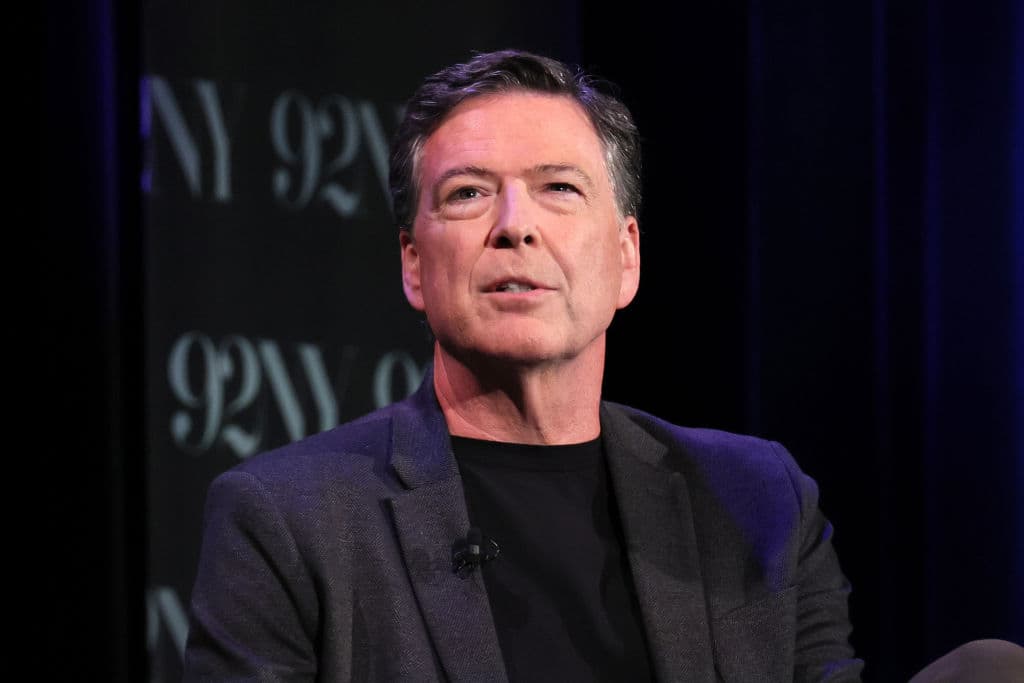
The desire of the Trump Department of Justice to criminally charge Attorney General of New York, Letitia James, and FBI Director James Comey amounts to a high-stakes gamble that the prosecutions could implode.
President Trump has made clear he thinks Ms. James and Mr. Comey should be charged. He fired the previous United States attorney for the Eastern District of Virginia, Erik Siebert after he discovered, he said, that Mr. Siebert had been warmly endorsed by the state’s two Democratic Senators, who Mr. Trump despises. ABC News reported that the prosecutor had been dragging his feet on bringing charges against Mr. Comey and Ms. James.
Grand juries usually return indictments at a rate north of 90 percent — hence the old saw that prosecutors could get grand juries to “indict a ham sandwich.” The Trump DOJ, though, has encountered resistant grand juries, suggesting that securing an indictment could be no sure thing.
Mr. Trump told reporters that “We have to act fast — one way or the other. They’re guilty, they’re not guilty — we have to act fast. If they’re not guilty, that’s fine. If they are guilty or if they should be charged, they should be charged.” He wrote to Attorney General Bondi in a Truth Social post that Nothing is being done. What about Comey, Adam ‘Shifty’ Schiff, Leticia??? They’re all guilty as hell, but nothing is going to be done.”
When Mr. Trump says “we have to act fast,” he may be referring to the five year statute of limitations on perjury, which for Mr. Comey will expire in days if applied to his testimony before Congress in 2020, where he is widely believed to have made provably false statements about leaking to the press.
CNN’s Kaitlan Collin, whom Mr. Trump repeatedly accuses of bias, reports — along with four other colleagues — that that “Attorney General Pam Bondi and other federal prosecutors have concerns about the case against former FBI Director James Comey.” ABC News, which Mr. Trump recently denounced as “hateful” and “fake news,” claims that federal prosecutors in Virginia were unable to gather sufficient evidence to support bringing criminal charges.
Line prosecutors in the Eastern District have shared that skepticism with the new United States attorney, Lindsey Halligan, in a memorandum. Ms. Halligan has never prosecuted a felony case before, but she does not have an abundance of time to read into the case because a key statute of limitations deadline for possible perjury charges will pass on September 30.
The case against Mr. Comey centers on statements he made during his congressional testimony in September 2020 related to the 2016 Trump-Russia collusion investigation. Mr. Comey claimed under oath that he did not authorize the leak of information. Senator Ted Cruz and other Republicans have claimed, with evidence, that FBI Deputy Director Andrew McCabe repeatedly told investigators — including the FBI’s inspector general — that he leaked information with respect to the Clinton Foundation at Mr. Comey’s orders.
Mr. Comey testified during that hearing that his work was “in the main … done by the book, it was appropriate, and it was essential that it be done. Overall, I’m proud of the work. There are parts of it that are concerning, which I’m sure we’ll talk about. But overall I’m proud of the work.” The legal standard for securing an indictment is “probable cause,” meaning that there is sufficient evidence for a grand jury to believe that a crime has been committed and that the defendant committed it.
Mr. Trump on Thursday was asked whether he would order the DOJ to seek an indictment. He responded that “I’m not making that determination. I think I’d be allowed to get involved if I want, but I don’t really choose to do so. I can only say that Comey is a bad person. He’s a sick person. I think he’s a sick guy, actually. He did terrible things at the FBI. But I don’t know. I have no idea what’s going to happen.”
ABC News reports that similar doubts have glommed onto the criminal case against Ms. James. ABC relates that the Eastern District is also doubtful that a prosecution can be built around the accusation that Ms. James listed a modest Norfolk, Virginia home as her primary residence. She is also accused of listing her father as her husband on mortgage documents and undercounting the number of units in her Brooklyn brownstone, all to secure better loan terms.
Ms. James’s lawyer, Abbe Lowell, calls the allegations “stale” and “threadbare” and suggests that other documentation exists that contradicts the position put forth by the director of the Federal Housing Finance Agency, William Pulte, that Ms. James intentionally committed fraud. Any conviction would require a showing of an intent to deceive, not the mere existence of mistakes.
Ms. James — an elected Democrat who campaigned on a promise to investigate Mr. Trump’s businesses — secured a civil fraud verdict of $500 million against Mr. Trump and his business which was reversed on appeal. Mr. Trump loathes her.
The standard for convicting a defendant is “beyond a reasonable doubt,” which is far more arduous for the government to prove than probable cause. If Ms. Halligan seeks indictments with the knowledge that probable cause is lacking, she runs the risk of violating the DOJ’s own policies — and possible repudiation from grand juries.