As the UN Launches Its Annual Debate, Washington Wonders Whether the World Body Serve Its Interests

After UN-favoring Democrats long blocked the Senate confirmation of a former national security adviser, Mike Waltz, the Senate finally approves him as America’s ambassador to the UN.
AP/Alex Brandon
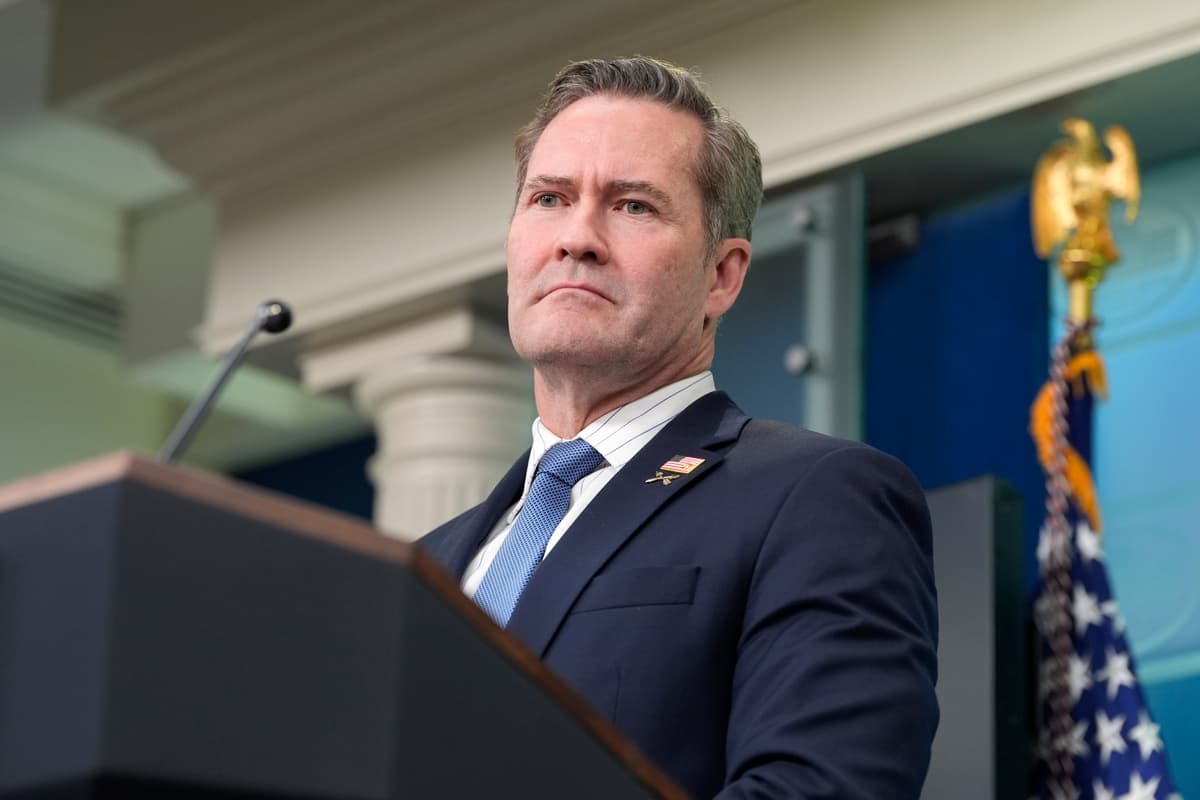
Mike Waltz is America’s new ambassador to the UN. AP/Alex Brandon

Should America finance and participate in a bloated institution that consistently attempts to isolate and condemn its foreign policy tenets, one that singles out our most trusted Mideast ally for tar-and-feather rituals? 

In an unwritten United Nations tradition, Jewish holidays are noted with anti-Israel votes. This Monday, as heads of state arrive at New York for their annual gabfest, they will mark Rosh Hashanah by conducting one of the most significant assaults on the Jewish state’s legitimacy in decades.

The American delegation to the General Assembly, though, will now at least be bolstered by an ambassador who is close to President Trump. After UN-favoring Democrats long blocked the Senate confirmation of a former national security adviser, Mike Waltz, the Senate finally approved him as America’s ambassador to the UN on Friday, just in time for next week’s events, starting with a Monday conference on the promotion of a “two state solution.”

A French-led resolution calling for recognizing an independent Palestinian Authority-led state living peacefully next to Israel provided the backbone for the conference. “Recognition of a Palestinian state is the best way to isolate Hamas,” President Emmanuel Macron told Israel N12 television. He dismissed as “pure cynicism” that Hamas welcomed his initiative. 

Mr. Trump, who is scheduled to address the General Assembly on Tuesday, opposes the French move, which is being joined by allies like Britain, Canada, and most of the European Union.

In his speech, Mr. Trump could cite a Friday discovery by the Israel Defense Force of a rocket factory near the Palestinian Authority’s capital of Ramallah. The IDF said its intervention prevented an imminent rocket attack aimed at central Israel’s major population centers. 

Washington, though, is extremely isolated at the General Assembly, where it often votes alongside a tiny minority against a groundswell of support for a one-sided plethora of resolutions, from Israel-bashing to America’s policy on Communist Cuba.    

America’s isolation is far from new, a former National Security Council member and UN delegate, Hugh Dugan, tells the Sun. In today’s fast-moving media environment, he says, America’s detractors seem “louder and shriller and harsher than ever.” At the UN, he adds, many fear being “on the wrong side of history — or the wrong side of the social media feed.”

One of the loudest promoters of the anti-Israel line is the UN secretary-general, Antonio Guterres, who also opposes such American policies as Mr. Trump’s endorsement of energy resources deemed harmful for the climate. His second five-year term as UN chief will end next year, and the race to replace him will quietly start in earnest next week, as heads of state arrive at Manhattan.

America and Russia will likely dominate the selection process, Mr. Dugan says. Yet, “our attempts to really play in these elections haven’t worked out very well in the past,” a former national security adviser, Richard Goldberg, tells the Sun. Now a senior adviser at the Foundation for Defense of Democracies, Mr. Goldberg says America must use its economic leverage to fight for cutting UN redundancies. 

Washington finances nearly a quarter of the UN regular budget and supplies even more funds to other UN operations, which altogether add up to $20 billion a year. The UN has 193 member states, and “92 of them have GDPs less than $20 billion,” Mr. Dugan notes.   

America does hold a veto right in the UN’s most powerful organ, the Security Council. On Thursday a Washington delegate, Morgan Ortagus, vetoed an Algerian proposal for a resolution demanding an unconditional cease-fire in Gaza, which would amount to a Hamas war victory.

On Friday, on the other hand, America endorsed a council resolution proposed by Britain, France, and Germany to end the 2015 Iran nuclear deal and reinstate all sanctions on the Islamic Republic that existed before it. America tried to trigger that “snapback” mechanism in 2019, but the Europeans blocked the attempt. Now, nuclear- and missile-related sanctions, as well as a ban on weapons transactions and other restrictions, will be reimposed globally by the end of September. 

“Having a permanent veto on the Security Council is valuable not because we’re going to achieve anything, but we can stop things,” Mr. Goldberg says.

Next week, though, “expect something of a food fight as it relates to the war in Gaza,” the FDD executive director, Jonathan Schanzer, says. It will “play out at the UN over the coming weeks, and I do think it will be a rather bizarre and saddening spectacle,” he says, adding that it will reflect badly on the American-led “international order that was designed to protect countries and to allow them to defend themselves and to uphold Western values, democratic values.”


The New York Sun

© 2025 The New York Sun Company, LLC. All rights reserved.

Use of this site constitutes acceptance of our Terms of Use and Privacy Policy. The material on this site is protected by copyright law and may not be reproduced, distributed, transmitted, cached or otherwise used.

The New York Sun

Sign in or  create a free account

or
By continuing you agree to our Privacy Policy and Terms of Use