
At Now-Empty Institute Bearing His Name, Trump Oversees Peace Agreement Between African Rivals

At the heart of the pact between Rwanda and the Democratic Republic of Congo are separate deals to provide American companies access to rare earths and other minerals.
Evan Vucci/AP
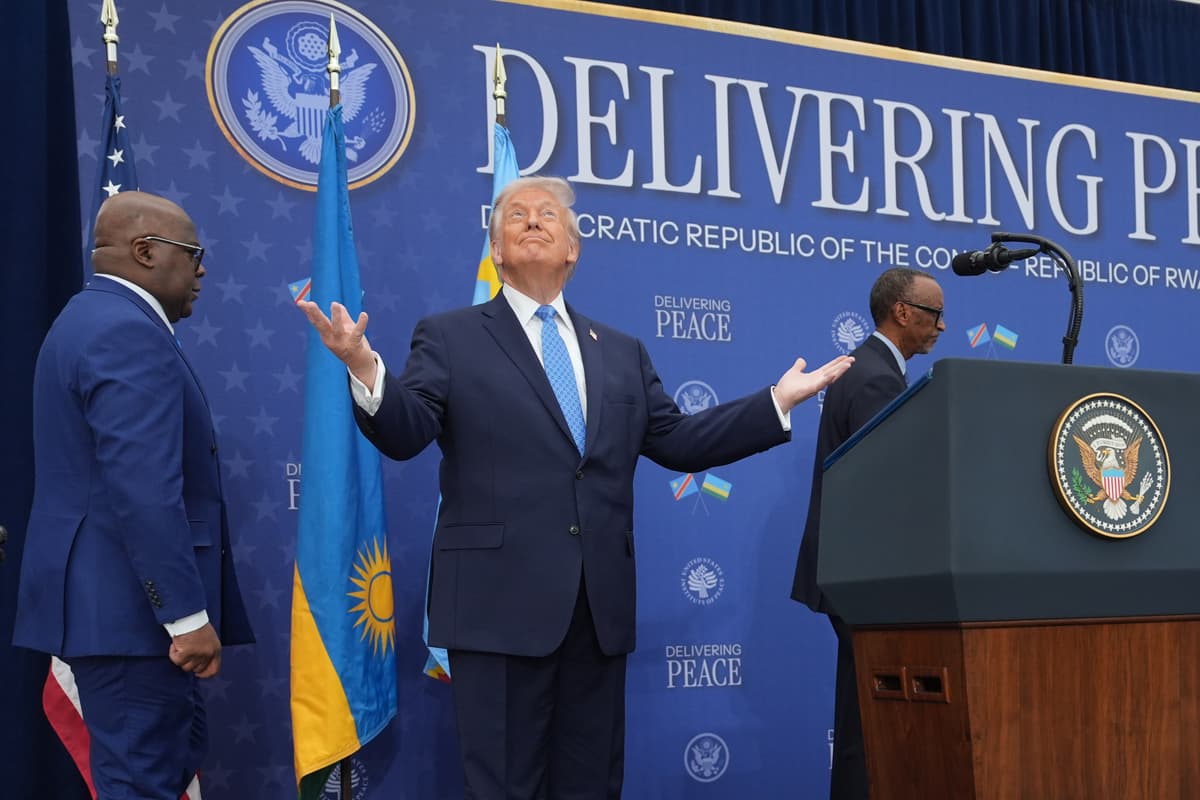
President Donald Trump arrives for a signing ceremony with presidents Paul Kagame of Rwanda and Felix-Antoine Tshisekedi of the Democratic Republic of Congo at the Donald J. Trump Institute of Peace at Washington on December 4, 2025. Evan Vucci/AP

While inside proclaiming “a great day for the world,” President Trump might have been more thrilled by the crowd outside.

“Congo, Congo,” they persisted in shouting, waving Congolese and American flags and portraits of the countries’ respective presidents long after Mr. Trump had returned to the White House in a cavalcade of limousines and motorcycles.

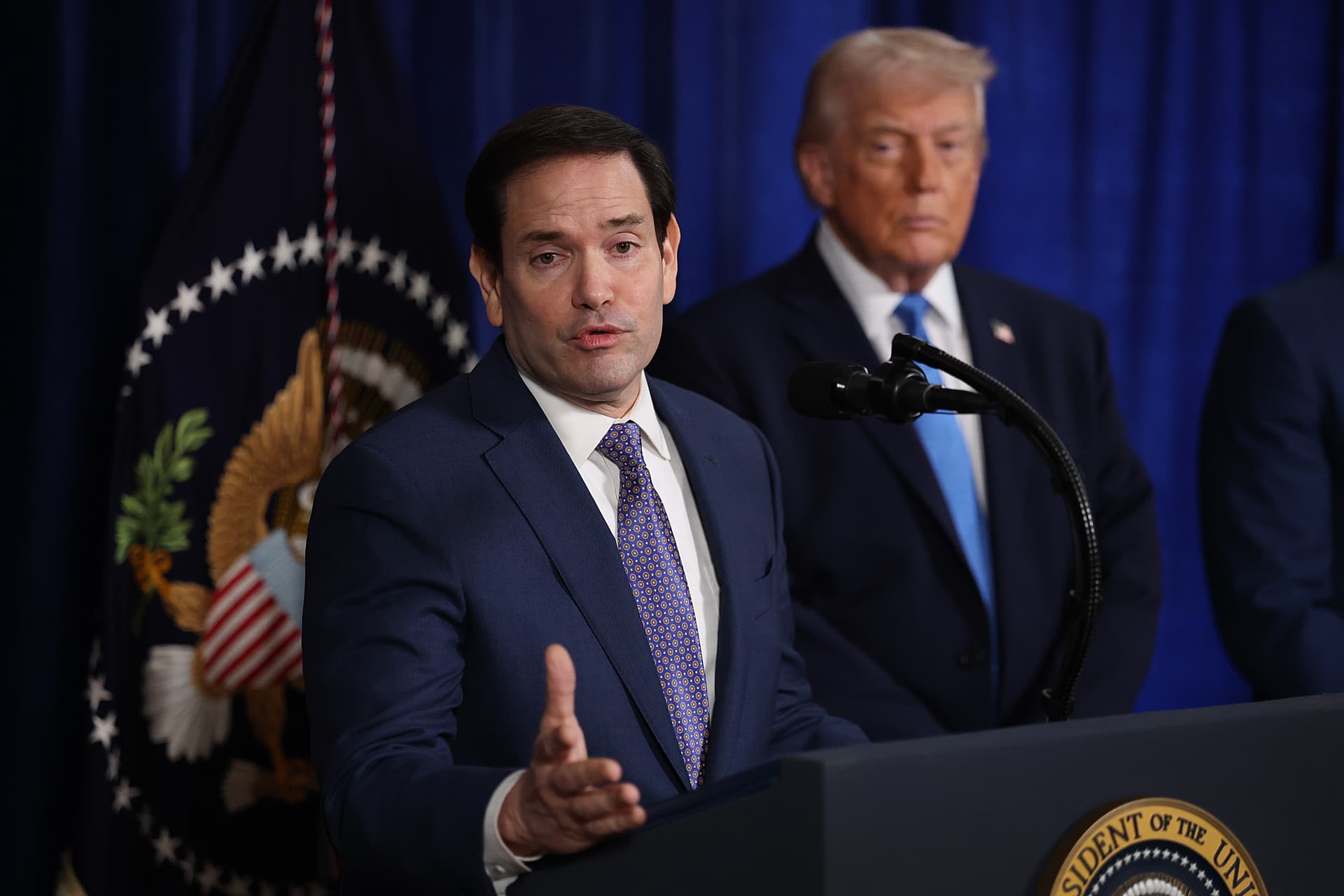
The occasion was the signing of a peace agreement by the president of the Democratic Republic of Congo, Felix Tshisekedi,  and the president of Rwanda, Paul Kagame. The White House said Mr. Trump had brokered the deal in yet another success at settling bloody wars. “Today, we’re succeeding where so many others have failed,” Mr. Trump told the two presidents and representatives of other African nations.

Mr. Trump got the two leaders together in a sprawling building with huge glass windows and a glassy ceiling that’s headquarters for what had been the United States Institute of Peace, a non-governmental organization that provided a forum for speeches and seminars intended to encourage peaceful interaction on a global scale.

The State Department, across the street  from the institute, announced this week that the building has a new name, the “Donald J. Trump Institute of Peace.”  Overnight, the words “Donald J. Trump” appeared in large aluminum  lettering on the exterior wall above “United States Institute of Peace,” the name that’s been there ever since  the institute moved from cramped quarters in downtown Washington in 1984. 

The building looks just the same, with or without Mr. Trump’s name, but the entire staff, including numerous retired diplomats and scholars, moved out after Mr. Trump said he had the right to take charge, just as he’s done with the Kennedy Center, visible a few blocks away.

Contesting the administration’s claim, a lawyer for the institute maintained it was an independent entity, not a government agency. Bereft of staff, the building remains in government hands while a court decides whether to return it to the non-governmental organization that the White House kicked out.

For Mr. Trump, the “Donald J. Trump Institute of Peace” provides what should be an ideal venue for functions supporting his image of himself as a man of peace. 

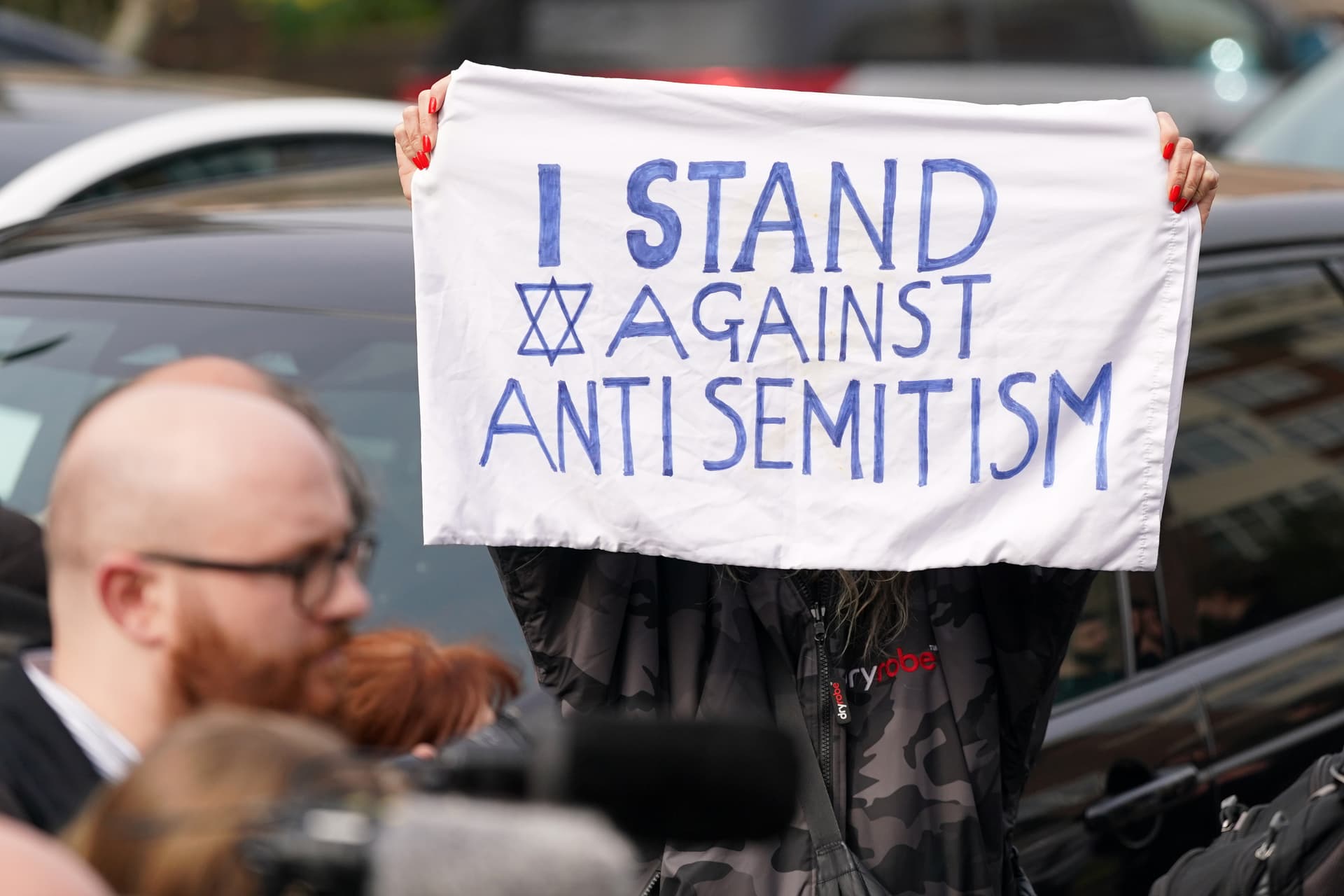
He could not have asked for a more enthusiastic crowd than the several hundred people, mostly from the Congo, who jammed behind police lines. One sign said, “Trump for Noble Peace Prize” – a misspelling of the name of the 19th century Swedish inventor, Alfred Nobel, in whose name  Nobel peace prizes are given annually.

The outlook of the Congolese, however, did not bode well for lasting peace with Rwanda. “They are killers,” people in the crowd told The New York Sun  when asked why Rwandans were not also there shouting for Mr. Trump. “We hate them.”

In fact, peace is hardly at hand in war-wracked Central Africa.  The Associated Press reported the presidents of Congo and Rwanda did not shake hands under Mr. Trump’s benevolent gaze — and that the fighting intensified this year as Rwandan rebels seized Congolese cities.

Nonetheless, the leaders of the two countries  put on a show of optimism. When Mr. Trump “saw the opportunity to contribute to peace, he immediately took it,” said the president of Rwanda, Mr. Kagame. “This is a path where peace will not just be a wish, an aspiration, but a turning point,” said the Congolese president,  Mr. Tshisekedi.

Down the street from the pro-Congo demonstrators, two or three women said they too were from Congo — but had a much different take on Mr.  Trump’s motives. Hefting a sign saying, “Don’t Steal Our Minerals,” they told the Sun that Mr. Trump was interested only in exploiting the mineral wealth of the region. “Have you heard of imperialism?” one of them asked.

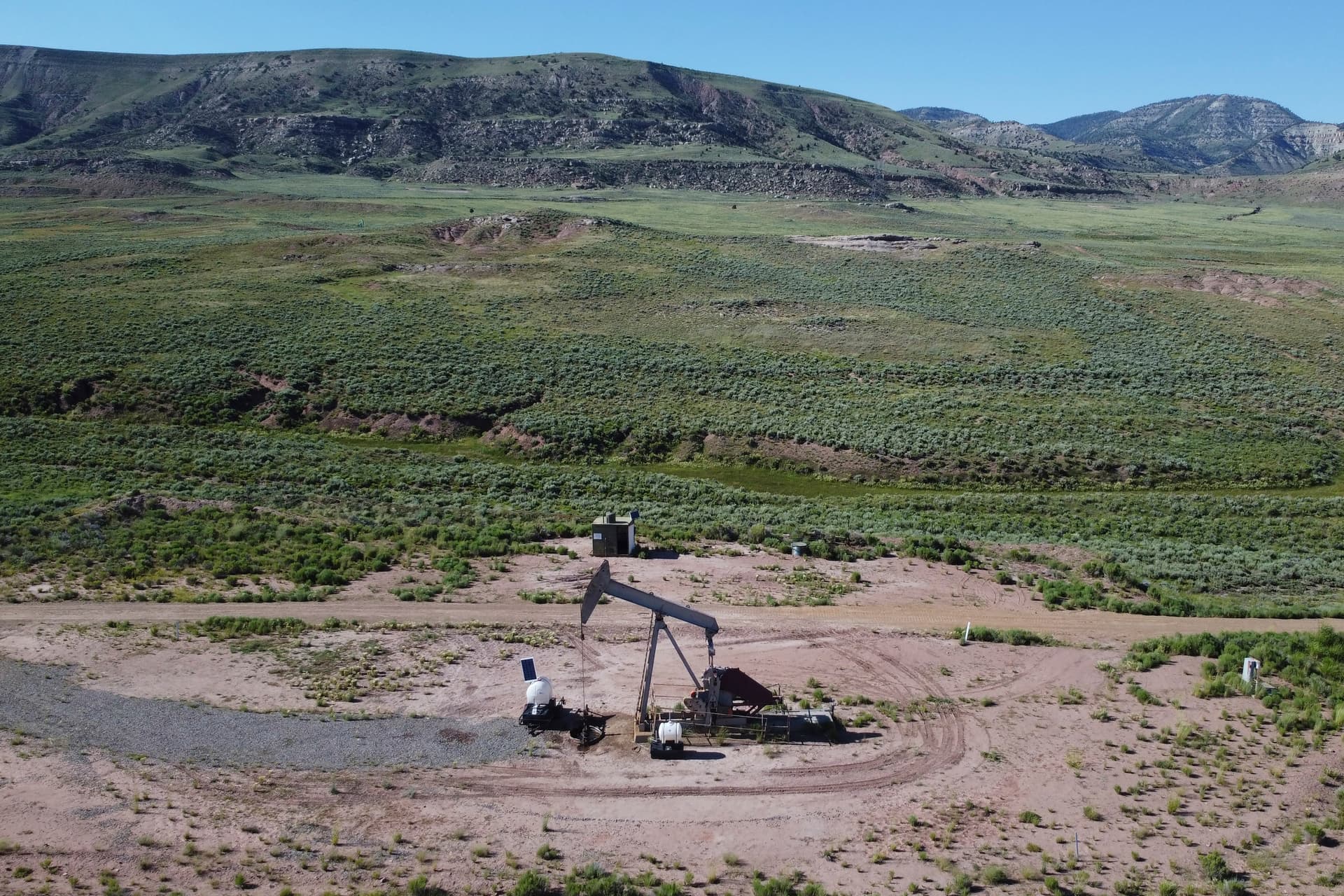
In fact, minerals are unambiguously a reason why Mr. Trump would like to see the two nations at peace. In the quest for minerals including rare earths, most of which America now gets from China, he negotiated separate deals with each of the presidents.

“Everybody’s going to make a lot of money,” Mr. Trump said, promising  the two countries would provide opportunities for “some of our biggest and greatest U.S. companies.”


The New York Sun

© 2025 The New York Sun Company, LLC. All rights reserved.

Use of this site constitutes acceptance of our Terms of Use and Privacy Policy. The material on this site is protected by copyright law and may not be reproduced, distributed, transmitted, cached or otherwise used.

The New York Sun

Sign in or  create a free account

or
By continuing you agree to our Privacy Policy and Terms of Use