Bad Bunny’s Summer Sojourn in Puerto Rico Rekindles a Long-Running Debate Over Its Political Future

‘Bad Bunny is a cultural juggernaut, amplifying the independence movement by giving it a global stage.’

Alejandro Granadillo/AP
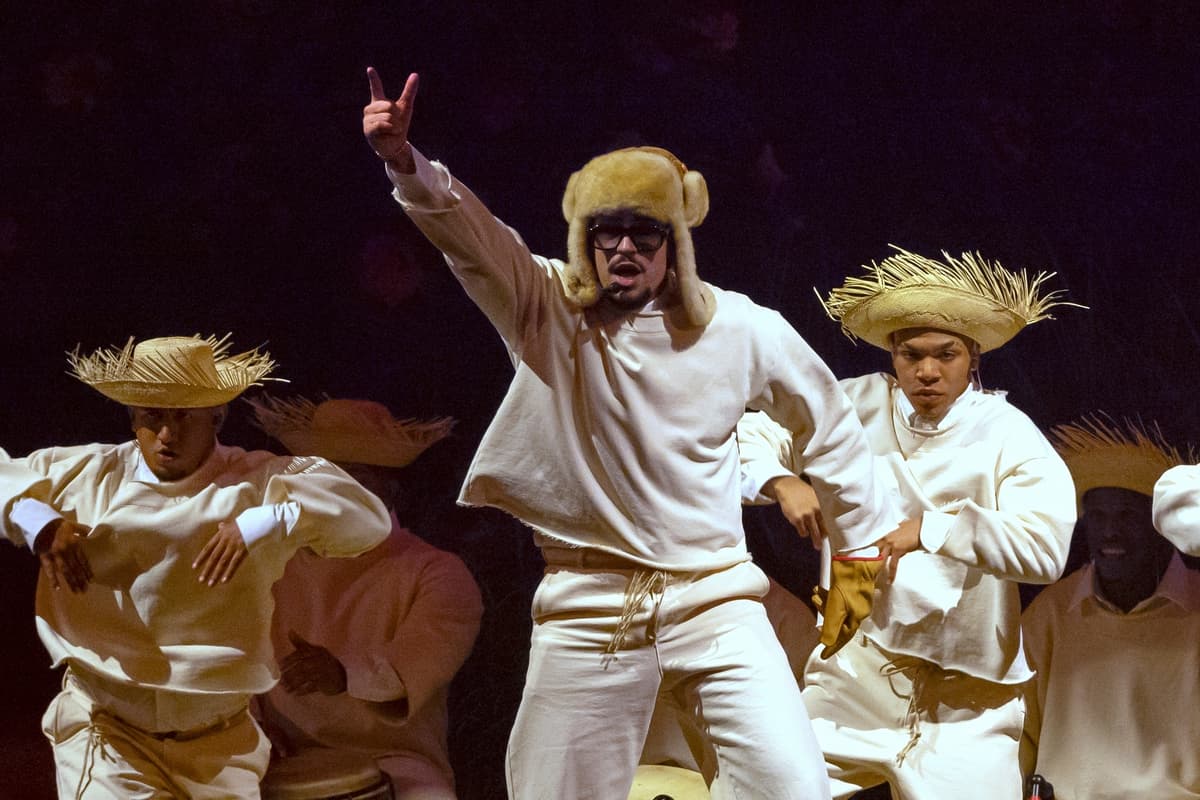
Bad Bunny performs at San Juan, Puerto Rico, on July 11, 2025. Alejandro Granadillo/AP

When Bad Bunny steps onto a stage in Puerto Rico, the roar of the crowd isn’t just for the music. It’s for a cultural and political awakening.

During his 2025 summer residency, the global superstar wove symbols of Puerto Rican nationalism into his performances, ranging from displays of  the island’s iconic La Borinqueña flag to social media posts bearing subtle references to independence movements.

For fans, it is a celebration of identity; for activists, a reminder that the island’s colonial status — a United States unincorporated territory for more than a century — is unresolved.

“Bad Bunny is a cultural juggernaut, amplifying the independence movement by giving it a global stage,” the managing director at the strategic policy firm Nestpoint Associates, John Thomas, tells the New York Sun.

“His influence sways younger voters and draws international eyes, but it’s more about optics than policy substance — celebrity endorsements don’t shift entrenched political realities.”

The executive director of the Puerto Rico Statehood Council, George Laws Garcia, echoed that point, stressing that while Bad Bunny “resonates with young people and especially far-left young people outside of Puerto Rico,” the island’s voters have repeatedly leaned the other way. In the 2024 referendum, more than 59 percent supported statehood compared with fewer than 12 percent for independence.

The Case for Sovereignty: Economics and Identity

Independence advocates argue that Puerto Rico could thrive free from American oversight while delivering a fiscal bonus to Washington. They project that ending the island’s territorial status could save the federal government billions in disaster relief and subsidies over the coming decades.

These activists envision an economically self-determined Puerto Rico — one able to shape its own tax policy, attract international investment, and grow local industries free of federal interference.

Mr. Thomas, however, warns that the “cost-saving claims are shaky. Cutting Puerto Rico loose could reduce direct federal spending, but it ignores economic ripple effects like trade disruptions or migration costs.”

That skepticism is shared by many policy experts, who stress that independence is far from a straightforward cost-saving measure. Mr. Garcia went further, arguing that the case overlooks Puerto Rico’s value to Washington. 

“The most likely outcome of Puerto Rico becoming an independent nation is that it would cost U.S. taxpayers and the federal government more money than if Congress were to make Puerto Rico a state,” he said.

For sovereignty supporters, the argument is not only economic but also cultural. Independence, especially among younger Puerto Ricans, is seen as a declaration of identity and pride.

Proponents outline strategies centered on tourism, agriculture, and regional trade partnerships with Latin America and the Caribbean. They also point to United Nations recognition of Puerto Ricans’ right to self-determination, adding international legitimacy to their cause.

Why Independence Isn’t Simple

Despite its allure, independence brings serious challenges. Puerto Ricans are United States citizens but lack full voting rights in federal elections and are represented in Congress by a non-voting delegate.

Critics warn that independence could strip away federal funding for essential services like healthcare, disaster relief, and social programs. The island’s economy remains fragile — heavily reliant on imports and weighed down by debt.

Mr. Garcia underscored the stakes: Independence could spark “massive population loss, which could reach one to two million or more residents” as those seeking to retain American citizenship move to the mainland.

Such disruption would ripple into the United States’ supply chains, while national security costs could rise given Puerto Rico’s strategic location in the Caribbean.

Meanwhile, polls consistently show statehood as the preferred option. 

“Desires for full U.S. citizenship benefits and economic stability drive this. Independence has vocal support but less traction; many see it as economically risky,” Mr. Thomas noted.

The tension, however, highlights a widening gap: cultural enthusiasm for independence, amplified by figures like Bad Bunny, versus the practical preferences of the broader electorate.

Washington’s Role and the Trump Administration

Federal policy has long been a double-edged sword. During the first Trump administration, Puerto Rico became a national flashpoint, with Washington condemned for its delayed response to Hurricane Maria.

“A second Trump term is doubling down on its first-term stance. Puerto Rico’s status is a local issue, not a federal priority,” Mr. Thomas said. “Trump’s focus is economic recovery over political status debates, pushing fiscal discipline and infrastructure over statehood or independence talks.”

Mr. Garcia added that regardless of presidential rhetoric, the core issue persists: “The island is still a territory subjected to the ‘plenary powers’ of Congress, without a meaningful say in who makes and implements the federal laws and programs the island lives under.”

“Ultimately, the power to pass legislation to end Puerto Rico’s territory status rests with Congress,” he continued, acknowledging that support for statehood from President Trump would likely encourage Republican majorities to act.

A Cultural and Political Turning Point

The debate over Puerto Rico’s future is no longer confined to congressional hearings or policy papers; it is being argued in music, art, and everyday conversation. Bad Bunny’s visibility amplifies the questions of sovereignty, even if the electoral math tells a different story.

“While Bad Bunny has the right to his political views and opinions, his voice must never be allowed to drown out that of the majority of voters who have repeatedly called for statehood as their preferred option for Puerto Rico’s future,” Mr. Garcia stressed.

For Washington, the decision may hinge on economics and governance. For Puerto Ricans, it is about something more intimate — the right to decide who they are and how they are represented. Independence, statehood, or continued territorial status each carries profound consequences for citizenship, culture, and community.

As the island weighs its path forward, the image of a sold-out concert series in San Juan is a reminder: Here, politics is not only fought in legislatures but sung, danced, and lived. Whether Puerto Rico claims independence, joins the Union as the 51st state, or remains a territory, the conversation has already shifted.

In that shift, Bad Bunny’s voice has become as much a part of Puerto Rico’s future as any vote in Congress.


The New York Sun

© 2025 The New York Sun Company, LLC. All rights reserved.

Use of this site constitutes acceptance of our Terms of Use and Privacy Policy. The material on this site is protected by copyright law and may not be reproduced, distributed, transmitted, cached or otherwise used.

The New York Sun

Sign in or  create a free account

or
By continuing you agree to our Privacy Policy and Terms of Use