‘Blanding’ Trend Faces Resistance as Americans of All Stripes Object to ‘Decluttered’ Cracker Barrel

As roadside restaurant chain strips away distinctive decor, backlash emerges against a future that’s trending toward drab, minimalist grayscale.
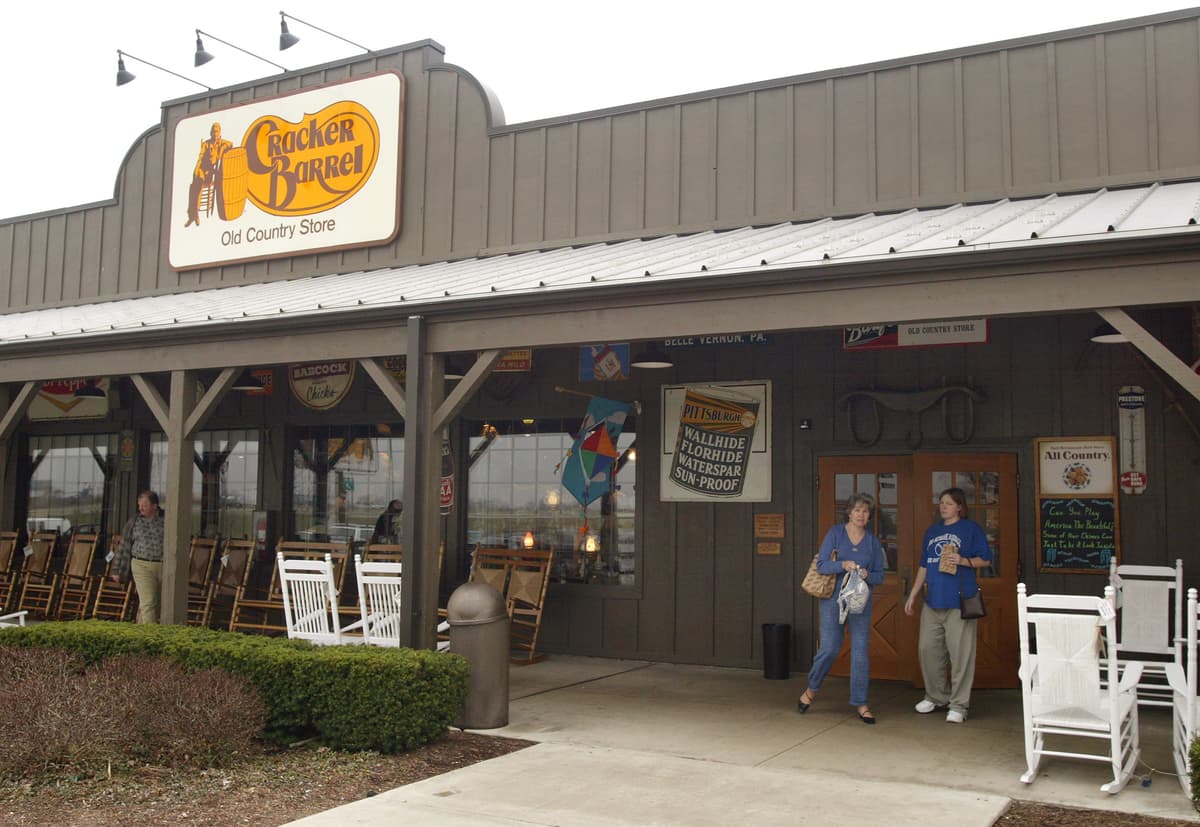

Tim Boyle/Getty Images
A Cracker Barrel Old Country Store restaurant in 2002 at Naperville, Illinois. Tim Boyle/Getty Images

Expect the uproar over Cracker Barrel’s “modernized” logo and “decluttered” restaurants to linger in the minds of marketers, designers, and builders for years. Americans across all demographics are pushing back against a future that’s trending toward drab, minimalist grayscale.

Fans of Cracker Barrel are directing their ire at the company’s chief executive, Julie Felss Masino, who stripped away the titular barrel and “Uncle Herschel” from the company’s logo. She also overhauled the menu, and “decluttered” some of the chain’s about 660 locations. “We’re just not as relevant,” she said last July, “as we once were.”

Ms. Masino, though, seems to have undervalued her chain’s cultural importance and the backlash against her changes was vast. TikTok videos excoriated the redesigned, bright-white new restaurants. Parodies of, and snarky remarks about, the words-only logo filled social media as diners objected to the removal of all that made Cracker Barrel special.

On X, the publisher of Film Threat, Chris Gore, called Ms. Masino’s aesthetic “blanding,” combining “brand” and “branding.” He sees the phenomenon “happening in all areas of culture — fashion, design, architecture, music, film, art, you name it. And it’s making everything boring as a result.”

The new Cracker Barrel logo is displayed on Thursday, Aug. 21, 2025, in New York.
The new Cracker Barrel logo on August 21, 2025, at New York. AP/Wyatte Grantham-Philips

Fox News girded for another “woke” battle while opposing outlets like the Daily Beast mocked “the MAGAverse’s Cracker Barrel meltdown.” Yet something more unifying soon emerged, demonstrating that the restaurant’s fans prefer wedges of pie over wedge issues. On Thursday night, the Democratic Party’s official X account got in on the Southern-themed chain’s action.

“We think,” the @TheDemocrats wrote, “the Cracker Barrel rebrand sucks too.” The post included the painting “Freedom of Speech,” Norman Rockwell’s depiction of an everyman addressing a public forum. Using an iconic piece of art reflected the appeal of Americana that the rebranding had laid bare.

Even as CGI and HDTV bombard us with color, the real world is fading to monochrome. According to Germain Motor Company, 80 percent of cars are gray, white, black, or silver. The vividness of Prince’s “Little Red Corvette,” Bruce Springsteen’s “Pink Cadillac,” and Kesha’s “Gold Trans Am” are relics of the past.

FILE - The Cracker Barrel Old Country Store logo in Pearl, Miss., is photographed, Sept. 12, 2023.
The Cracker Barrel Old Country Store logo at Pearl, Mississippi, September 12, 2023. AP/Rogelio V. Solis

Modern buildings are just as homogenized. In March, Slate explored “how giant white houses took over America,” and why the black-trimmed domiciles are “huge,” “unsightly,” and “everywhere.” In January 2024, Modern Home Builders reported on the “rise” of “box houses … prioritizing efficiency and functionality over decoration.”

Criticism of corporate blandness, to be sure, has a long track record. In 1920 novelist Sinclair Lewis, in “Main Street,” was scoring the rise of national brands and retail chains as a deadening influence on small-town life. Depicting a “Ford car” standing “in front of the Bon Ton Store” at the novel’s fictional Gopher Prairie, Minnesota, Lewis adds: “The story would be the same in Ohio or Montana, in Kansas or Kentucky or Illinois.”

In 1962, folk singer Malvina Reynolds lamented cookie-cutter suburban sprawl with the song “Little Boxes,” which decried “little houses” that were “made of ticky-tacky” and “all look the same.” Pete Seeger covered the song in 1963 in a famous recording. A “mournful ditty of suburban malaise,” the Financial Times calls the tune, that “sharply critiqued the growing conformity and consumerism of the US.”

lewis
Novelist Sinclair Lewis photographed by Oscar White, Pach Brothers Studio, around 1945. National Portrait Gallery via Wikimedia Commons

Yet today’s desire to preserve Cracker Barrel’s farmhouse aesthetic suggests the depth of opposition to the tendency toward sameness. The restaurants, even if they lack any real historic pedigree, are, like America, places of plenty, nostalgia, and chaos with everyone talking at once. There’s even capitalist kitsch from the Dolly Parton Cast Iron Skillet to T-shirts with slogans like, “Dog is OK. Beware of the Wife.”

This columnist visited Cracker Barrels in Eastern Pennsylvania on Friday. All of them were packed; none were the new, sanitized versions. The American melting pot was on full display, a range of people united by chicken dumplings, meatloaf, and cinnamon rolls.

One after another, marketers have advised stripping iconic brands and their logos of detail and originality. Ronald McDonald retired. Tropicana changed its orange juice logo and lost $20 million when consumers balked. Dunkin’ dropped its “Donuts.”

The defense of Cracker Barrel’s clutter and kitsch may be a kind of Waterloo for the “blanding” of America. It’s a moment that could well preserve some of the fun and color in a world that can be gray and boring enough as it is.


The New York Sun

© 2025 The New York Sun Company, LLC. All rights reserved.

Use of this site constitutes acceptance of our Terms of Use and Privacy Policy. The material on this site is protected by copyright law and may not be reproduced, distributed, transmitted, cached or otherwise used.

The New York Sun

Sign in or  create a free account

or
By continuing you agree to our Privacy Policy and Terms of Use