

‘Not Every Man Has His Price’: Can Money Pacify the Middle East?

‘Gazans don’t need financial help. They’re capable people with resources. The problem is their ideology, not their capabilities,’ an Israeli author and politician tells the Sun
AP/Matias Delacroix
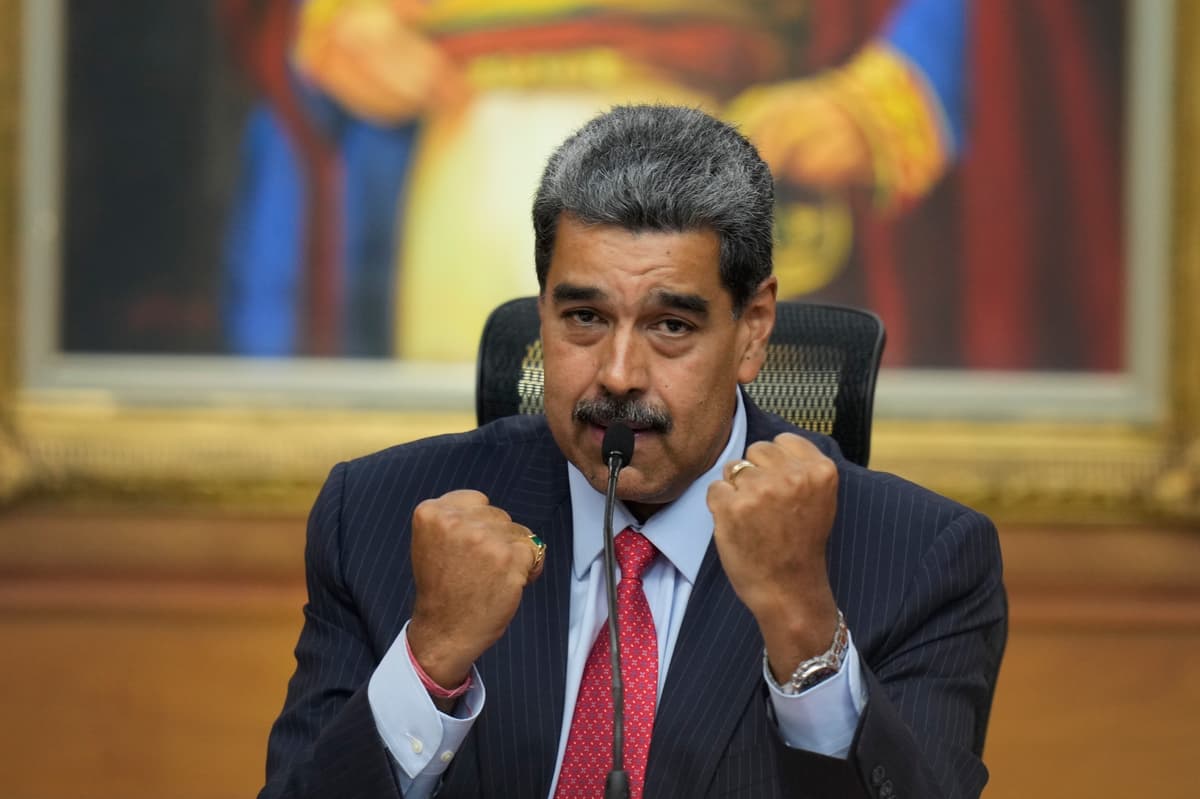
President Maduro of Venezuela at Caracas, July 31, 2024, three days after his disputed re-election. AP/Matias Delacroix

Western-led peace initiatives are often based on the premise that financial carrots or sticks would reduce the incentive to wage war. Will Russia’s President Putin relent if sanctions are removed and business opportunities open up? Will Venezuela’s Nicolas Maduro leave the country for a fistful of dollars? Will Iran disarm if outsiders help resolve its worst water shortages in memory or end its staggering inflation rates?

A diplomat who was dispatched to a Middle East country after a long stint in Latin America was asked once about the difference. In Latin America, he said, violence is derived from greed. In Arabia it’s all about religion, ideology, and fervor.

“Not every man has his price,” an Iran watcher at the Foundation for Defense of Democracies, Behnam Ben Taleblu, tells The New York Sun. The Middle East is “a home to countless examples of populists and authoritarians pocketing concessions rather than using them to bridge gaps in trust to build a better order.” 

In 1978, as part of the Camp David accords that led to the first treaty between an Arab country and the Jewish state, America committed $1.3 billion in aid annually to Egypt, and $3 billion to Israel. Despite ups and downs, including the rise to power of the anti-Israel Muslim Brotherhood, that treaty largely held up. 

The financial incentives helped, but the lack of war is arguably mostly maintained because Egypt gave up on beating Israel militarily, and shifted its alliance to America from its previous reliance on the Soviet Union. Public animosity remains high, but Cairo’s dictators cooperate with Israel. 

The Egyptian experience, and a similar American arrangement with the Jordanian kingdom, though, are an anomaly in a region where Washington endlessly attempts to bribe its way to peace. Israel’s critics claim its “imperial” designs and endless blood lust are the source of the region’s unrest. Facts, though, show otherwise.  

Lebanon

Talk of war is rife one year after President Biden mediated a cease-fire. Tehran, though, once again finances the rearming of Hezbollah. According to a recent department of treasury report, the Islamic Republic delivered $1 billion to Beirut since the cease-fire was agreed. 

In the leadup to the November 2024 cease-fire agreement, the Biden administration shifted to Lebanon $100 million from aid to Egypt and Israel. Most of that money, as well as other funds from America, France, and others, was designed to bolster the Lebanese Armed Forces. A new $230 million American package was delivered two months ago to help the Beirut government-backed military disarm Hezbollah.

Yet the only force that is destroying Hezbollah’s weapons and stops recruitment is Israel. Jerusalem officials warn unless the terror group’s recovery is halted, Israel will be forced to launch a new full scale war. A Beirut source tells the Sun that fear there is that hostilities will resume immediately after Christmas.

Why did the LAF fail to do its job despite global backing? “The Western concept holds that the solution is to pour money on the Lebanese Army, to improve equipment, raise salaries, and thus turn it into a counter-force to Hezbollah,” the founder of the northern Israel-based Alma Research, Sarit Zehavi, writes in a new research piece. 

Half of the Lebanese population is Shiite, as is more than 50 percent of army personnel. “Do these soldiers see themselves committed to disarming Hezbollah, or do they see Hezbollah as the defender of the Shiite sect?” Ms. Zehavi says. “How could a soldier in the LAF act against his brother, a Hezbollah member?” 

Iran

The Islamic Republic’s resumption of arming with missiles and air defenses might soon end the June cease-fire agreement that ended the 12-day war. Haven’t the Iranians had enough? 

President Obama pledged to end Tehran’s pursuit of nuclear weapons by ending Iran’s economic isolation. “We have offered Iran a clear path toward greater international integration if it lives up to its obligations,” he said in 2009. Mr. Biden followed suit, and even President Trump hints that Iran could be enriched if it agreed to his terms. 

Yet “until force was used to end Iranian enrichment in declared nuclear facilities in 2025, no combination of sanctions and incentives was able to thwart domestic uranium enrichment for even a single day,” Mr. Ben Taleblu says. The reality is that regional domination, spreading Shiite Islam, and enmity to the Jewish state are much more deeply-rooted in the mollah’s ethos than the welfare of the Iranian peoples. 

Gaza

When Israel withdrew all troops and settlements from the Strip in 2005, it asked local leadership if they wanted to leave settlers’ homes intact to house Gazans. “Raze them to the ground,” was the answer. Similarly, agricultural hothouses the settlers left behind were purchased by do-gooders hoping to give Gazans a monetary leg-up. Despite the financial value, though, they were burned to the ground as “symbols of the occupation.” 

In 2018, a top Qatari official told the Sun that billions of dollars in cash, which Doha was delivering to Gaza periodically, were solely used for building hospitals, schools, and community facilities. The October 7, 2023, atrocities demonstrated that Hamas used the funds for building attack tunnels, purchasing and manufacturing arms, and otherwise preparing for war.

An author who recently launched Oz, a new Israeli political party, Einat Wilf, uses the term “Palestinism” to describe the Palestinian desire to erase the Jewish state rather than build its own. “If you’re going to give billions to people who don’t think that Gaza is their home, they will use their billions to build tunnels to take them, in their minds, back the home that they believe was stolen from them,” she tells the Sun.

Hamas remains entrenched at Gaza City, and a “Gaza Riviera” investor fund remains a future dream. The strip, though, “sits on the Mediterranean, it has fertile soil, ancient trade routes, everything to be a global hub of commerce and tourism and trade,” Ms. Wilf says. “Gazans don’t need financial help. They’re capable people with resources. The problem is their ideology, not their capabilities.”


The New York Sun

© 2025 The New York Sun Company, LLC. All rights reserved.

Use of this site constitutes acceptance of our Terms of Use and Privacy Policy. The material on this site is protected by copyright law and may not be reproduced, distributed, transmitted, cached or otherwise used.

The New York Sun

Sign in or  create a free account

or
By continuing you agree to our Privacy Policy and Terms of Use