Catastrophic Spike in Health Care Costs Hangs Over Washington as Subsidy Deal Slips Further and Further Out of View
Speaker Mike Johnson said the health insurance subsidies were a ‘December’ issue. Now, he’s barreling toward Christmas without a plan in sight.
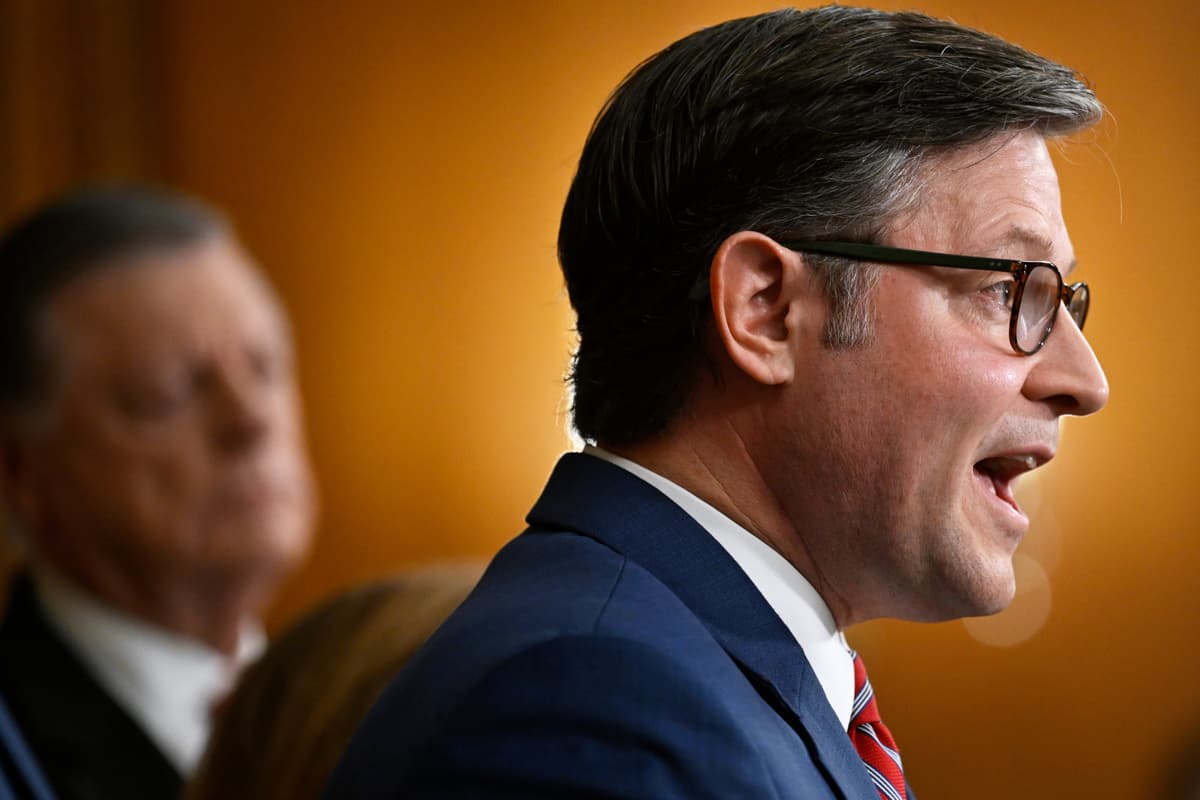

Speaker Mike Johnson has been saying for months that he and his colleagues would address rapidly rising health care costs before enhanced tax credits under the Affordable Care Act expire on December 31. Now, as Americans are seeing their premiums increase by triple-digit percentages, it is clear that Congress will almost certainly get nothing done before that end-of-year cliff.
Democrats tried to use the government shutdown as a way to twist Republicans’ arms in the health care subsidy fight, though a small band of lawmakers worked together to re-open the government once it became clear that the GOP would not budge. The only thing they have won in the fight was a promise from Senator John Thune that Democrats could call up a proposal to extend the tax credits before the end of the year.
The bill that Senate Democrats are pushing — a clean extension of the subsidies for the next few years — is guaranteed to fail in the Republican-controlled Senate. At the same time, a bipartisan group of House lawmakers is trying to sound the alarm bells as loud as possible before Congress goes on vacation in just two weeks.
On Thursday, 35 House Republicans and Democrats rallied together in the basement of the Capitol to push their proposal for keeping the tax credits in effect through at least the next two years with some new reforms.
If their proposal was signed into law, there would be a lower income cap for those who are eligible to receive the subsidies, as well as an additional phase-out once someone’s income reached 600 percent of the federal poverty line. Their bill would also extend open enrollment until next spring while also cracking down on middlemen who make money off of inflated prescription drug prices.
“If you want to make lasting change in this country, if you want to actually accomplish something that impacts the vast majority of Americans, it cannot be done without bipartisan support,” Congressman Mike Lawler, a New York Republican, said Thursday. “This group is coming together today to say to our leadership on both sides: Enough.”
“We have a responsibility before the end of the year to pass a bill that will address the issue of health care costs in this country,” Mr. Lawler added.
Mr. Johnson’s biggest problem, for now, is his right flank. The House Freedom Caucus has been saying loudly and consistently since this summer that there is no reality in which they go along with a deal to extend those Affordable Care Act subsidies.
“These expanded ACA tax credits were always meant to be short-term adjustments. They both eliminated the income cap on subsidy eligibility, and increased the amounts that the federal government paid toward premiums on the Obamacare exchanges,” the hardline conservatives wrote in an opinion piece for Newsweek back in September.
“The result: millions of higher-income Americans who previously never needed these taxpayer-funded subsidies suddenly qualified for government assistance, and insurance companies reaped the benefits,” they wrote.
President Trump, meanwhile, has done little to settle the intraparty fight over these subsidies. He said at the beginning of the shutdown that he would be happy to sit down with Democrats once they voted to re-open the government. To date, he has not begun to have any substantive negotiations with the minority party on Capitol Hill.
“Doing nothing is not an option,” Republican Congressman Kevin Kiley said Thursday alongside his colleagues. “When you’re talking about 22 million people … who are suddenly gonna have to pay thousands of dollars more for health care, doing nothing is not an option.”
Mr. Kiley himself made clear that Mr. Johnson is very much to blame for the current crisis, given the fact that the House was left out of session for eight weeks during the shutdown — eight weeks which could have been used to craft some bipartisan deal much earlier than today.
“This has not exactly been the finest hour for the U.S. House of Representatives. Over the last several months, the House has been missing in action in a lot of ways. At the decision of leadership, we were literally absent for the last two months,” Mr. Kiley said. “This is an opportunity to change that.”