
CBS Asks FCC To Drop ‘News Distortion’ Probe of ‘60 Minutes’ Harris Interview, Even as Parent Company Seeks Settlement With Trump 

Lawyers for CBS say the government has ‘no lawful role in policing the editorial decisions of broadcast news outlets.’
CBS News
CBS News

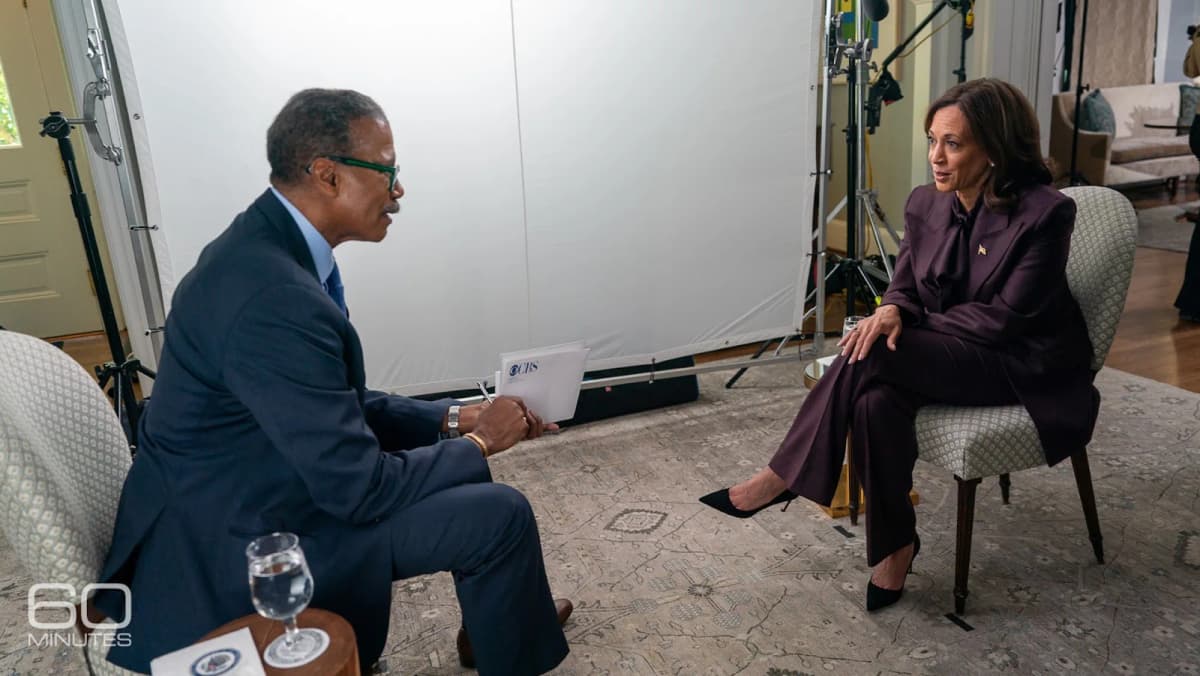
CBS is asking the FCC to close its “news distortion” investigation focused on the selective editing of a “60 Minutes” interview with Vice President Harris. The effort to make the probe go away comes as the contretemps of CBS News’ conduct during the election may be holding up the high stakes acquisition CBS parent company Paramount Global by Skydance Media, which requires government approval. 

CBS legal efforts to fight the Trump Administration, both by pushing back at the FCC probe as well as fighting a $20 billion lawsuit President Trump has brought against the Tiffany Network over the interview, runs in parallel to efforts by Paramount’s senior management to settle the Trump lawsuit.

The news distortion investigation was spawned by a complaint from the conservative law firm, the Center for American Rights, after “60 Minutes” was exposed for selectively editing  Ms. Harris’s answer to a question about Prime Minister Netanyahu to remove what critics say was a “word salad” and make her answer sound more coherent. The editing was exposed after “60 Minutes” gave clips of the Netanyahu question-and-answer sequence to lesser CBS News platforms, “Face the Nation” and CBSNews.com. When these programs broadcast the clips, astute observers noted that Ms. Harris gave three different answers to the same question on the three different CBS News platforms. 

CBS would argue that it was standard practice to edit taped interviews for clarity. But when the “60 Minutes” interview aired, Ms. Harris’ avoidance of news interviews and difficulty expressing herself coherently had become a major issue in the campaign. Mr. Trump’s supporters argued that reliably liberal CBS News had behaved unethically by editing the interview to remove Ms. Harris’ digressions into “word salad”. Mr. Trump would later say that  the editing could have cost him the 2024 election and that he expected CBS to pay “a lot” when they settled the suit.

President Biden’s FCC quickly tossed the news distortion complaint against CBS, but Mr. Trump’s new FCC chair, Brendan Carr, revived it. Unlike cable or streaming news channels, CBS has exclusive access to public airwaves, and therefore is legally required to broadcast fair and truthful news coverage. Should the FCC find CBS at fault, it could lead to fines. But more significantly, the FCC probe may be holding up Paramount’s merger with Skydance.

In a filing with the FCC on Monday, CBS said, “The Complaint filed against CBS for ‘news distortion’ envisions a less free world in which the federal government becomes a roving censor—one that second guesses and even punishes specific editorial decisions that are an essential part of producing news programming.”

The filing also said the “essence” of the complaint that CBS “somehow broke the law by airing a portion, but not all, of a candidate’s answer to a question in a news magazine program—is fatally flawed.”

The FCC says that it investigates allegations of “news distortion,” or incidents when public brocasters are accused of “rigging or slanting the news.” However, CBS’ filing suggests that the policy, which originated in 1949, is antiquated and from a time when “most people and organizations could not express their views via electronic means of communication.” It also questioned whether the policy is Constitutional. 

“In this dramatically changed media landscape, the federal government has no lawful role in policing the editorial decisions of broadcast news outlets. CBS accordingly urges the Commission to deny or dismiss the Complaint and close this proceeding,” the filing said. 

The Center for American Rights explained its complaint on Friday. It argued CBS “distorted the news” by “cleaning up the Vice President’s muddled and meandering answer in this individual clip, such that the American people did not see that a major party presidential nominee could not give a coherent answer on the most important issue of national security at the time.” It also argued the network “suppressed the news by failing to air damning answers about other topics like China and taxes.”

Additionally, CAR took issue with CBS’ refusal to release the unedited transcript of the Harris interview for months, and then only doing so after Mr. Carr ordered it to be released.

While CAR celebrated the decision by the FCC to launch its investigation, a free speech advocacy organization, the Foundation for Individual Rights and Expression, criticized the agency and called the investigation a “political stunt” and an “illegitimate show trial.” It also said it is “especially unseemly when paired with the FCC review” of the Paramount-Skydance deal. 

“The purpose and timing of this inquiry are both obvious and unjustifiable. Launching a politically fraught investigation based on such a paper-thin complaint in these circumstances is alone a compelling example of regulatory abuse,” FIRE said. 

The request to drop the FCC’s lawsuit comes after lawyers for CBS also filed a request to have Mr. Trump’s lawsuit dismissed, which they called an “affront to the First Amendment.” Attorneys for the company argued that the president’s complaint about the potential impact of the Harris interview on his campaign is “mooted” because he won the election. 

Despite the network’s defense of the edits and left-wing journalists and legal scholars calling the lawsuit “meritless,” it has so far survived CBS’ challenges in the conservative Texas court where it was filed. 

Furthermore, the resolution of the legal battle has reportedly become a source of contention between CBS News brass and top executives at Paramount, who think they should settle the suit. 

As Mr. Trump’s lawsuit has unfolded, the outgoing head of Paramount, Shari Redstone, and the man tapped to replace her once the Skydance deal is approved, former NBC executive Jeff Shell, have reportedly been ramping up pressure to reach a settlement with the president. They believe a settlement could help ensure the merger with Skydance is approved by the federal government. 

According to the Status email newsletter, Mr. Shell inserted himself into the controversy months ago, suggesting to CBS News executives that they release a transcript of the interview, even though legally, he’s not supposed to involve himself in management issues until the merger closes.

Despite Ms. Redstone reportedly wanting a settlement, some CBS executives fear that aside from setting a precedent of trying to appease the president, a settlement could come with legal risks as it could be seen as a bribe to secure approval of the merger deal, according to the Wall Street Journal.

Mr. Trump confirmed the settlement talks to reporters during his Cabinet meeting in February, adding that he believes any settlement deal would need to have a hefty price tag because he thinks the “60 Minutes” edits could have cost him the election. However, he did not offer an example of an amount that would satisfy him.

One way to avoid the appearance of the settlement being a bribe (which could expose CBS executives to possible criminal charges) would be for CBS News to admit wrongdoing in the way it edited Ms. Harris’ interview. However, the chief executive of CBS News, Wendy McMahon, and the executive producer of “60 Minutes, Bill Owens, have been firmly against the idea. Journalist Oliver Darcy, the author of the Status newsletter, reports it is now a “red line” they will not cross.

In a meeting last month that was reported by the New York Times, Mr. Owens told staff, “There have been reports in the media about a settlement and/or apology. The company knows I will not apologize for anything we have done.”

“The edit is perfectly fine; let’s put that to bed so we can get on with our lives,” he said, referring to releasing the transcript, which the FCC had just ordered CBS to do.

In addition to the constant drip of embarrassing leaks surrounding CBS News and the merger deal, the latest reporting about Mr. Shell’s pressure to settle Mr. Trump’s lawsuit could put the merger at risk. The intervention by Mr. Shell could be seen as a form of “gun jumping,” or illegal pre-merger coordination between the two companies, that could spark further scrutiny from the FCC, which has the authority to approve or reject the deal.

Even if CBS manages to resolve Mr. Trump’s lawsuit and the FCC investigation without allegations of impropriety, the Paramount-Skydance deal still appears to be in peril as a judge in Delaware has agreed to hear arguments in a case that could block the deal. 

The New York City public pension fund filed a complaint seeking to stop the merger as it argues the process was not sufficiently open and did not allow other companies to make offers to merge with Paramount. The judge in the case, Kathaleen McCormick, has not blocked the merger deal. However, her decision to let the case proceed is seen as yet another warning sign that the Skydance deal could be derailed. 


The New York Sun

© 2025 The New York Sun Company, LLC. All rights reserved.

Use of this site constitutes acceptance of our Terms of Use and Privacy Policy. The material on this site is protected by copyright law and may not be reproduced, distributed, transmitted, cached or otherwise used.

The New York Sun

Sign in or  create a free account

or
By continuing you agree to our Privacy Policy and Terms of Use