CBS News Is Not Out of the Woods Yet: FCC Chair Says ‘News Distortion’ Investigation of the ‘60 Minutes’ Harris Interview Is Ongoing
Brendan Carr says they have not made a ‘final’ decision on the news distortion matter.
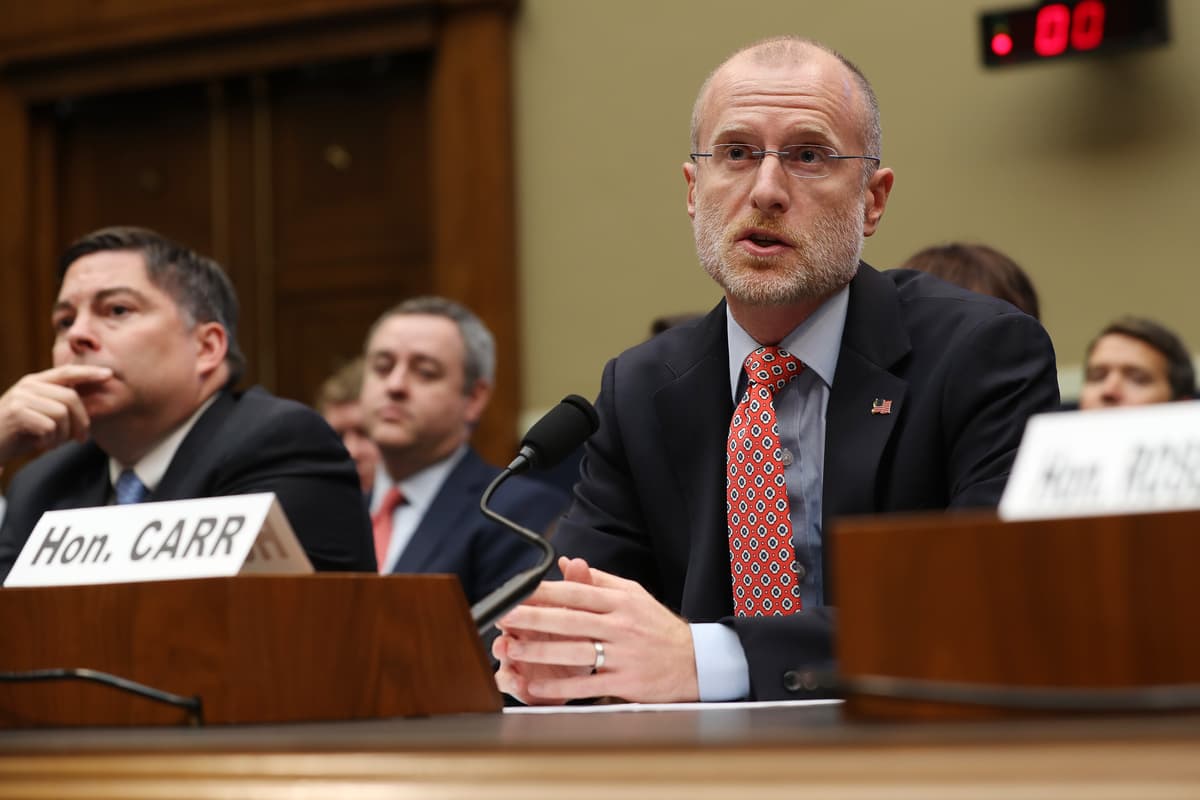
Even though President Trump’s lawsuit against CBS is settled, and its parent company’s merger with Skydance Media has finally been approved, CBS News is still facing a news distortion investigation conducted by the Federal Communications Commission. At issue is the same Vice President Harris interview that has bedeviled CBS and its parent company, Paramount Global, for the last nine months.
For months, the FCC’s approval of the Skydance deal seemed to be on hold as Mr. Trump’s lawsuit against CBS for its editing of Ms. Harris’ October interview with “60 Minutes” played out. A formal complaint about the interview was initially dismissed by President Biden’s FCC, but was restored when Mr. Trump returned to power and his new FCC commissioner, Brendan Carr, launched a formal “news distortion” investigation.
During an appearance on CNBC on Friday, the morning after the merger was approved, Mr. Carr, addressed allegations from some Democratic senators and from the anti-Trump comedian, Stephen Colbert, that Paramount’s decision to settle Mr. Trump’s lawsuit was a “bribe” to pave the way for the FCC to approve the Skydance deal. The chairman said the key to approving the deal was actually Skydance’s commitment – made in writing days before the transaction was approved – to unbiased journalism.
CBS News, whose flagship program is “60 Minutes,” has for decades been accused of a pronounced liberal, anti-conservative and anti-Israel bias. Skydance has committed in writing that CBS News, under its dominion, will practice “unbiased journalism.” Skydance also agreed to do a “content review” of CBS News, and to appoint an ombudsman for at least two years who would be an internal policeman.

During his CNBC interview, Mr. Carr said that the Skydance deal, Mr. Trump’s lawsuit, and a news distortion complaint against CBS were unrelated. But, while the merger and the president’s lawsuit have been resolved, the news distortion investigation remains ongoing.
“There was this lawsuit involving President Trump, which was outside of the FCC, didn’t have anything to do with us,” Mr. Carr said. “We had this [merger] transaction before us, and we also have a news distortion complaint against CBS. The news distortion complaint is still pending at the FCC, and we haven’t made a final decision on that.”
CBS and Mr. Trump basically agreed on the facts of the lawsuit. CBS News producers edited a question-and-answer sequence to make Ms. Harris sound more coherent. Mr. Trump claimed this was “election interference” – the interview aired at a time, just weeks before Election Day, when Mr. Harris was under fire for her difficulty expressing herself clearly – while CBS argued it was standard practice to edit interviews for brevity and concision.
Paramount agreed to pay $16 million to settle Mr. Trump’s lawsuit, but did not offer an apology, which would have been an admission of wrongdoing and might have played into the news distortion investigation. Since the merger has been approved and Mr. Carr has expressed optimism about the new owners’ vision for CBS News, it is unlikely that the FCC would choose to take the extraordinary step of revoking its broadcast license, even though he has previously threatened to take such action.

However, there are some other options available for the commission to take to punish CBS News for the editing, such as a fine. In 2004, the FCC fined the network $550,000 for airing a “wardrobe malfunction” that happened during singer Janet Jackson’s performance during the Super Bowl halftime show over a brief shot that showed her exposed breast.
CBS appealed the fine, and a three-judge panel on the Third Circuit U.S. Court of Appeals found that the FCC acted “arbitrarily and capriciously,” as it said the commission did not give outlets enough notice about changes to its enforcement policies.
In 2012, the Supreme Court unanimously rejected the government’s appeal.
It is possible that the FCC could issue a fine to CBS as a result of the news distortion investigation.

Alternatively, it could seek to resolve the complaint through other concessions from the network, such as potentially requiring it to air conservative advertisements or public service announcements.
Mr. Trump said in a post on Truth Social earlier this week that he “anticipate[s] receiving $20 Million Dollars more from the new Owners, in Advertising, PSAs, or similar Programming, for a total of over $36 Million Dollars.”
Reports of the PSAs surfaced shortly after Paramount first announced its settlement. Paramount previously denied that it made a deal to air PSAs as part of the settlement. And there was speculation that Mr. Trump had made a side deal with Skydance to air them. His post this week appeared to confirm the speculation.
However, the “anticipation” for the advertisements could come from an expectation that the FCC would require CBS News to air them as a short-term band-aid to counteract its liberal slant and to provide equal time to conservatives.

Republicans have largely shunned interviews with “60 Minutes” due to concerns that their pre-recorded interviews will be edited in ways that make them sound worse. The ads could be a more immediate effort to provide some kind of counterbalance to the left-wing bias.