
‘Checkpoint Zoo’ Serves Up a Slice of Ukrainian Life During the War With Russia
Joshua Zeman has crafted a heartwarming picture, populated by memorable people and adorable animals. It is also punctuated by moments of unspeakable tragedy, of heroic efforts thwarted by the cruelties of war.
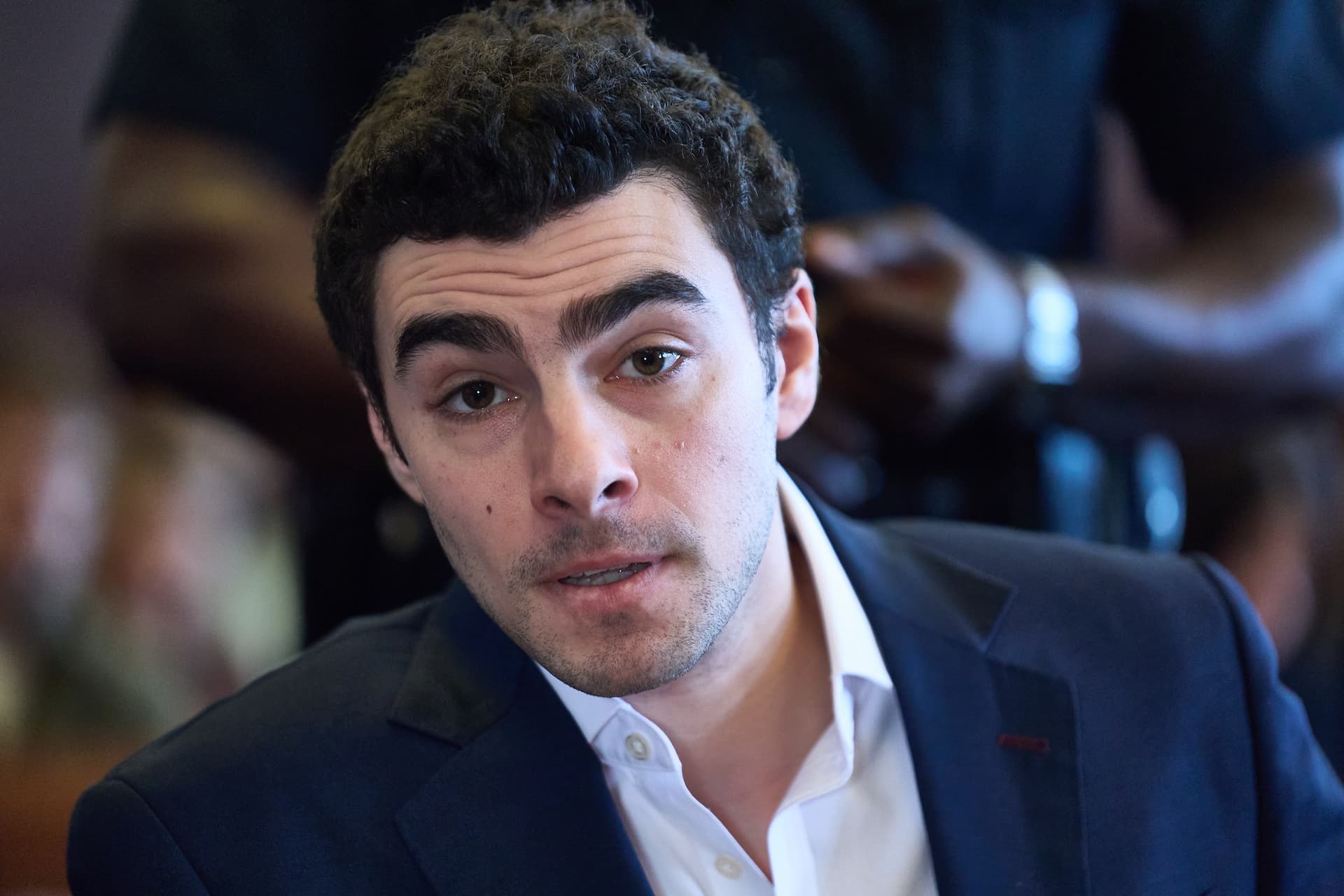
Oleksandr Feldman is an interesting character. Although he’s not the primary focus of Joshua Zeman’s “Checkpoint Zoo,” Mr. Feldman is at its hub and a man who is as passionate as he is idiosyncratic. Born to Jewish parents in Ukraine’s second largest city, Kharkiv, Mr. Feldman served in the Red Army, worked at a variety of odd jobs, and proved a deft hand at real estate, ultimately making the Forbes list of the “100 Richest Ukrainians.”
A full embrace of Judaism came late: Mr. Feldman underwent a bris at age 42 and, according to the Times of Israel, “endured the ritual” accompanied by his father and son. At about the same time, Mr. Feldman won a parliamentary seat and has been active in politics ever since. All the while, he served as president of the Ukrainian Jewish Committee, an organization that works to stem the tide of antisemitism and xenophobia.
Mr. Feldman’s charitable works extend to all species. The Kharkiv Eco-Park that bears his name holds a special place in his heart. Established in 2011 as a petting zoo, the facility took on larger and more exotic animals, bringing the number up to around 5,000. Geared primarily toward children, the Feldman Eco-Park and its attendant activities were offered to citizens free-of-charge. All of which came to an end on February 24, 2022, when Russian bombs started falling.
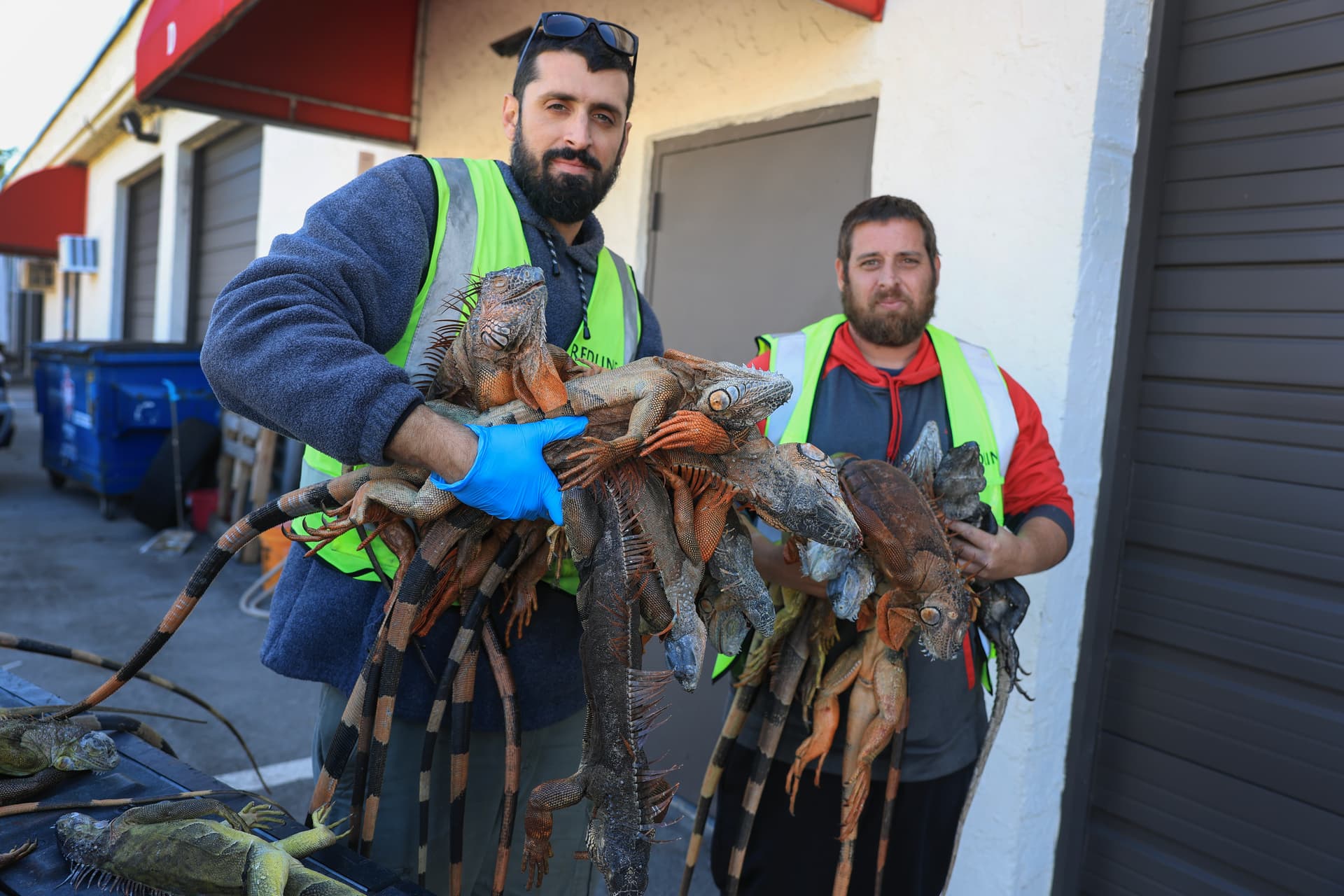
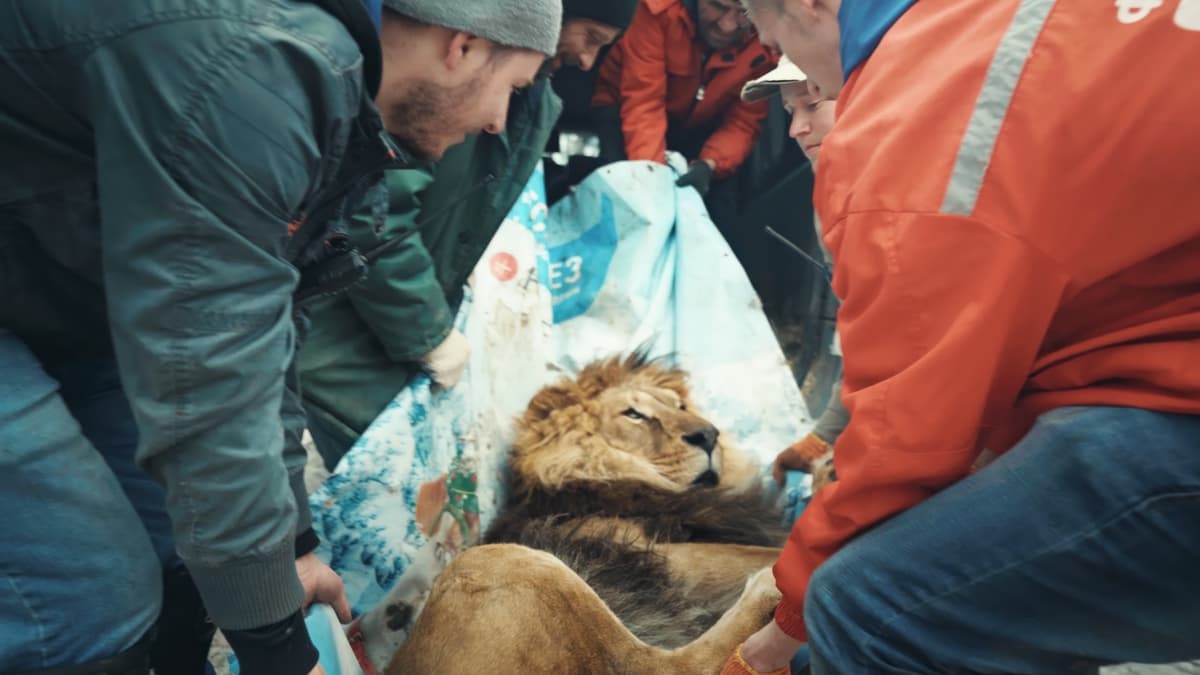
The zoo was situated close to the border. Non-essential staff were vacated. The facilities sustained damage, utilities were cut, and, notwithstanding the efforts of the Ukrainian army, the immediate area continued to be a war zone. All of which motivated an array of like-minded people, especially veterinarian Tymofli Karchenko, to help the remaining members of the zoo staff. Placing themselves in considerable danger, these volunteers entered the facility to feed a hungry population and, later, transfer the animals to a safe location.
Easier said than done. The efforts of this humble crew are alternately funny and alarming: Moving a recalcitrant goat has its challenges, but so does dealing with a jaguar even after it’s been sedated. One may ask: Where are these creatures to be shuttled? Mr. Feldman ended up housing the majority in his spacious mansion, keeping his wife in the dark about the veritable Noah’s Ark stowed away in a lap of luxury. Luckily for all involved, the predators were taken on by the Kyiv Zoo. Messrs. Feldman and Karchenko and their team managed to save more than 4,700 animals during the first 71 days of the war.
Mr. Zeman has crafted a heartwarming picture, populated by memorable people and adorable animals. It is also punctuated by moments of unspeakable tragedy, of heroic and often foolhardy efforts thwarted by the cruelties of war.
This is especially the case as we reach the end of Mr. Zeman’s picture, at which point Russian prisoners of war are forcibly confronted with the victims of their actions. These scenes are not easy to watch, but, then, the depths and range of human feeling shouldn’t be soft-pedaled. “Checkpoint Zoo” is one facet of a larger conflict, but it speaks volumes all the same.