

Chernobyl Fungus That Feeds on Radiation Could Shield Astronauts From Cosmic Rays on Mars
Black mold discovered inside at the site of the infamous reactor meltdown in 1986 appears to use ionizing radiation as an energy source.
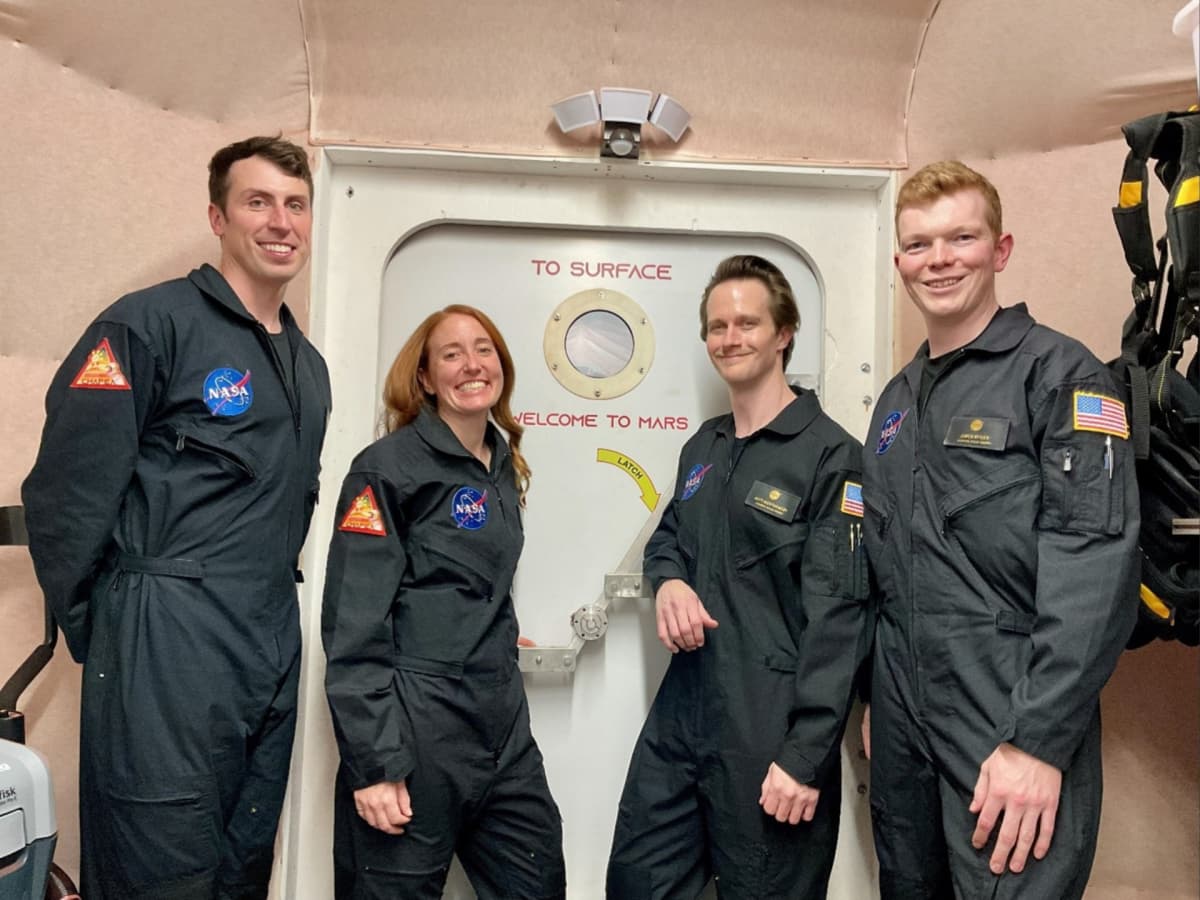
As a mission to Mars moves closer to reality from science fiction, scientists are taking a renewed interest into whether a fungus found thriving inside Chernobylâs nuclear reactor could be the key to shielding astronauts from cosmic rays.
In the late 1990s, scientists discovered Cladosporium sphaerospermum growing inside reactor No. 4 at the site of the worldâs largest nuclear meltdown. The black fungus appears to have the ability to use ionizing radiation as an energy source.
Ionizing radiation, which strips electrons from atoms to create charged particles called ions, is created by, among other things, nuclear reactors and fission processes. It can trigger chemical changes that damage DNA and cells, proving deadly to humans and animals exposed to high doses.
But the opposite seems to be happening to the black mold found at the site of the former nuclear power plant in Ukraine. Scientists have found that the Chernobyl fungus has been thriving on the gamma radiation particles.
âFungi have been through numerous challenging environmental âboot campsâ through which they â by necessity â developed interesting protective and advantageous abilities,â a professor at the Albert Einstein College of Medicine/Montefiore Medical Center, Dr. Joshua Nosanchuk, told Newsweek. ââEatingâ radiation, or radiosynthesis, is one such adaptation certain fungi that produce the pigment melanin developed. This fungal process of energy transduction is akin to photosynthesis based on chlorophylls.â
The fungiâs secret is melanin â the same pigment that protects human skin from UV rays. While melanin shields individuals from sunlight, the fungal version appears to not only block ionizing radiation, but feed off it as well.
âThe fungi still had essential elements like carbon and nitrogen in their growth media, but they did not have a source of energy like sucrose, and ionizing radiation was playing a role of an energy source with melanin serving as an energy transducer so fungi would be able to utilize this energy in their metabolism,â a scientific researcher, Ekaterina Dadachova, who was among the first to study the fungus, said to Newsweek.
âThey developed a way to protect themselves with melanin pigment from this exposure and also use melanin as an energy transducer to help them survive.â
The discovery has sparked investigation into whether the fungi could also protect astronauts from cosmic radiation. Samples of C. sphaerospermum grown aboard the International Space Station for 30 days in 2018 were found to reduce radiation exposure by about two percent.
Researchers estimate a 21-centimeter layer of the fungus could significantly cut radiation exposure on Mars, according to a report from International Business Times.
While the idea of a self-generating biological shield has captured imaginations, researchers have not yet proven whether the fungus truly feeds on radiation via radiosynthesis or simply uses melanin for protection.
âActual radiosynthesis, however, remains to be shown, let alone the reduction of carbon compounds into forms with higher energy content or fixation of inorganic carbon driven by ionizing radiation,â a team of researchers led by a Stanford University engineer, Nils Averesch, wrote in a scientific journal.