

Chinese Astronauts Stranded Over Concerns Space Junk Damaged Craft

China’s space agency says the craft needs to undergo impact analysis.
AP/Andy Wong
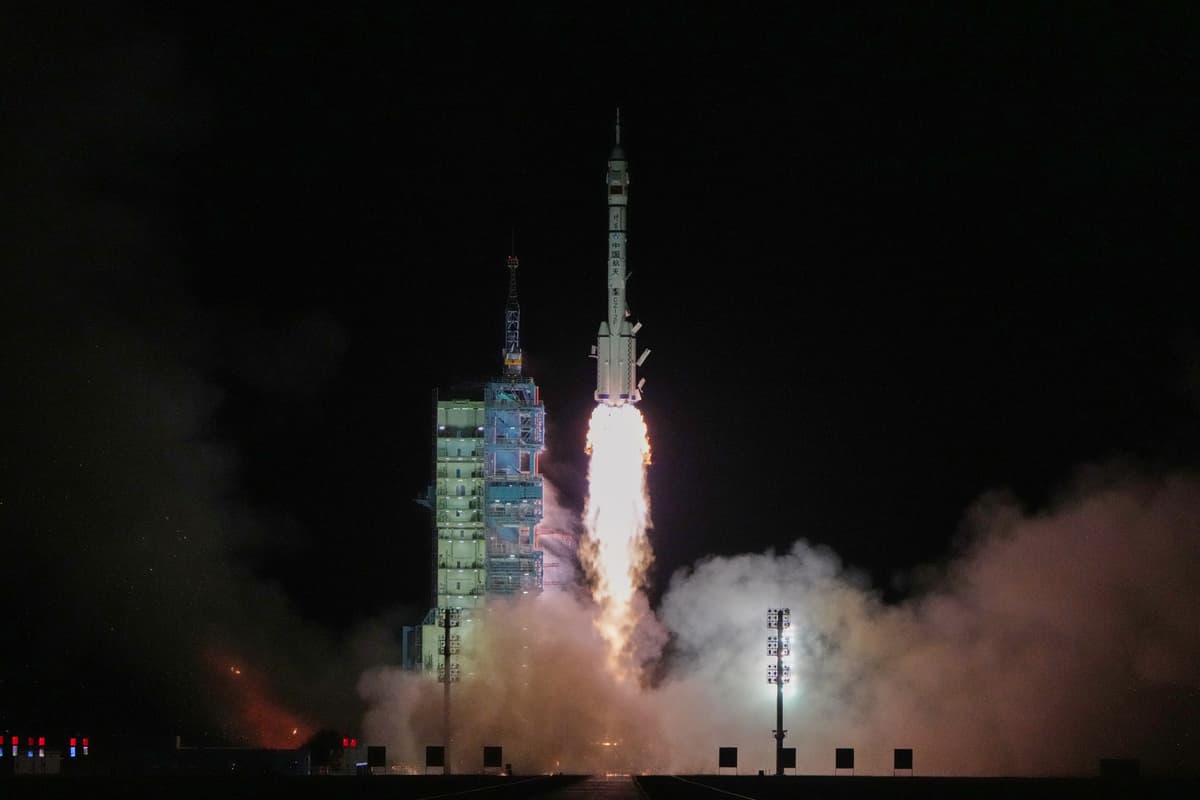
China's Long March 2F rocket, carrying three astronauts for the Shenzhou 21 manned space mission, lifts off for a space station, at the Jiuquan Satellite Launch Center at Jiuquan, northwestern China, October 31, 2025. AP/Andy Wong
LUKE FUNK
LUKE FUNK

Three Chinese astronauts — who have already been in space for six months — are having their return to Earth delayed over concerns their spaceship has been damaged by space debris.

The Chinese government has not released any details about when the possible impact took place or the potential damage to the craft.

The astronauts, Chen Dong, Chen Zhongrui, and Wang Jie, were scheduled to depart the Chinese space station on Wednesday but their new departure date is unclear.

The China Manned Space Agency said Wednesday that the Shenzhou-20 spaceship needs to undergo impact analysis and risk assessment before it is cleared to leave the space station.

“The decision to delay the return aims to ensure the astronauts’ safety and mission success,” the space agency told Chinese state media.

A new crew of astronauts are already at the space station to replace the crew. For now, all six will remain on the craft.

Two American astronauts were stranded nearly a year at the International Space Station after their Boeing Starliner spacecraft malfunctioned. NASA determined the Starliner was too risky for their return because it had experienced helium leaks.

Astronauts Sunita Williams, 59, and Barry “Butch” Willmore, 62, returned to Earth in March aboard a SpaceX Dragon craft after Elon Musk volunteered to get them home.

While the astronauts planned to spend eight days in space, the mission stretched to 286 days. There was no indication that the Chinese astronauts would be delayed nearly that long.

China has been investing heavily in space in recent years and there is a new space race to return to the moon. There are ambitions of building nuclear reactors on the lunar surface to supply power for a permanent settlement. Those operations are expected to be critical to carry out future manned missions to Mars.

China and Russia are jointly developing a lunar reactor they aim to deploy by 2035. The interim administrator of NASA, Sean Duffy, is accelerating plans for an American mini-nuclear reactor to deploy on the Earth’s moon.“We’re behind. If we’re going to engage in the race to the moon and the race to Mars, we have to get our act together,” Mr. Duffy said in August.


The New York Sun

© 2025 The New York Sun Company, LLC. All rights reserved.

Use of this site constitutes acceptance of our Terms of Use and Privacy Policy. The material on this site is protected by copyright law and may not be reproduced, distributed, transmitted, cached or otherwise used.

The New York Sun

Sign in or  create a free account

or
By continuing you agree to our Privacy Policy and Terms of Use