Climbing Interest Rates Mean More Paltry Cash Payouts for Winner of Today’s $1.3 Billion Lottery Jackpot

Most people shouldn’t worry about it, as the odds of winning the jackpot are 1 in 292.2 million.
AP/Stephanie Scarbrough
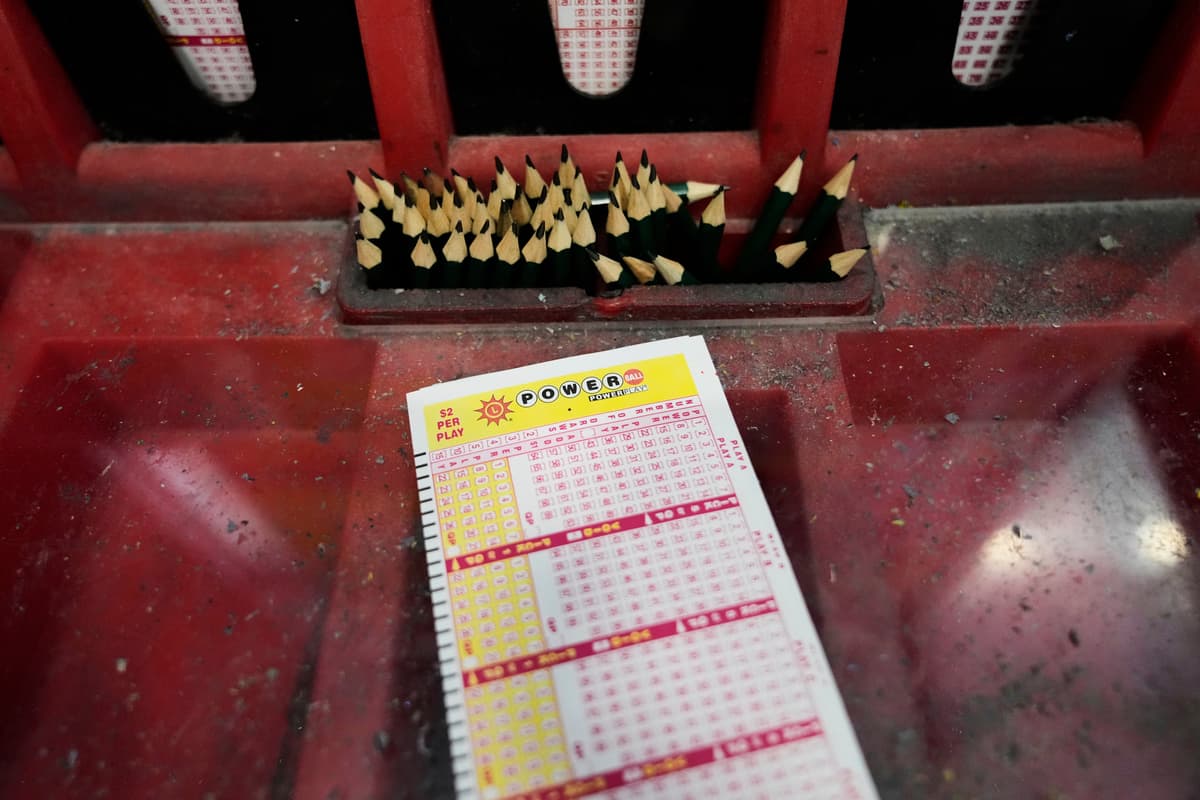
A Powerball play slip on the lottery ticket counter at a gas station in Baltimore. AP/Stephanie Scarbrough

Today’s $1.3 billion Powerball jackpot is one of the top 10 biggest of all time, but the one-time cash payout almost all winners opt for these days is a lot smaller than might be expected — and high interest rates are to blame.

If someone wins and takes the lump sum option, the winner will receive about $589 million before taxes. That’s less than half of the value of the posted jackpot, 45.3 percent, and a much smaller percentage than the 62 percent that the winner collected on the $1.5 billion payout in January 2016.

Lottery officials base the jackpot number on the expected value of the jackpot if a winner decides to take payment over the course of 30 years. Higher interest rates boost the overall payout for the win because of compounding interest.

“Higher interest rates mean you get bigger advertised jackpots for the same cash prize, and exactly the opposite when we start going down,” an economics professor at the University of Minnesota, Victor Matheson, told Lottery Geeks.

A little more recently, in July 2022, the cash payout on the $1.337 billion jackpot was $780.5 million, or 58.4 percent. That’s nearly $200 million more than today’s cash on a similarly valued jackpot.

But that was when the 10-year Treasury yield was 2.67 percent. Today, that yield, one of several variables that lottery officials use to structure long-term payouts, has climbed to 4.23 percent.

Powerball officials admit the interest rates inflate the jackpots. In the lottery website’s FAQ section it states, “The higher the interest rates, the higher the advertised Grand Prize. You might not realize that an economic reality like interest rates impact even the Powerball jackpot, but they do!” 

Most winners, however, opt for a lump sum payment in cash instead of agreeing to take their payment in dribs and drabs over 30 years. That means their overall payment, without compounded interest, is much lower in the end.

A sole winner of Wednesday night’s Powerball opting for the 30-year plan could take an initial payment of about $19.5 million, a representative of the Multi-State Lottery Association tells The New York Sun. The annual payment would increase 5 percent every year culminating in a final payment of about $80.5 million in 2055.

There are also tax implications depending on how a winner takes a jackpot. If a winner takes the one-time cash payment, he or she will immediately have to pay Uncle Sam roughly $218 million in income taxes. An annuity winner would spread the taxes out over 30 years, but could risk paying more if Congress raises tax rates in the future.

The lower value of cash payouts doesn’t seem to worry jackpot winners. No one has taken the annuity option for a big jackpot in more than a decade, likely because the market generally outperforms federal rates.

Either way, the stress over which option to take is not something most people should worry about. The odds of winning the jackpot are 1 in 292.2 million.


The New York Sun

© 2025 The New York Sun Company, LLC. All rights reserved.

Use of this site constitutes acceptance of our Terms of Use and Privacy Policy. The material on this site is protected by copyright law and may not be reproduced, distributed, transmitted, cached or otherwise used.

The New York Sun

Sign in or  create a free account

or
By continuing you agree to our Privacy Policy and Terms of Use