Coffee Prices Surge as Supply Shocks, Tariffs Blow Up Global Market
The average price for a pound of coffee is now nearing nine dollars, as last month alone saw a 2.5 percent increase.
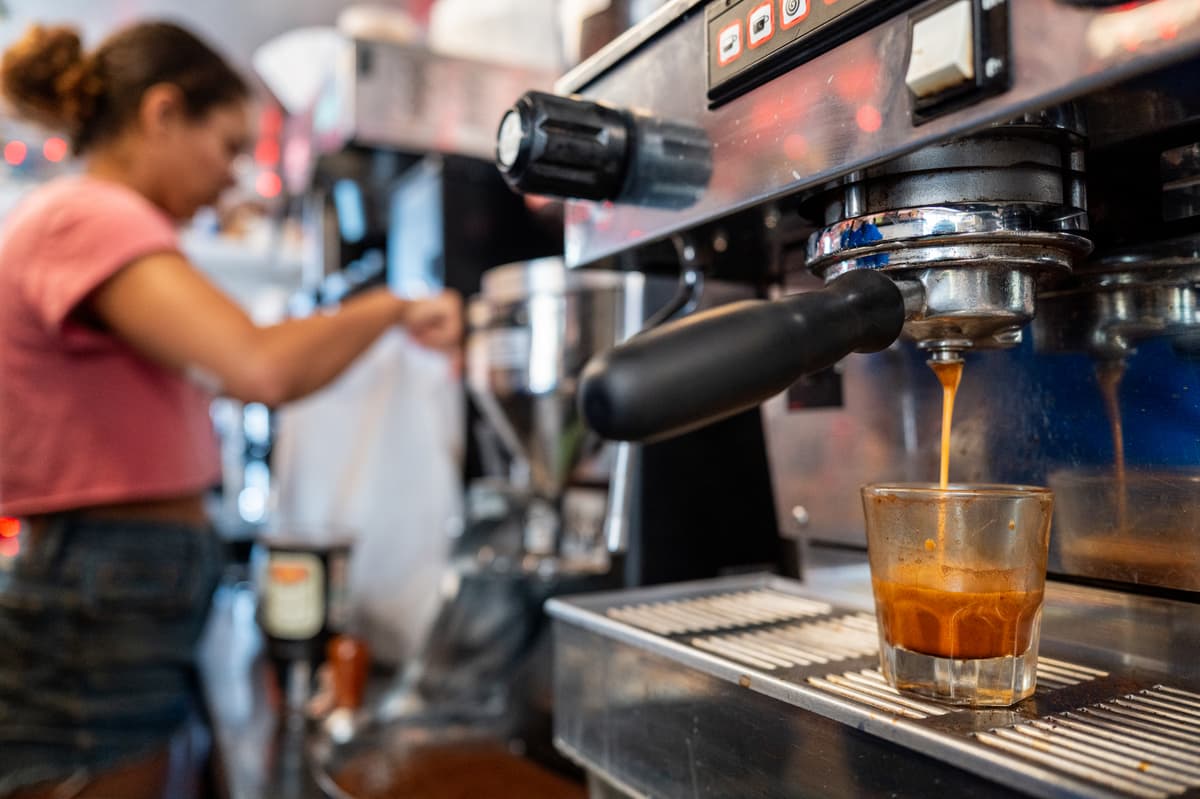

Coffee drinkers could be forgiven for getting the jitters lately as they watch prices for their favorite brew surge ever higher thanks in large part to President Trump’s tariffs.
The average price per pound of ground roast coffee — $8.41, according to the St. Louis Federal Reserve — has jumped 20 percent across America so far in 2025, with a 2.5 percent increase in the past month alone, according to a report from the free-market think tank American Action Forum.
Previous price hikes have often been due to shocks in supply such as droughts in producing countries like Brazil and Vietnam that lowered yields. Demand in consuming countries like the United States would subsequently drop off and supply and demand would settle into an equilibrium that stabilized prices.
Now, however, global demand is still soaring as new consumers develop in emerging economies such as China. That, combined with the import taxes enacted by the Trump administration this year, are contributing to the current price increases in the United States.
“Prior to President Trump’s ‘Liberation Day,’ the tariff rate on coffee imports has been between 0 percent and 0.1 percent. In June, that rate surged to 9.3 percent and is expected to keep rising as a result of the 50-percent tariff on Brazil, the largest supplier of coffee beans to the United States,” AAF’s trade policy analyst, Jacob Jensen, says in his report. “Tariffs collected on coffee imports have experienced year-over-year increases of up to 15,000 percent.”
Despite high American demand for coffee, the crop is nearly impossible to grow in the lower 48 states due to a lack of proper climate conditions. Only Hawaii, and to a lesser extent small parts of California, have the ideal conditions for arabica to flourish.
The commonwealth of Puerto Rico also has an ideal coffee-producing climate and is currently the country’s largest grower, but production has waned in recent years following several devastating hurricanes that decimated the growth stock.
Consequently, coffee has long been one of the country’s top imported goods, and the country that consistently supplies most of it to the United States — usually about one-fourth of our supply — is Brazil.
Last month, Mr. Trump announced plans to impose a 50 percent tariff on Brazilian imports in part because of the country’s “witch hunt” targeting a former president and Trump ally, Jair Bolsonaro, who is due to be sentenced next month by the country’s supreme court for an attempted coup and for trying to overturn the results of an election in 2022.
“Due in part to Brazil’s insidious attacks on Free Elections, and the fundamental Free Speech Rights of Americans … starting on August 1, 2025, we will charge Brazil a Tariff of 50% on any and all Brazilian products sent into the United States,” Mr. Trump said in a social media post.
Democrats already have seized on the surging prices and are laying the blame squarely at the president’s feet. One of New Hampshire’s senators, Jeanne Shaheen, recently highlighted the plight of a local Concord café, Cortado Brothers, to highlight how the tariffs will hurt businesses in her state if they continue.
“They’re gonna go down to a very small margin that barely allows them to break even,” she said of the Cortado Brothers in a video posted to social media Tuesday.