Columbia University Agrees To Pay $200 Million in Sweeping Settlement With Trump Administration Over Botched Antisemitism Response
The head of Columbia’s center for Jewish life is optimistic that the deal ‘marks the beginning of real, sustained change.’
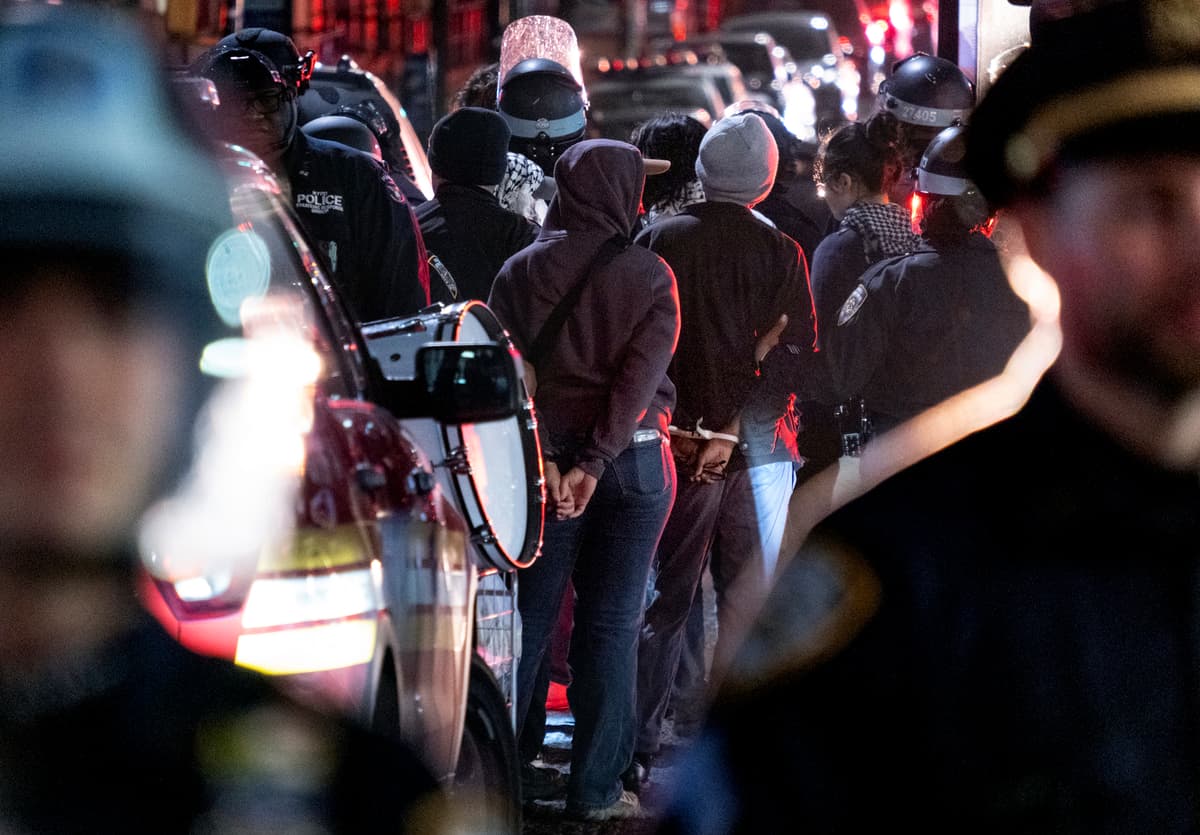

Columbia University and the Trump administration have come to a much-anticipated agreement to reinstate the $400 million in federal funding revoked by the government this spring over the school’s mishandling of campus antisemitism.
The deal was announced on Wednesday night by the Ivy League university and puts an end to a months-long negotiation process that has been mired in controversy and speculation.
The agreement notably requires the New York City-based university to pay $200 million over three years to the federal government to settle allegations of unlawful discrimination and $21 million to resolve claims of antisemitic discrimination against Jewish employees in the wake of Hamas’s October 7 attack.
The deal includes several provisions that the university agreed to in March, including appointing a new senior vice provost to conduct a comprehensive review of its Middle East studies offerings and bolstering its Institute for Israel and Jewish Studies with additional faculty appointments.
Other previously agreed-upon concessions codified in the deal include banning face masks during protests, enhancing campus safety measures, and enforcing anti-discrimination and anti-harassment policies during demonstrations, among others.
The university also pledged to drop all programs that “promote unlawful efforts to achieve race-based outcomes, quotas, diversity targets, or similar efforts,” and agreed to produce a “timely” report detailing the school’s compliance with federal anti-discrimination laws in admissions and hiring.
To that end, the school reiterated its commitment to “merit-based admissions policies” and agreed to provide to the government admissions data on both rejected and admitted students, including their race, GPA, and standardized test results.
The university’s adherence to the deal will be evaluated by an independent monitor that is “jointly selected” by the school and the White House. In exchange, the government will restore the $400 million in frozen federal grants and resume the annual flow of $1.3 billion in federal funding that was put on hold this spring.
The deal does not require the university to admit wrongdoing, though the school stated on Wednesday that “with this resolution agreement, the institution’s leaders have recognized, repeatedly, that Jewish students and faculty have experienced painful, unacceptable incidents, and that reform was and is needed.”
The announcement follows months of debate over what kinds of reforms the university should — or shouldn’t — agree to adopt. After a draft version of the agreement surfaced last week, worry mounted within the school’s Jewish community that the required reforms would fall short of addressing the university’s deep-rooted issues.
One of the largest concerns was resolved later that week when the school announced that it would move disciplinary decisions out of the purview of the faculty-run senate — which has been accused of going easy on unruly anti-Israel protesters — and into the provost’s office. The school’s Jewish community was further consoled by Columbia’s decision this week to expel and suspend more than 70 students who were involved in the chaotic takeover of Butler Library during finals this spring.
The final agreement was received warmly by the executive director of Columbia’s center for Jewish life, Brian Cohen, who shared his optimism that the deal “marks the beginning of real, sustained change.”
The education secretary, Linda McMahon, offered a similarly hopeful sentiment, hailing the agreement as “a seismic shift in our nation’s fight to hold institutions that accept American taxpayer dollars accountable for antisemitic discrimination and harassment.”
Ms. McMahon further pitched the agreement as a “roadmap for elite universities that wish to regain the confidence of the American public,” and predicted that its provisions will “ripple across” higher education and “change the course of campus culture for years to come.”
Despite the deal’s extraordinary concessions, Columbia’s acting president, Claire Shipman, insisted that the school “retains control over its academic and operational decisions” and that “the federal government will not dictate what we teach, who teaches, or which students we admit.”
While Ms. Shipman’s cooperation with the administration has drawn praise from President Trump, the Columbia leader has faced backlash from members of the community, who have likened her approach to submission. Ms. Shipman has sought to challenge that narrative, insisting at one point that “ following the law, attempting to resolve a complaint is not capitulation. That narrative is incorrect.”
Columbia’s actions come in stark contrast to those taken by Harvard University, which responded to the administration’s proposal to implement a set of reforms or lose out on billions of dollars in federal funding by taking the government to court. Those reforms, however, were more controversial and expansive than those that were issued to Columbia.
Ms. Shipman on Wednesday defended her chosen route for the school, stating that the “deeper long-term damage” expected to emerge from taking the government to court would outweigh “short-term litigation victories.”