Comey Could Fight Trump by Claiming President’s Hand-Picked Prosecutor Is Illegitimate, Creating a Quandary for Bondi

The lawyer leading the case, Lindsey Halligan, might have to defend her hiring before the case begins.

Alex Wong/Getty Images
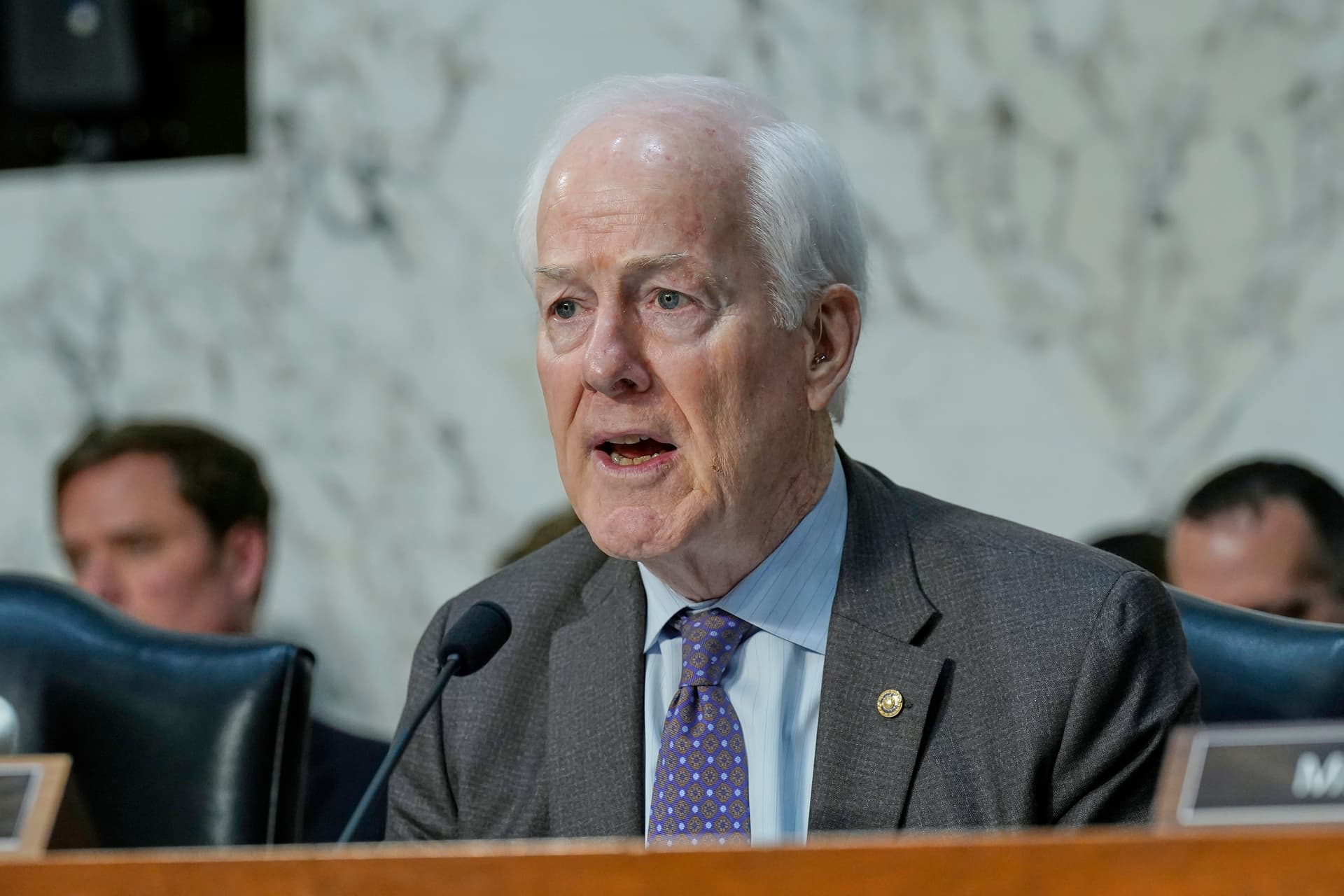
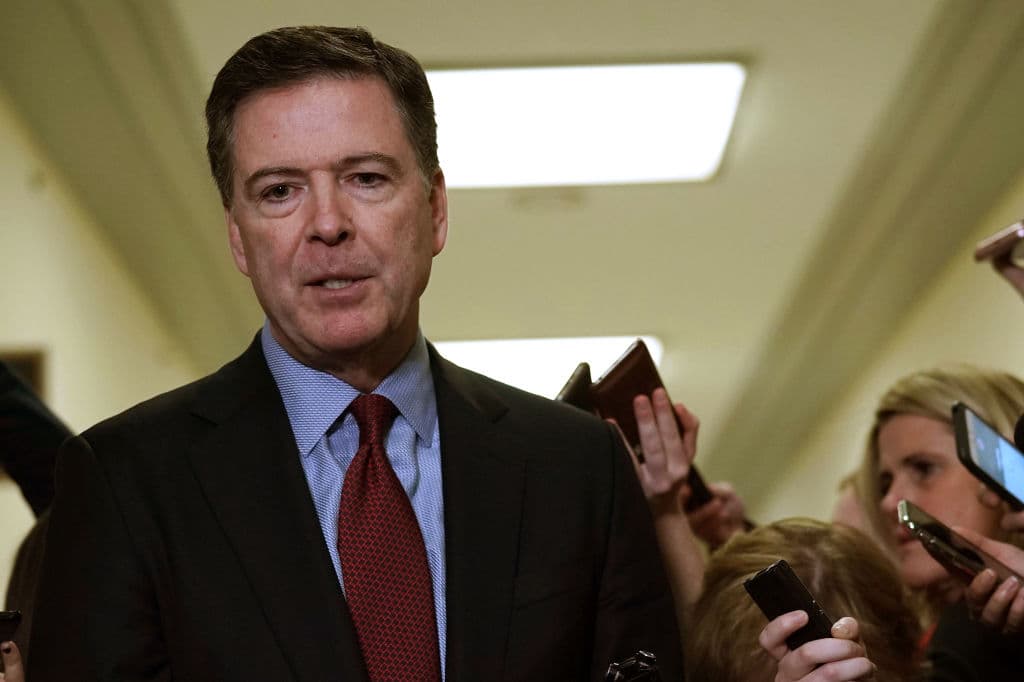
James Comey on Capitol Hill, December 7, 2018. Alex Wong/Getty Images

The Trump administration’s effort to convict a former FBI director, James Comey, on two criminal counts could be undermined or slowed down if Mr. Comey — who’s declared himself “unafraid” — secures a disqualification of the prosecutor, Lindsey Halligan, who is charged with trying him. 

Mr. Comey declared that he possesses “great confidence in the federal judicial system.” The former federal prosecutor vows that he and his family “will not live on our knees, and you shouldn’t either.” He is charged with making a false statement and obstruction of a congressional proceeding stemming from testimony delivered in 2020.

A potential weakness in President Trump’s case stems from the president’s relative lack of authority in appointing United States attorneys, or the chief federal prosecutors in a region. Per a longstanding custom, senators get veto power over United States attorneys in their states. This means Democratic senators in blue states like Virginia can block prosecutors they dislike. The practice, known as “blue slipping,” enrages Mr. Trump, but Senator John Thune, the majority leader, insists on upholding the convention.

The run-up to the bringing in of charges against Mr. Comey was marked by volatility centered on the  United States attorney for the Northern District of Virginia, where Mr. Comey lives in the affluent suburbs of the District of Columbia. The previous United States attorney, Erik Siebert, resigned under pressure from Mr. Trump. The president said he was incensed that Mr. Siebert, who had balked at indicting Mr. Comey, enjoyed the strong support of Virginia’s two Democratic senators, Mark Warner and Tim Kaine.

Federal law mandates that Attorney General Pam Bondi is empowered to appoint an interim United States attorney for a term of 120 days. After that, “the district court for such district may appoint a United States attorney to serve until the vacancy is filled.” When Mr. Siebert resigned — or was fired — he had not yet been confirmed by the Senate. After his 120 day term expired, though, Virginia’s judges elected to extend his term.

The question now is whether Ms. Bondi can appoint a second interim United States attorney in a row, as she did when she named Ms. Halligan, who previously defended Mr. Trump in his Mar-a-Lago case and more recently was tasked with reforming the Smithsonian, to the post. A 1986 Office of Legal Counsel Memorandum, written by a then-deputy assistant attorney general — and now a Supreme Court justice —  Samuel Alito, took the position that the president could not make two interim appointments in a row.

Ms. Halligan, a Florida lawyer who has no prosecutorial experience and whose work with the Smithsonian is reviled by the left, handled the case herself before the grand jury —  a breach of precedent met with mockery by elite media. Mr. Comey is likely to argue that she lacks the relevant legal experience and was put in place merely to ram through an indictment over the objections of professional prosecutors.

A legal analyst, Ed Whelan, writing at National Review, reckons that “it should be a simple matter for the federal district judge to dismiss Halligan’s indictment of Comey.” Mr. Whelan notes that while another law, the Vacancies Reform Act, allows for the appointment of an acting United States attorney, that person must be Senate-confirmed, a status not achieved by Ms. Halligan.

The judge presiding over the prosecution of Ms. Comey is Michael Nachmanoff, a 2021 appointee of President Biden. Judge Nachmanoff, a former public defender, has espoused liberal views, including objecting to mandatory minimum sentences for crack dealing. The matter of Ms. Halligan’s authority will likely be ultimately determined at the appellate level.

Only two — Judge Jeanine Pirro and Jason Reding Quiñones — of the country’s 93 United States attorneys have so far been confirmed by the Senate. Last month a federal judge in New Jersey, Matthew Brann, ruled that New Jersey’s top federal prosecutor, Alina Habba — also a former personal attorney for Mr. Trump with no prosecutorial experience — was unlawfully appointed “through a novel series of legal and personnel moves. … Her actions since that point may be declared void.” 

Ms. Habba’s path to confirmation was blocked by New Jersey’s two Democratic senators, Andy Kim and Cory Booker. They vehemently opposed her prosecution of the mayor of Newark, Ras Baraka, and Congresswoman LaRonda McIver, both Democrats, for an altercation at an ICE facility in the Garden State. The felony charges against Mr. Baraka were dropped, but those against Ms. McIver are still on the books, enraging Democrats on Capitol Hill.

Judge Brann reasoned that because Ms. Habba “is not currently qualified to exercise the functions and duties of the office in an acting capacity, she must be disqualified from participating in any ongoing cases.” Her disqualification is stayed pending appeal — Ms. Bondi has vowed to seek review — and the cases she oversaw have not been dismissed. New Jersey’s federal judges, overwhelmingly appointed by Democratic presidents, declined to extend Ms. Habba’s 120-day interim appointment. 

The DOJ, in a prelude of what could be contested in Virginia, attempted to install Ms. Habba anyway by elevating her to the status of an acting United States attorney. Ms. Bondi declares that Ms. Habba “is doing incredible work in New Jersey and we will protect her position from activist judicial attacks.” 

Mr. Trump has also been on the winning side of the disqualification ledger. Judge Aileen Cannon, who was presiding over the Mar-a-Lago case brought by Special Counsel Jack Smith, disqualified the prosecutor and dismissed the charges he brought. She ruled that he had been unlawfully appointed by Attorney General Merrick Garland. Ms. Halligan had a front-row seat for that decision.

Ms. Bondi’s chief deputy, Todd Blanche, told Fox News on Friday that “folks may have their view from looking at the indictment and from knowing Mr. Comey, like a lot of these folks do, and might not be happy with this indictment, but as alleged, these are very serious crimes.”


The New York Sun

© 2025 The New York Sun Company, LLC. All rights reserved.

Use of this site constitutes acceptance of our Terms of Use and Privacy Policy. The material on this site is protected by copyright law and may not be reproduced, distributed, transmitted, cached or otherwise used.

The New York Sun

Sign in or  create a free account

or
By continuing you agree to our Privacy Policy and Terms of Use