
Coming Supreme Court Term Set To Determine Legality of Trump’s Expansive View of His Presidential Powers
The justices will likely decide cases in the coming months related to dismissals of independent agency leaders and Trump’s tariffs.
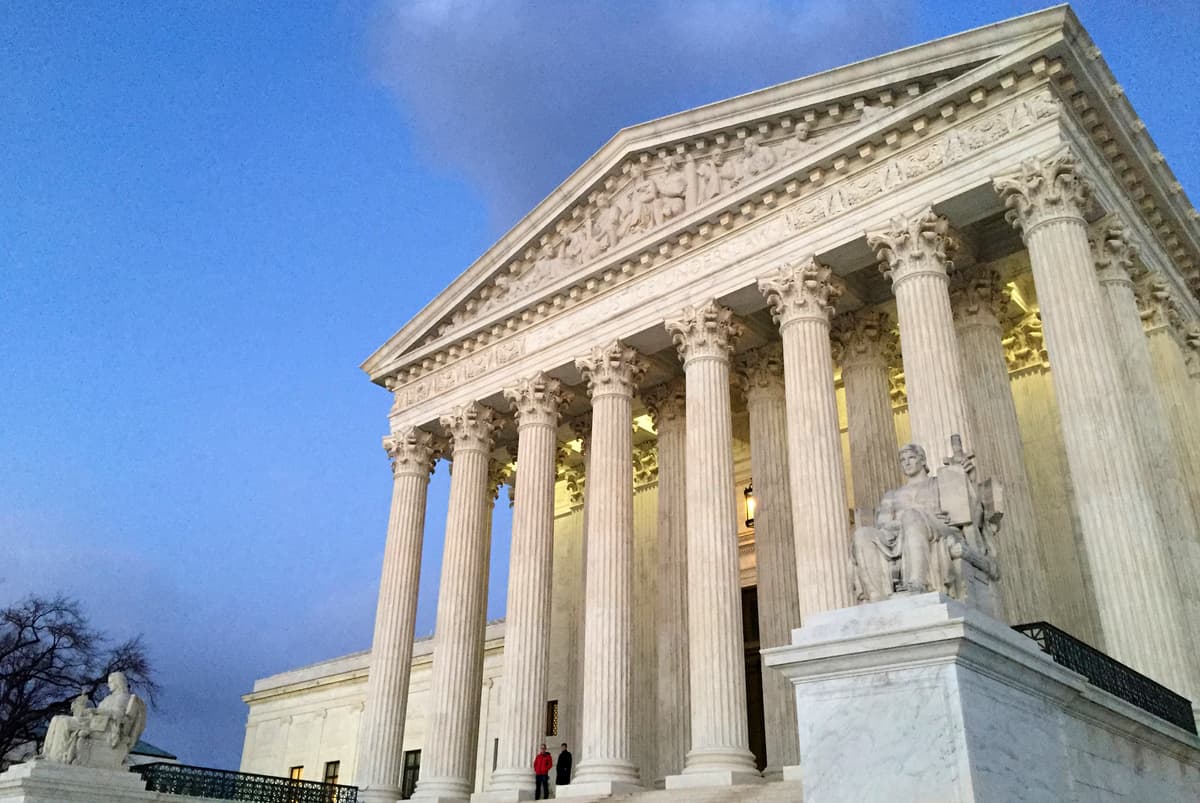
The Supreme Court will return from its summer recess on Monday to begin a new term, one likely dominated by cases concerning President Trump’s expansive view of his presidential powers. Everything from tariffs to the dismissal of a Federal Reserve governor to immigration are likely to face the justices’ scrutiny between now and the end of the term next year.
One of the most important cases for the Trump world will determine the fate of his tariffs on imported foreign goods. Earlier this year, five small businesses led by V.O.S. Selections, a wine and liquor distributor based in New York, sued to halt the tariffs on the grounds that the president illegally imposed the import taxes. The state of Oregon led a separate lawsuit challenging his authority. The two cases are now consolidated as they head to the justices.
The U.S. Court of International Trade and the U.S. Court of Appeals for the Federal Circuit both ruled in favor of V.O.S. Selections and the state of Oregon, stating that Mr. Trump overstepped his authority with his “Liberation Day” tariffs.
“ALL TARIFFS ARE STILL IN EFFECT!” Mr. Trump raged in August after the appellate court ruled against him. “Today a Highly Partisan Appeals Court incorrectly said that our Tariffs should be removed, but they know the United States of America will win in the end.”
In September, the Supreme Court agreed to hear Mr. Trump’s appeal. Those oral arguments are scheduled for early November.
In its petition seeking relief from the court, the Department of Justice argues that Mr. Trump has broad powers to impose the import taxes because they “are necessary to rectify America’s country-killing trade deficits and to stem the flood of fentanyl across our borders.”
“The President has determined that those tariffs and the ensuing trade negotiations with all our major trading partners are pulling America back from the precipice of disaster,” they argue. The tariffs are also a means to “restoring [America’s] respect and standing in the world, eliminating decades of unfair and asymmetric trade policies that have gutted our manufacturing capacity and military readiness, and inducing our trading partners to invest trillions of dollars in the American economy.”
Another key case before the court in January relates to the employment status of a governor of the Federal Reserve, Lisa Cook. Both a federal district court and an appellate court have ruled that Mr. Trump does not have the power to dismiss her from her job based solely on the accusation that she committed mortgage fraud — an accusation she strongly denies.
Ms. Cook’s lawyers argue that handing the president the power to dismiss Fed governors “would threaten our Nation’s economic stability and raise questions about the Federal Reserve’s continued independence.” Her firing would send “shock waves in the financial markets that could not easily be undone,” her lawyers argue.
Ms. Cook may find some relief from the justices in this case, based on their past rulings and comments. In another, similar case before the court earlier this year, two individuals appointed to serve on the National Labor Relations Board and the Merit Systems Protection Board sued Mr. Trump after he fired them from their posts.
The justices, in their order, allowed Mr. Trump to fire the executive branch officers, stating, “Because the Constitution vests the executive power in the President … he may remove without cause executive officers who exercise that power on his behalf.”
The pair argued that they were afforded the same civil protections as Federal Reserve governors, but in their ruling the justices said the central bank was unique. “The Federal Reserve is a uniquely structured, quasi-private entity that follows in the distinct historical tradition of the First and Second Banks of the United States,” the court said.
A separate case related to presidential firings will also come up, this one dealing with a fired Federal Trade Commission member, Rebecca Slaughter. The Supreme Court allowed Mr. Trump to remove her from her post, though the justices agreed to hear her appeal in December.
They have already stated that they will revisit the landmark 1935 case Humphrey’s Executor v. United States, which set the precedent that presidents may not fire commissioners simply for policy disagreements. During those oral arguments in December, the justices will also consider the question of whether judges even have the authority to review presidential dismissals.
Another case related to transgender individuals in sports is also set to get a hearing before the justices. The case, West Virginia v. B.P.J., will decide the legality of West Virginia’s ban on transgender individuals participating on any single-sex sports teams that do not align with their biological sex.
The justices specifically are set to answer the questions of whether Title IX bars states from imposing the prohibitions on transgender individuals on certain sports teams, and whether the equal protection clause “prevents a state from offering separate boys’ and girls’ sports teams based on biological sex determined at birth.”