Commander of American Forces in Latin America Steps Down as Trump Threatens Early Land Operations in Venezuela
Admiral Alvin Holsey has told lawmakers he is quitting his post two years early for personal reasons, dismissing reports of tensions with the secretary of defense.
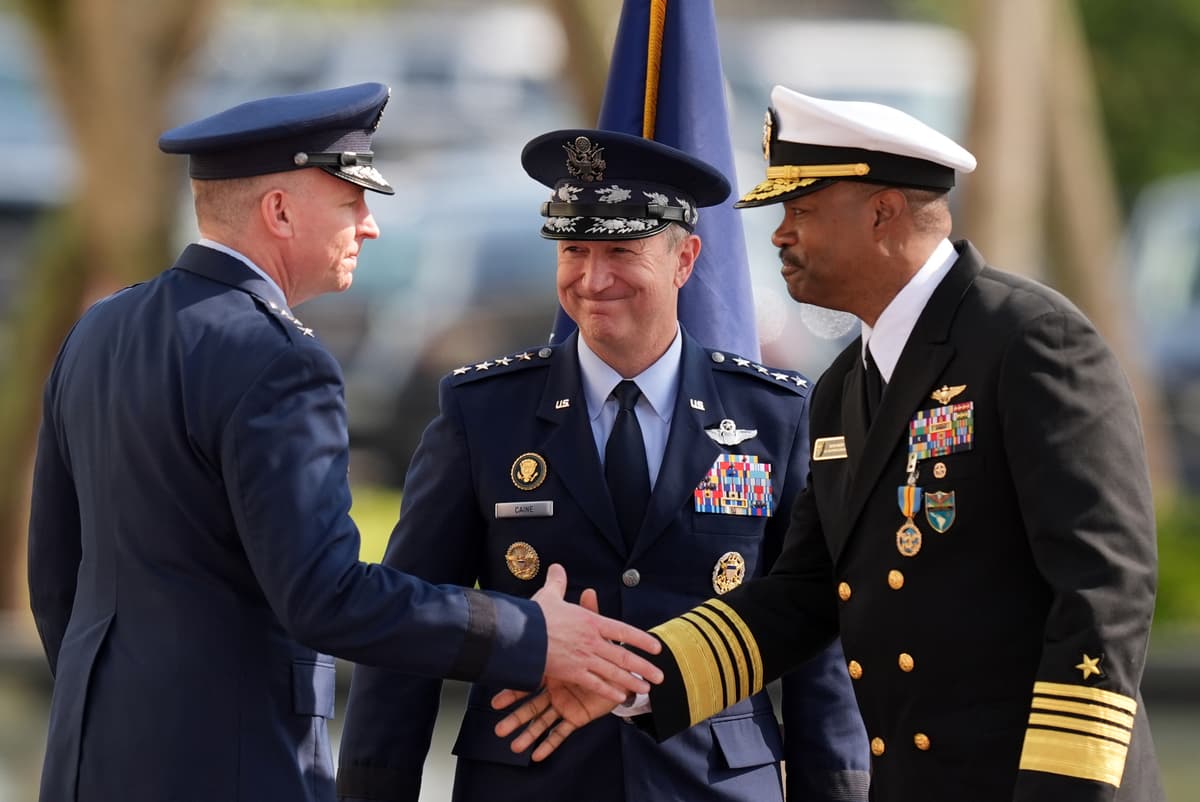

The admiral overseeing American military forces in Latin America, Alvin Holsey, stepped down two years early on Friday, days after telling lawmakers he was leaving for reasons unrelated to the American military buildup around Venezuela.
Admiral Holsey announced his retirement plans in October, and multiple reports attributed it to tension over American strikes on suspected drug boats departing Venezuela that began about six weeks earlier.
Admiral Holsey did not provide an explanation for his decision during the retirement ceremony at Southern Command headquarters in Florida, nor has he done so since his October announcement. But he urged America to support democracies in the region.
“We must always be there for like-minded partners, like-minded nations who share our values — democracy, rule of law and human rights,” he said before handing over command to his deputy, a lieutenant general in the Air Force, Evan Pettus.
Several unnamed officials who spoke to outlets such as the New York Times previously suggested that Admiral Holsey decided to retire early due to disagreements over the Trump administration’s Venezuela strategy.
Secretary of Defense Pete Hegseth grew frustrated with Admiral Holsey for not “moving quickly or aggressively enough to combat drug traffickers,” CNN reported in October, adding that officials at U.S. Southern Command had questions about the legality of the strikes.
CNN reported that the admiral offered to resign during an October 6 meeting with Mr. Hegseth, but the “idea was tabled, and his departure was not announced until over a week later.”
Despite the reports, Admiral Holsey reportedly told lawmakers behind closed doors this week that the reason for his departure is “personal.” The chairman of the House Armed Services Committee, Mike Rogers, told Politico, “He just said that’s private.”
“He said it had nothing to do with the operations in his command,” Mr. Rogers added.
Since September, American forces have carried out at least 22 strikes on suspected drug boats in the Caribbean and eastern Pacific, killing at least 87 people. This week, American forces seized an oil tanker off the coast of Venezuela.
The Trump administration has said America is in an “armed conflict” with drug cartels, offering a legal justification for the use of force. However, some lawmakers have raised questions about the president’s authority to carry out the strikes, the identification of the targets, and whether military officials committed a war crime by ordering a second strike on a drug boat that killed two survivors. Trump administration officials have denied that an order was given to kill survivors.
There are also questions about the ultimate objective of the largest build-up of American forces in the region in decades. A Democratic member of the Senate Foreign Relations Committee, Chris Van Hollen, is arguing that the seizure of the oil tanker proves that the operations in the Caribbean are not just about stopping the flow of drugs into America.
“This shows that their whole cover story — that this is about interdicting drugs — is a big lie,” Mr. Van Hollen said Thursday. “This is just one more piece of evidence that this is really about regime change — by force.”
Mr. Trump has not ruled out land operations in Venezuela. During an interview with Politico, he said that President Nicolás Maduro’s “days are numbered.” And on Thursday evening, Mr. Trump told reporters that land operations could begin “pretty soon.”