


Conservatives Reject Lament That Anti-DEI Push May Make It Harder for White Males To Get Into College
‘This is how you build a society of excellence,’ one anti-DEI activist says after reports private universities may stop giving preference to men, whose application numbers are cratering.
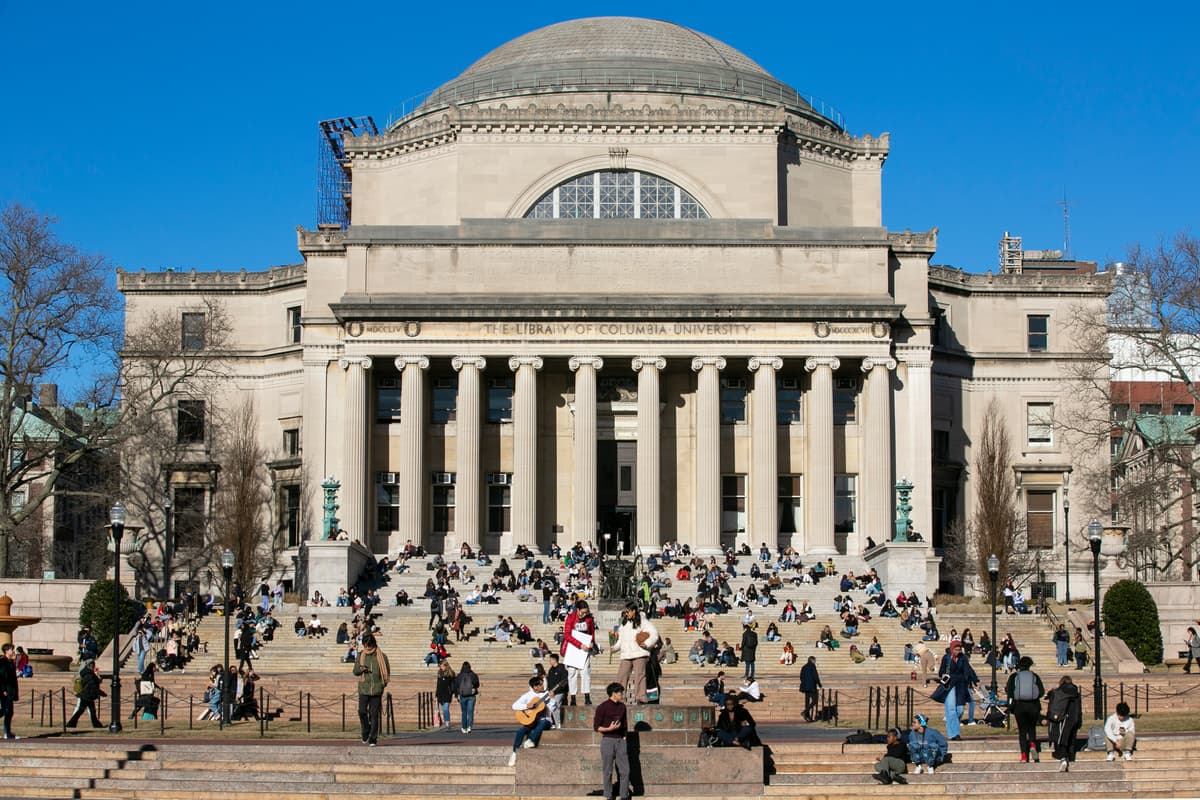
A new report that says the push to eliminate diversity, equity, and inclusion initiatives from public life could result in fewer white males enrolled in college is stirring a satisfied response from conservatives who say the “unintended consequence” is exactly what they prefer.
“Everything should be decided by merit. We should all want to be measured equally and let the chips fall where they may,” a conservative activist who has been influential in pushing large corporations to drop DEI initiatives, Robby Starbuck, told the New York Sun.
While the Trump administration is working to ensure colleges are not “discriminating against hard-working American[s],” according to the secretary of education, Linda McMahon, a new report by The Washington Post notes that pressure on colleges to drop diversity initiatives may lead to imbalanced admissions based on gender, in other words white men.
Male enrollment in colleges and universities had already been dropping for decades. The gender gap in college enrollment grew to 817,035 more women than men in 2021.
That’s up from roughly 200,000 more women enrolled than men in 1979, not long after Title IX guarantees were enacted preventing public colleges from discriminating based on gender, though women were still largely limited in the degree programs to which they were admitted.
Though men tend to have lower ACT scores and lower average SAT scores in reading and writing than women, many colleges and universities have tried to keep a balance between the number of men and women on their campuses. America’s top 50 private universities and colleges have two percentage points more male undergraduates than public colleges.
Private universities are not required to consider gender equity in admissions, but by attempting to keep the numbers equal, universities are finding they are turning down more women than men.
One of America’s most selective schools, Brown University, received 50,000 applications last year competing for 1,700 freshman seats. It received nearly twice as many female applicants as male applicants so to keep gender enrollment equal, its acceptance rate for male applicants was seven percent while just 4.4 percent for female applicants.
Last year, Columbia University accepted three percent of women applicants and four percent of men. Meanwhile, Vassar College accepted 20.4 percent of male applicants, while it accepted 17.6 percent of female students.
Education researchers who spoke to the Post said private colleges and universities will likely wind down gender-balancing efforts to try to avoid scrutiny from the Trump administration.
The “racial parts” of the anti-DEI initiatives “have gotten a lot more attention,” but practitioners in college admissions are noting that the initiatives refer to race and gender, a researcher at the University of Southern California’s Race and Equity Center, Shaun Harper, told the Post.
“What I think they don’t understand is that taking away the ability of colleges and universities to balance the gender composition of their incoming classes will ultimately have an impact on the college enrollment rates of white males. It is likely to impact them the most,” Mr. Harper said.
“I think we will see people dropping gender preferences, even though it is still within the law,” added the president of the American Council on Education, Ted Mitchell, who said universities are saying they would ‘rather be cautious than stick our neck out.’”
Mr. Mitchell estimated that if gender preferences are dropped, the “undergraduate population would skew to 65 percent female overnight.”
While Mr. Mitchell said it “drips with irony” that the campaign against DEI may make it harder for men to get into colleges, some commentators who advocated against diversity initiatives are not disappointed.
“All things being indisputably equal, any failure becomes a no-nonsense source of motivation to be and do better. This is how you build a society of excellence,” Mr. Starbuck says. “Merit erases excuses and breeds excellence.”
A columnist at the libertarian magazine Reason, Eugene Volokh, also opined that the outcome is “good” because the current system at private institutions has been unfairly disadvantaging women applicants.
“If males have been getting an express admissions advantage because of their sex, why isn’t it a good outcome that they lose this advantage?” he asked.